


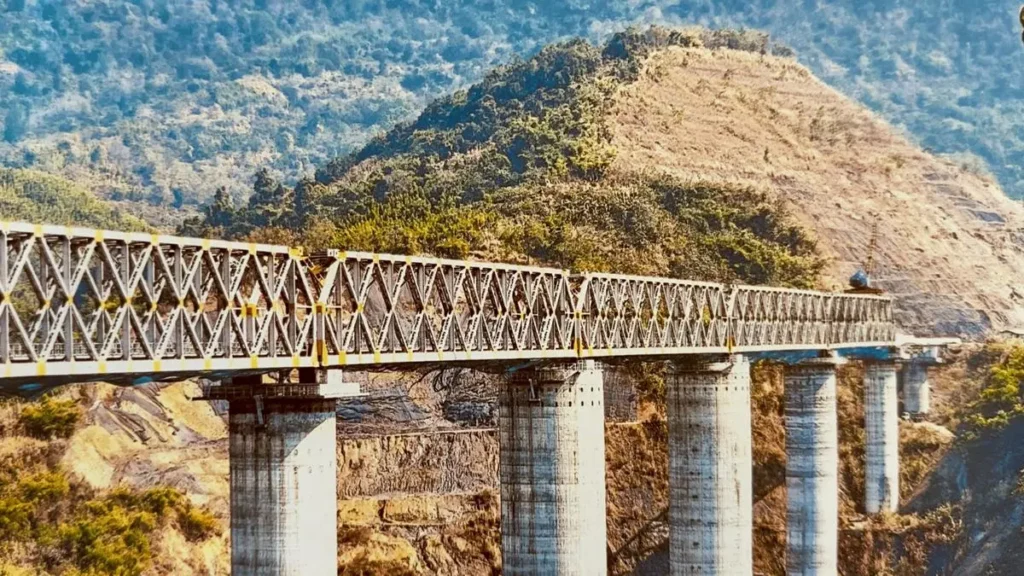
Manipur railway broad gauge connectivity achieved a major milestone after Northeast Frontier Railway officially linked one of the state’s most remote villages to the expanding national rail network. The development marks a significant infrastructure breakthrough for Manipur, where difficult terrain and limited transportation routes have historically restricted mobility and economic growth. Meanwhile, officials stated that the new rail connection could transform regional trade, passenger movement, and strategic connectivity across the northeastern frontier.
Meghalaya Eco Tourism Investment Drives Infrastructure Expansion
Tripura Akhaura Rail Link Expands Regional Trade
Remote Village Receives Historic Rail Access
Authorities confirmed that railway engineers completed the final phase of broad gauge integration connecting isolated areas in Manipur with India’s wider rail infrastructure system. Additionally, officials described the project as one of the most technically challenging railway developments undertaken in the Northeast region.
The new rail corridor passes through mountainous terrain, deep valleys, and environmentally sensitive zones. Consequently, engineers constructed multiple bridges, tunnels, and reinforced track systems to ensure operational safety in difficult conditions. Earlier, residents in several remote villages depended mainly on road transport, which often became unreliable during monsoon seasons.
Officials from Indian Railways stated that the railway expansion aims to improve transportation accessibility and regional integration. Furthermore, authorities expect the project to reduce travel time between remote districts and major commercial centers across Northeast India.
Northeast Frontier Railway Highlights Strategic Importance
Senior officials from Northeast Frontier Railway attended the inauguration ceremony alongside regional administrators and community representatives. Meanwhile, railway authorities emphasized that the project supports long-term infrastructure modernization efforts across India’s northeastern states.
Officials explained that improved railway access could strengthen cargo transportation and lower logistics costs in remote districts. Specifically, local businesses may benefit from faster movement of agricultural products, construction materials, and consumer goods. In addition, analysts believe the expanded railway network may encourage future industrial and tourism investments.
Several community leaders welcomed the project because transportation limitations previously affected healthcare access and educational opportunities. However, some environmental groups urged authorities to carefully monitor ecological impacts in fragile hill regions. Despite this, officials stated that environmental safeguards remained part of the construction process from the beginning.
Engineering Challenges Delayed Earlier Expansion Plans
The Manipur railway broad gauge project faced multiple engineering and logistical difficulties during earlier development phases. Additionally, frequent landslides, unstable soil conditions, and extreme rainfall complicated railway construction activities across several sectors.
Railway engineers reportedly used advanced geological surveys and specialized bridge construction techniques throughout the project. As a result, authorities successfully completed several critical tunnel and viaduct sections in high-risk mountain areas. Furthermore, officials introduced advanced monitoring systems to track structural safety during future railway operations.
Transportation experts noted that railway expansion in Northeast India often requires extensive planning because of difficult topography. Therefore, infrastructure projects in the region usually involve longer construction timelines compared to projects in plains areas.
Meanwhile, local workers and contractors participated extensively in multiple phases of the railway development process. Authorities stated that construction activity also generated temporary employment opportunities across nearby districts.
Economic Opportunities Expected To Increase
Officials believe the new railway connection may significantly improve economic activity in remote parts of Manipur. Additionally, transportation planners stated that broader market access could strengthen local agriculture, handicrafts, and small business operations.
Several traders explained that transporting goods through road networks previously increased delivery costs and delays. Consequently, improved railway infrastructure may lower transportation expenses and improve supply chain efficiency. Furthermore, tourism operators expect easier rail access to attract more visitors to scenic hill regions and cultural destinations in Manipur.
Government representatives also highlighted the railway’s importance for future regional trade expansion. At the same time, authorities indicated that better transportation infrastructure may encourage private sector investment in logistics and warehousing services.
Development experts stated that railway connectivity often influences long-term urban growth patterns around newly connected regions. Therefore, some remote settlements may gradually witness commercial expansion and population growth over the coming years.
Strategic Connectivity Gains Attention
The Manipur railway broad gauge expansion also carries strategic significance because of the state’s location near international border regions. Meanwhile, officials noted that stronger transportation infrastructure could improve emergency response capabilities and logistical coordination in difficult terrain zones.
Authorities stated that improved rail access may support future regional connectivity projects linked to India’s Act East policy initiatives. Specifically, transportation planners continue exploring opportunities involving cross-border trade corridors and enhanced northeastern logistics systems.
Earlier, the government launched multiple highway, airport, and railway projects across Northeast India to strengthen regional integration. In addition, infrastructure experts observed rising investment in transportation modernization throughout the northeastern states.
Security analysts also stated that stronger railway networks can improve movement efficiency for essential supplies during emergencies. However, officials clarified that the current project primarily focuses on civilian transportation and regional development goals.
Passenger Services And Freight Operations To Expand
Railway authorities confirmed that passenger services and freight operations would gradually expand following operational safety assessments. Additionally, officials stated that station infrastructure upgrades and scheduling improvements remain under active planning.
The new railway section includes modern signaling systems, reinforced tracks, and upgraded operational facilities. As a result, authorities expect smoother rail traffic management and improved service reliability in the future. Furthermore, railway officials indicated that future phases may include additional feeder routes connecting smaller settlements.
Passengers in remote areas may also gain easier access to educational institutions, healthcare facilities, and government offices located in larger urban centers. Meanwhile, transport operators expect increased commercial movement after full-scale operations begin.
Local residents celebrated the railway inauguration during public gatherings held near newly connected stations. Consequently, the development generated strong public attention across several districts in Manipur.
Future Railway Expansion Plans Continue
Officials confirmed that additional railway modernization projects remain under consideration across Northeast India. Specifically, authorities continue evaluating new connectivity proposals involving border districts and economically important transportation corridors.
Experts believe transportation infrastructure will remain central to future development strategies in the northeastern region. Moreover, stronger railway systems may improve trade efficiency, passenger movement, and regional economic integration over time.
The Manipur railway broad gauge project represents a major milestone for infrastructure development in Northeast India. Ultimately, officials expect the railway connection to strengthen economic opportunities, improve mobility, and support long-term regional connectivity goals across Manipur.
FAQs
What is the Manipur railway broad gauge project?
The project involves linking remote areas of Manipur to India’s national broad gauge railway network through expanded rail infrastructure.
Which organization completed the railway connection?
Northeast Frontier Railway led the railway expansion project with support from Indian Railways.
Why is the railway project important?
Officials stated that the project could improve transportation, trade, passenger mobility, and economic development in remote northeastern districts.
What challenges affected construction work?
Engineers faced difficult terrain, landslides, heavy rainfall, and complex tunnel construction requirements during multiple phases of development.
How may local communities benefit from the railway?
Residents may gain easier access to healthcare, education, markets, and transportation services through improved railway connectivity.
What does Manipur railway broad gauge mean for Northeast India?
Manipur railway broad gauge may strengthen regional integration, improve logistics efficiency, and support future infrastructure development across Northeast India.