


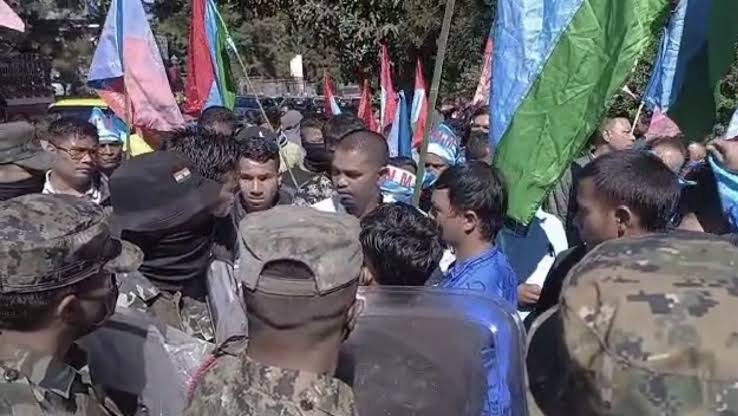
The Meghalaya ILP Demand has returned to the centre of public debate as pressure groups reportedly resumed peaceful sit-ins in Shillong calling for implementation of the Inner Line Permit system. The renewed demonstrations reflect continuing concerns among sections of civil society over migration, demographic change, and regulation of entry into the state.
Tripura Tribal Art: Digital Archive Launched to Preserve Traditional Risa Textile Weaves
The Meghalaya ILP Demand has remained a significant political and social issue in the state. Moreover, supporters argue that an Inner Line Permit framework could provide stronger mechanisms to regulate the entry of visitors and protect local interests.
The renewed sit-ins provide pressure groups with a platform to communicate their demands through peaceful public demonstrations. Therefore, the latest mobilisation could increase pressure on the state and central governments to address the issue.
The debate also involves questions surrounding constitutional provisions, implementation mechanisms, and administrative authority. Additionally, any decision on the ILP system would require consideration of legal, economic, and social factors.
Meghalaya ILP Demand Renews Public Mobilisation
The Meghalaya ILP Demand has gained renewed visibility following the resumption of peaceful sit-ins in Shillong.
Moreover, pressure groups have used demonstrations to highlight their concerns about population movement and the protection of local communities. Consequently, the sit-ins have brought the ILP issue back into public discussion.
Supporters of the demand view the permit system as a potential mechanism for regulating entry into Meghalaya. Furthermore, they argue that stronger monitoring could address concerns about demographic and economic pressures.
The renewed protests remain focused on peaceful demonstrations. Therefore, organisers can continue presenting their demands while allowing authorities to maintain public order.
Meghalaya ILP Demand Focuses on Entry Regulation
The Meghalaya ILP Demand centres on the introduction of an Inner Line Permit system to regulate the entry of people from outside the state.
Additionally, supporters argue that such a mechanism could strengthen the state’s ability to monitor population movement. Meanwhile, opponents and policymakers may raise questions about implementation, economic effects, administrative requirements, and legal considerations.
The debate therefore extends beyond the demonstrations themselves. Moreover, authorities would need to assess how an ILP system would interact with existing laws and regulations if they consider implementation.
Public discussion is likely to continue as pressure groups maintain their campaign. Consequently, dialogue between government representatives and civil society organisations could help address competing concerns.
Meghalaya ILP Demand Keeps Political Pressure High
The Meghalaya ILP Demand also carries political significance because successive governments and political parties have faced pressure to respond to calls for stronger entry regulations.
Furthermore, the issue connects with wider discussions about indigenous identity, employment opportunities, land rights, and demographic change. As a result, the demand can attract support from multiple community and political organisations.
At the same time, policymakers must consider the practical consequences of any proposed permit system. Therefore, consultations with affected communities, businesses, institutions, and other stakeholders could play an important role.
Peaceful demonstrations can keep the issue visible while giving pressure groups an opportunity to engage with policymakers. Additionally, sustained dialogue could help identify areas where concerns can receive practical responses.
Conclusion
The Meghalaya ILP Demand has regained attention as pressure groups resumed peaceful sit-ins in Shillong demanding implementation of the Inner Line Permit system.
Furthermore, the demonstrations reflect continuing concerns about entry regulation, indigenous interests, and demographic change in Meghalaya. The issue remains politically sensitive and involves legal, administrative, economic, and social considerations.
Overall, the Meghalaya ILP Demand is likely to remain an important public-policy issue as pressure groups continue their campaign and authorities consider how to respond to the renewed calls for an Inner Line Permit system.
FAQs
1. What is the Meghalaya ILP Demand?
The Meghalaya ILP Demand refers to calls from pressure groups and sections of civil society for the implementation of an Inner Line Permit system in Meghalaya.
2. Why are groups demanding an ILP system?
Supporters say an ILP system could strengthen regulation of entry into Meghalaya and address concerns related to demographic change and protection of local interests.
3. What are the current protests about?
Pressure groups have reportedly resumed peaceful sit-ins in Shillong to renew public pressure for implementation of the ILP system.
4. Would an ILP system affect visitors?
An Inner Line Permit framework generally involves additional entry requirements for people from outside a designated area. The specific rules would depend on the system adopted by the authorities.
5. What happens next?
The issue will depend on discussions between pressure groups, the state government, and relevant central authorities, along with consideration of legal and administrative factors.