


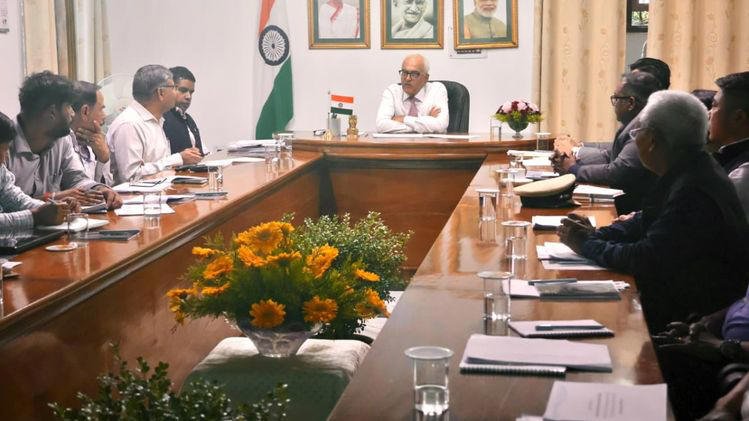
Nagaland Governor Om Prakash Mathur recently visited key sections of the Kohima–Dimapur highway to review ongoing construction and urge timely completion. The highway connects the state capital with Dimapur, the commercial hub, and authorities consider its completion crucial for economic development, safety, and smoother transport. The governor’s inspection emphasized accountability, quality, and speed in execution.
Read More: Kaziranga first Grassland Bird Survey records 43 species
Detailed inspection highlights
During his visit, the governor toured multiple stretches of the highway. He observed construction progress, including newly built bridges, retaining walls, and slope stabilization measures. Moreover, officials briefed him on current milestones, pending tasks, and future plans.
Governor Mathur highlighted the importance of completing the highway on schedule. He noted that delays not only inconvenience commuters but also affect trade, tourism, and essential services. Therefore, authorities must maintain consistent work schedules and coordinate closely with contractors.
Strategic significance of the highway
The Kohima–Dimapur highway plays a vital role in Nagaland’s infrastructure network. In addition to reducing travel time, it facilitates the transport of goods, improves accessibility to remote areas, and enhances emergency response. Furthermore, the highway supports tourism by connecting visitors to scenic destinations in the region.
Officials explained that the highway will boost trade between Kohima and Dimapur, benefiting businesses and daily commuters. Consequently, completing this project efficiently is essential for long-term economic growth and regional integration.
Enhancing safety measures
Safety remained a key focus during the governor’s inspection. Authorities have installed signage, street lighting, and proper drainage systems along the highway. Additionally, bridges and embankments are being strengthened to withstand landslides and heavy rainfall.
The governor stressed that combining construction with safety measures is non-negotiable. In particular, hilly stretches require careful monitoring to prevent accidents. Authorities assured him that engineers and safety teams regularly inspect these critical sections.
Timely completion and progress monitoring
Governor Mathur urged officials to monitor the project rigorously. He recommended setting clear deadlines, enhancing coordination, and addressing bottlenecks swiftly. Furthermore, he encouraged the use of modern project management tools to track progress and report transparently.
Authorities responded positively, stating that all resources, including manpower, machinery, and materials, are being allocated efficiently. They assured the governor that they aim to meet the deadlines without compromising quality.
Benefits for local communities
The highway’s completion will bring significant advantages for local residents. People living along the route will enjoy better access to healthcare, education, and markets. Moreover, farmers and traders will benefit from faster, safer transportation of goods.
Additionally, commuters will save time and reduce travel costs, thereby improving overall productivity. The governor highlighted that infrastructure development directly contributes to improving the quality of life for citizens.
Environmental considerations
Governor Mathur also reviewed measures to protect the environment during construction. Authorities are minimizing deforestation, protecting water bodies, and implementing slope stabilization. Reforestation plans and proper soil management are underway to maintain ecological balance.
He emphasized that development must not come at the expense of environmental degradation. Therefore, combining infrastructure progress with sustainable practices remains a priority for the state government.
Community and stakeholder engagement
The governor stressed the importance of collaboration among all stakeholders, including contractors, local communities, and government agencies. Officials confirmed that regular consultations and meetings are ongoing to address issues like logistics, terrain challenges, and weather-related delays.
Furthermore, engaging with the local population helps create awareness and fosters cooperation, which in turn reduces resistance and accelerates work. Governor Mathur encouraged authorities to continue transparent communication throughout the project.
Long-term development impact
The Kohima–Dimapur highway’s progress is expected to have lasting benefits. Improved connectivity will encourage trade, tourism, and investment. Additionally, enhanced transportation infrastructure will facilitate quicker delivery of goods, services, and emergency aid.
The highway also strengthens the state’s strategic position by linking major commercial and administrative centers. As a result, its timely completion is critical for both economic and social development in Nagaland.
Encouraging sustained progress
During the visit, the governor appreciated the work completed so far and encouraged officials to maintain momentum. He suggested that regular inspections, timely troubleshooting, and strict adherence to safety protocols would ensure the highway meets all expected standards.
Officials pledged to continue working diligently and promised updates on progress in the coming months. Governor Mathur emphasized that accountability, efficiency, and proactive planning are key to achieving timely completion.
The review of the Kohima–Dimapur highway progress by Governor Om Prakash Mathur underscores Nagaland’s focus on infrastructure, connectivity, and public welfare. With timely completion, the highway will not only reduce travel time but also strengthen economic activity, tourism, and social cohesion.
By combining quality construction, safety measures, environmental safeguards, and stakeholder cooperation, Nagaland is setting a benchmark for highway projects in the Northeast. The Kohima–Dimapur highway stands poised to become a model of development that balances efficiency, sustainability, and community benefit.
Read More: CRPF 112 battalion cleanliness drive unites Kangpokpi community