


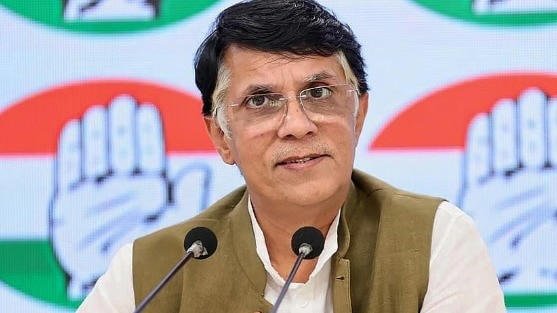
Himanta Sarma defamation row has escalated after Pawan Khera launched a sharp attack on Himanta Biswa Sarma, calling him a “constitutional cowboy” during an ongoing political dispute. The remarks have intensified tensions between the ruling party and the opposition in Assam.
The controversy stems from allegations and counter-allegations that have now taken a legal turn. Both sides have accused each other of defamation, leading to heightened political rhetoric. Therefore, the issue has gained significant public and media attention.
Moreover, the exchange reflects broader political differences between the two leaders. As a result, the dispute has become a focal point in Assam’s political landscape.
Read More: Mamata Banerjee Slams BJP, Says Bengal Will Not Be Run from Delhi
Pawan Khera’s sharp criticism
The Himanta Sarma defamation row gained momentum when Pawan Khera made strong remarks against Himanta Biswa Sarma. He accused the Chief Minister of misusing constitutional authority and acting beyond his mandate.
According to Khera, such actions undermine democratic principles. Therefore, he used the term “constitutional cowboy” to describe what he called an aggressive and unchecked approach to governance.
In addition, he questioned the motives behind the alleged actions that triggered the defamation case. He argued that political power should not be used to target opponents.
Furthermore, Khera emphasized the importance of accountability. Public officials, he said, must adhere to constitutional norms. As a result, his remarks have sparked debate among political observers.
Response from Himanta Biswa Sarma
Responding to the Himanta Sarma defamation row, Himanta Biswa Sarma rejected the allegations made by Pawan Khera. He defended his actions and stated that they were within the framework of the law.
The Chief Minister also accused the opposition of making baseless claims. According to him, such statements are politically motivated and intended to create controversy. Therefore, he has taken legal steps to address the issue.
In addition, Sarma emphasized that defamation laws exist to protect individuals from false accusations. He stated that he will pursue the matter through legal channels.
Moreover, he highlighted his government’s focus on development and governance. He argued that political attacks should not distract from these priorities.
Legal angle of the defamation row
The Himanta Sarma defamation row has now moved into the legal domain. Both sides have indicated their willingness to pursue the matter in court.
Defamation cases involve complex legal considerations. They require proving that statements made are false and have caused harm to reputation. Therefore, the outcome will depend on evidence and legal arguments.
Legal experts note that such cases can take time to resolve. However, they also highlight the importance of judicial processes in addressing disputes. As a result, the courts will play a crucial role.
Furthermore, the case raises questions about the limits of political speech. Balancing freedom of expression with accountability remains a key issue. Consequently, the case may set important precedents.
Political implications in Assam
The Himanta Sarma defamation row has significant political implications in Assam. It reflects the ongoing rivalry between the ruling party and the opposition.
Political analysts believe that such controversies can influence public perception. While some may view the remarks as strong criticism, others may see them as excessive. Therefore, the impact on voters remains uncertain.
In addition, the row has sparked discussions within political circles. Leaders from various parties have expressed their views on the issue. As a result, it has become a topic of wider debate.
Moreover, the controversy may affect future political strategies. Both sides are likely to use the issue to mobilize support. Consequently, it could shape upcoming political narratives.
Debate over political language and accountability
The Himanta Sarma defamation row has also triggered a broader debate on political language. The use of strong terms like “constitutional cowboy” has raised questions about the tone of political discourse.
Some observers argue that sharp criticism is part of democratic debate. It allows leaders to hold each other accountable. However, others believe that such language can escalate tensions unnecessarily.
Pawan Khera defended his remarks as a reflection of his concerns. Meanwhile, Himanta Biswa Sarma called for responsible communication.
Therefore, the issue highlights the need for balance in political expression. Respectful dialogue can contribute to constructive discussions. At the same time, accountability must be maintained.
Public reaction and media coverage
The Himanta Sarma defamation row has received extensive media coverage. News platforms and social media have amplified the debate, bringing it to a wider audience.
Public reactions have been mixed. Some people support the criticism, viewing it as necessary. Others believe that the focus should remain on governance and development.
Moreover, civil society groups have called for restraint. They emphasize the importance of maintaining decorum in public discourse. As a result, the issue continues to generate discussion.
The role of media in shaping perceptions is also significant. By highlighting different perspectives, it influences public opinion. Therefore, balanced reporting becomes essential.
Conclusion
The Himanta Sarma defamation row underscores the complexities of political discourse in Assam. The exchange between Pawan Khera and Himanta Biswa Sarma reflects deeper political differences.
As the matter moves through legal channels, its outcome will have implications for both leaders. It may also influence broader discussions on accountability and free speech.
In conclusion, the controversy highlights the importance of balancing criticism with responsibility. By maintaining constructive dialogue, political leaders can contribute to a healthier democratic environment.
Read More: Tripura Assembly Special Session on Women’s Reservation