


Introduction
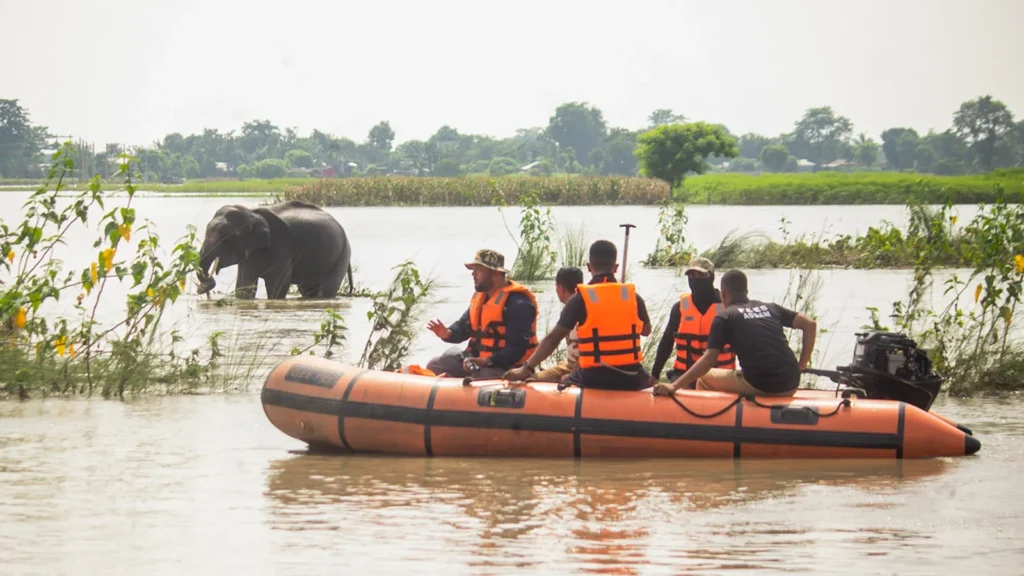
The Kaziranga anti poaching patrols have intensified as anti-poaching task forces increased boat patrols inside the national park during ongoing monsoon floods. Rising water levels often force wildlife to move toward higher ground, creating opportunities for illegal hunting and wildlife crime. In response, forest officials deployed additional patrol teams across vulnerable waterways and flood-affected zones. Meanwhile, authorities continue coordinating with law enforcement agencies to strengthen wildlife protection and ensure continuous monitoring throughout the flood season.
Blinkit Blocked In Meghalaya Licensing Row
Assam Government Deploys Full Administrative Response as Flood Situation Worsens in Dhemaji
Boat Patrols Increase Across Flooded Zones
The Kaziranga anti poaching patrols expanded after forest authorities deployed additional boats to monitor rivers, wetlands, and inundated grasslands inside the protected area. Consequently, patrol teams increased their presence in locations where floodwaters have altered wildlife movement. Officers also conducted regular surveillance along strategic waterways to deter illegal entry into the park.
Meanwhile, forest personnel maintained constant communication with field units to respond quickly to suspicious activity. They also inspected vulnerable areas that poachers could potentially access during floods. Furthermore, officials reviewed patrol routes daily to improve operational coverage as water levels continued changing.
Authorities stated that the enhanced patrols form part of routine wildlife protection measures during the monsoon season.
Authorities Strengthen Wildlife Protection
The Kaziranga anti poaching patrols prompted forest officials to enhance coordination with Assam Police and other enforcement agencies. Officers shared intelligence, monitored sensitive locations, and maintained rapid response teams to address any security concerns. At the same time, field staff continued tracking wildlife movement across flood-affected habitats.
Furthermore, officials encouraged nearby communities to report suspicious activities through official channels. They also emphasized that community cooperation plays an important role in preventing wildlife crimes during natural disasters.
Continuous surveillance remains essential because floods create changing conditions throughout the protected landscape.
Flood Season Raises Conservation Challenges
The Kaziranga anti poaching patrols highlight the unique conservation challenges that emerge during the annual monsoon. Floodwaters frequently displace animals, increase their movement across park boundaries, and require authorities to adapt protection strategies. In addition, forest personnel regularly assess water levels and adjust patrol schedules to match evolving conditions.
Meanwhile, wildlife officials continue monitoring animal safety while ensuring anti-poaching operations remain effective. They also coordinate rescue efforts whenever animals become stranded or enter nearby human settlements.
Officials emphasized that proactive monitoring supports both wildlife conservation and public safety.
Continuous Monitoring Remains Essential
The Kaziranga anti poaching patrols demonstrate the importance of sustained vigilance during periods of severe flooding. Therefore, forest authorities continue strengthening surveillance, improving coordination, and deploying additional resources across sensitive areas of the national park.
Moreover, officials remain committed to protecting wildlife through intelligence-based patrolling and rapid enforcement measures. Continued cooperation among forest departments, security agencies, and local communities will remain vital for safeguarding Kaziranga’s biodiversity throughout the monsoon season.
Conclusion
The Kaziranga anti poaching patrols reflect the forest department’s proactive response to increased risks during the flood season. By expanding boat patrols, strengthening surveillance, and coordinating with enforcement agencies, authorities aim to deter poaching while protecting vulnerable wildlife. Meanwhile, continuous monitoring, timely intervention, and community support will remain essential for preserving the ecological integrity of the protected area during the ongoing monsoon.
FAQs
1. Why have patrols increased in Kaziranga?
Forest authorities increased patrols to prevent poaching during widespread monsoon flooding.
2. Why do floods increase poaching risks?
Floods often force wild animals into more accessible areas, making them vulnerable to illegal hunting.
3. What are the Kaziranga anti poaching patrols?
The Kaziranga anti poaching patrols refer to enhanced boat-based surveillance and enforcement activities conducted during the monsoon season.
4. Which agencies support the patrol operations?
Forest officials coordinate with law enforcement agencies and local authorities during the patrols.
5. How do patrol teams monitor the park?
They use boats, field surveillance, intelligence inputs, and regular inspections of vulnerable locations.
6. What role do local communities play?
Residents help by reporting suspicious activities and supporting wildlife conservation efforts.