


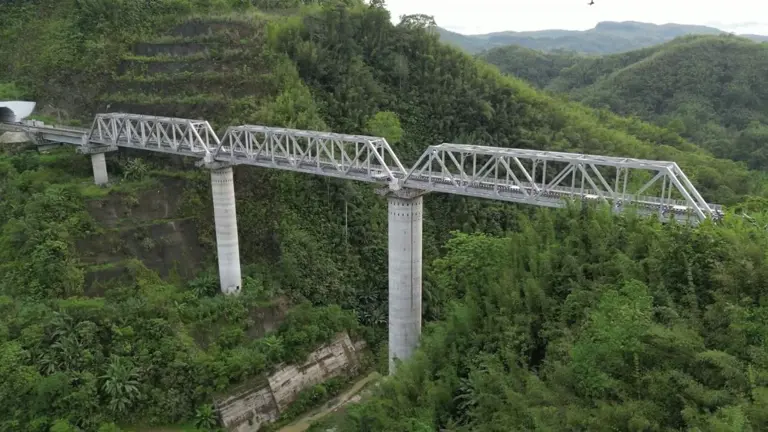
The long wait for Mizoram to be connected with the Indian railway network has finally ended. After 78 years of Independence, railways reach Mizoram, marking a turning point for the state’s connectivity, economy, and integration with the rest of the country. This development has not only fulfilled a long-pending dream of the people but also opened new opportunities for trade, travel, and tourism.
Read More: India’s First and Largest Bio-Refinery in Assam’s Golaghat
Decades of isolation broken
Mizoram, nestled in the hills of the Northeast, has faced challenges of connectivity since Independence. While road transport improved gradually, the absence of a railway line left the state isolated from the national mainstream. Farmers, traders, and industries relied heavily on road transport, which was both costly and time-consuming. With railways reaching Mizoram, the state now has a direct link that will reduce travel time and improve access to markets across India.
Chief Minister Lalduhoma described the achievement as “historic,” emphasizing that the project would transform Mizoram’s economy and enhance opportunities for its people.
How the project came alive
The project, taken up under the Bairabi-Sairang railway line, had been in planning for years. The Indian Railways finally completed a 51.38-kilometer stretch that connects Bairabi, near the Assam border, to Sairang, close to Aizawl, the state capital. Officials highlighted that the track passes through difficult terrain, requiring the construction of tunnels and bridges.
Engineers worked relentlessly to overcome challenges, including landslides, tough soil conditions, and heavy rains. Despite these hurdles, the project was completed, signaling the determination of both the Centre and the state government to enhance Mizoram’s infrastructure.
Economic opportunities ahead
The arrival of the railway in Mizoram promises a big boost to trade. Farmers who grow ginger, turmeric, orange, and other crops can now send their produce across the country at lower transport costs. Traders in Aizawl and surrounding areas will benefit from cheaper goods arriving via rail instead of trucks.
Tourism is another sector that will thrive. Mizoram’s scenic hills, cultural richness, and eco-tourism sites could attract more visitors once railway connectivity makes travel easier and more affordable. This development is expected to generate jobs, improve livelihoods, and create opportunities for small businesses.
Northeast’s growing rail map
The milestone also reflects India’s larger effort to strengthen connectivity in the Northeast. In recent years, the government has pushed for rail projects in Manipur, Nagaland, Arunachal Pradesh, and Meghalaya. Mizoram, one of the last states to be connected, now becomes part of this expanding network.
Union Railway Minister Ashwini Vaishnaw noted that connecting Mizoram is not just about transport but also about strengthening national integration. He added that improved connectivity would also help in strategic and security terms, given Mizoram’s proximity to Myanmar and Bangladesh.
Challenges to address
While the achievement is remarkable, challenges remain. The current railway line ends at Sairang, about 20 kilometers from Aizawl. Extending the track to the capital is still under discussion. Moreover, the hilly terrain means maintenance costs will be high. Authorities must also ensure safety, especially during monsoon seasons, when landslides and flooding pose risks.
Environmental concerns are also significant. Large-scale construction in fragile hilly areas can impact forests and biodiversity. Experts stress the need for eco-friendly practices to balance development with conservation.
People’s reaction and hopes
The people of Mizoram welcomed the railway with excitement and optimism. Local traders believe it will lower prices of essential commodities. Farmers expect better profits for their produce, while young people see new opportunities for employment. Social groups and community leaders have hailed the railway as a step toward bringing Mizoram closer to the rest of India.
For many, it is not just about travel but also about recognition. The arrival of the railway after 78 years of Independence symbolizes that the state is no longer left behind in the march toward progress.
Looking to the future
The success of the project has raised expectations for further expansion. Extending the line beyond Sairang and exploring international connectivity with Myanmar in the future are already topics of discussion. With proper planning, the railway could position Mizoram as a gateway for trade with Southeast Asia, in line with India’s Act East Policy.
As the train whistle echoed through Mizoram for the first time in history, it carried with it the hopes of better days. Railways reach Mizoram, not just with steel tracks and trains, but with dreams of prosperity, integration, and growth for generations to come.
Read More: Heavy rain paralyses life in Guwahati, waterlogging chaos