


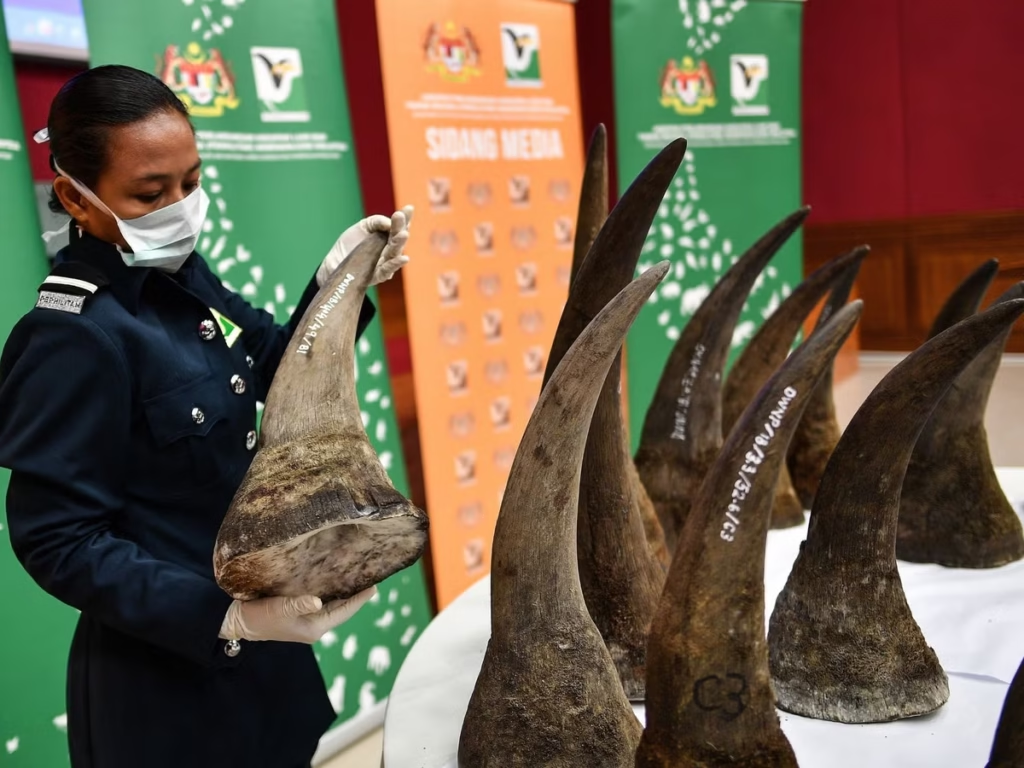
Rhino Horn Seizure Reveals a suspected interstate wildlife trafficking network after a major multi-agency crackdown in Hollongi resulted in the arrest of four individuals and the recovery of a rhino horn reportedly valued at nearly ₹1.2 crore. According to officials, preliminary investigation findings indicate that the smuggling operation may have used adjoining transit routes connected through Assam to move illegal wildlife products across regional corridors.
Meanwhile, the operation has intensified security concerns across border forest zones and protected wildlife areas. Consequently, forest departments, law enforcement agencies, and wildlife crime units have increased monitoring activities to prevent further illegal trafficking attempts linked to endangered species.
Two Killed in Bagdogra Elephant Attack on Highway
Jamugurihat Double Murder Sparks Public Outrage
Multi-Agency Operation Conducted In Hollongi
According to officials, forest authorities, police personnel, and specialized enforcement teams jointly carried out the wildlife seizure operation in Hollongi. Investigators reportedly acted on intelligence inputs about suspected wildlife trafficking activities moving through the region.
During the operation, enforcement teams intercepted the suspects and recovered a rhino horn believed to be linked to illegal poaching activities. Authorities also arrested four individuals for allegedly possessing and transporting protected wildlife material.
Officials estimated the black-market value of the seized rhino horn at nearly ₹1.2 crore. As a result, the case has attracted major attention from wildlife crime investigators and conservation agencies.
Experts noted that rhino horn trafficking remains one of South Asia’s most serious wildlife crimes because of strong international black-market demand.
Investigation Points Toward Assam Transit Routes
The Rhino Horn Seizure Reveals possible smuggling links connected to transit routes passing through Assam. Investigators believe traffickers may have used regional transport corridors and border routes to move illegal wildlife products across multiple states.
In addition, authorities are examining communication records, travel histories, and suspected criminal networks linked to the arrested individuals. Consequently, law enforcement agencies have expanded intelligence-sharing operations with neighboring regions.
Wildlife crime experts explained that Assam often becomes a key transit zone in trafficking investigations because of its connectivity with forest regions and interstate transport routes. Therefore, enforcement agencies have increased surveillance across sensitive corridors after the seizure.
Furthermore, investigators suspect organized smuggling groups may have broader operational links beyond the immediate region. However, officials have not yet disclosed the full scope of the investigation.
Border Forest Reserves Placed on Alert
The Rhino Horn Seizure Reveals growing risks for protected forest areas and wildlife reserves located near interstate transit corridors. Following the crackdown, forest officials strengthened patrolling and monitoring activities in vulnerable border regions.
Meanwhile, anti-poaching units and wildlife enforcement teams intensified inspections near sensitive forest zones to prevent further illegal movement of wildlife products. Authorities may also continue intelligence-based operations across neighboring areas linked to the suspected trafficking route.
Officials stressed that rhino poaching and wildlife smuggling continue to threaten endangered species because traffickers target international illegal trade markets. As a result, forest departments are coordinating closely with national wildlife crime agencies and local police units.
At the same time, environmental activists called for stronger cross-border coordination and faster response systems to combat organized wildlife trafficking networks.
Rhino Trafficking Remains a Serious Threat
Conservation experts warned that rhino horn trafficking continues to endanger rhinoceros populations across India and neighboring countries. Illegal wildlife trade networks often use sophisticated smuggling methods, covert transportation systems, and organized criminal groups.
Moreover, experts explained that international black-market demand for rhino horn continues to drive poaching activities targeting protected species. Therefore, wildlife enforcement agencies frequently prioritize intelligence-led operations to intercept traffickers before they move products out of regional transit zones.
Environmental organizations also urged authorities to impose stricter penalties and adopt advanced technological monitoring systems to improve wildlife protection efforts. Several groups emphasized the importance of community participation in reporting suspicious activities near forest reserves.
Additionally, analysts stated that the latest seizure highlights the urgent need for coordinated regional enforcement strategies involving multiple states and agencies.
Arrested Suspects Face Wildlife Crime Charges
Officials confirmed that investigators are questioning all four arrested individuals under wildlife protection and anti-smuggling laws. Authorities are also trying to determine whether the suspects directly participated in poaching or acted as transport intermediaries within a larger trafficking network.
Meanwhile, forensic examination and verification procedures involving the seized rhino horn are continuing as part of the investigation. Investigators are also attempting to trace the origin and intended destination of the contraband item.
Legal experts explained that wildlife trafficking operations often involve multiple layers, including poachers, transport handlers, middlemen, and cross-border buyers. Therefore, authorities may continue investigating wider network connections after the initial arrests.
Officials also stated that ongoing interrogations and intelligence analysis could lead to the identification of additional suspects.
Authorities Expand Anti-Smuggling Measures
The Rhino Horn Seizure Reveals increasing urgency among enforcement agencies to strengthen anti-smuggling mechanisms in wildlife-sensitive regions. Officials stated that authorities are expanding surveillance systems, interstate coordination, and intelligence operations after the latest seizure.
Furthermore, authorities stressed that protecting endangered wildlife species requires close cooperation among police departments, forest agencies, border authorities, and conservation organizations. Consequently, monitoring of high-risk transportation corridors is expected to intensify in the coming weeks.
Meanwhile, wildlife activists urged authorities to strengthen public awareness campaigns and encourage citizens to report suspicious activities near protected forest areas.
Conclusion
The Rhino Horn Seizure Reveals suspected interstate wildlife trafficking links involving routes connected through Assam after a major enforcement operation in Hollongi led to four arrests and the recovery of a rhino horn valued at nearly ₹1.2 crore. Authorities have also increased security surveillance across border forest reserves and wildlife-sensitive corridors following the crackdown.
Overall, the incident highlights the continuing threat posed by organized wildlife smuggling networks targeting endangered species across northeastern India. As investigations continue, enforcement agencies are expected to intensify anti-poaching operations and strengthen regional intelligence coordination to disrupt illegal wildlife trafficking activities.
FAQs
Where did the rhino horn seizure take place?
The wildlife seizure operation was conducted in Hollongi during a multi-agency crackdown.
How many people were arrested in the case?
Officials confirmed that four individuals were arrested during the operation.
What was recovered during the raid?
Authorities recovered a rhino horn reportedly valued at around ₹1.2 crore.
Why are Assam transit routes being investigated?
Preliminary investigations suggest the smuggling network used adjoining transit corridors connected through Assam.
Why have forest reserves been placed on alert?
Authorities increased monitoring due to concerns regarding organized wildlife trafficking activities in border regions.
Why is the Rhino Horn Seizure Reveals case significant?
The Rhino Horn Seizure Reveals investigation highlights suspected interstate smuggling networks threatening endangered wildlife species in Northeast India.