


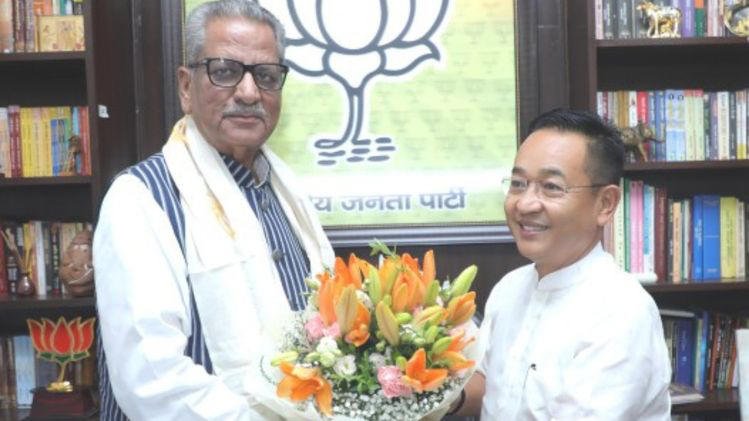
Sikkim Assembly session March 26 has been officially scheduled after Governor Om Prakash Mathur summoned a key sitting of the state legislature in Gangtok. The announcement has set the stage for an important round of legislative discussions, with several policy and governance matters expected to come under review.
Read More: Tripura Rural Livelihood Mission Targets 1.35 Lakh Lakhpati Didis by 2026–27
Governor summons key Assembly sitting
Governor Om Prakash Mathur has exercised his constitutional authority to summon the Sikkim Legislative Assembly for a session on March 26. The sitting will take place in Gangtok, the state capital, where lawmakers will gather to deliberate on pressing issues.
The Governor’s decision comes at a time when the state government is focusing on policy implementation and administrative efficiency. Therefore, the upcoming session holds significant importance for both the ruling party and the opposition.
Moreover, officials have indicated that the session will include discussions on legislative proposals, budgetary considerations, and governance priorities. As a result, it is expected to play a crucial role in shaping Sikkim’s policy direction.
Focus on governance and legislative agenda
The Sikkim Assembly session March 26 is likely to focus on a wide range of governance issues. Lawmakers are expected to debate policies related to infrastructure development, tourism, and environmental sustainability.
In addition, the government may introduce new bills or amendments aimed at improving administrative processes. These measures could address key sectors such as healthcare, education, and rural development.
At the same time, the session will provide an opportunity for elected representatives to raise constituency-specific concerns. This platform allows for meaningful discussions and ensures that local issues receive attention at the state level.
Political significance of the session
The upcoming Assembly session carries political significance as well. It offers the ruling government a chance to highlight its achievements and outline future plans. Leaders are likely to present updates on ongoing projects and initiatives.
Meanwhile, the opposition is expected to play an active role by questioning policies and holding the government accountable. This dynamic often leads to robust debates and encourages transparency in governance.
Furthermore, the session will reflect the overall political climate in Sikkim. Observers will closely monitor interactions between the ruling party and opposition members to assess the state’s political landscape.
Gangtok prepares for legislative proceedings
Gangtok is preparing to host the Assembly session, with arrangements underway to ensure smooth proceedings. Security measures have been strengthened around the Assembly परिसर, and administrative teams are coordinating logistics.
The city often witnesses increased activity during Assembly sessions, as officials, legislators, and media personnel gather for the proceedings. This creates a vibrant political atmosphere in the state capital.
Additionally, local authorities are focusing on maintaining order and facilitating movement around key areas. These preparations aim to ensure that the session proceeds without disruptions.
Key issues likely to dominate discussions
Several important issues are expected to dominate the Sikkim Assembly session March 26. Development projects, particularly those related to infrastructure and connectivity, are likely to be a major focus.
Environmental concerns may also feature prominently in discussions. Sikkim’s unique ecological landscape requires careful planning and sustainable policies. Lawmakers are expected to address these challenges during the session.
Moreover, economic growth and employment generation will remain key topics. The government may present strategies to boost investment and create job opportunities for the state’s youth.
At the same time, social welfare schemes and public service delivery could come under review. These discussions aim to improve the effectiveness of government programmes.
Role of Governor in legislative process
Governor Om Prakash Mathur plays a vital role in the legislative process. By summoning the Assembly, he ensures that constitutional procedures are followed and that governance continues smoothly.
The Governor’s office acts as a link between the state government and the broader constitutional framework. Therefore, his decision to convene the session reflects the importance of timely legislative engagement.
In addition, the Governor may address the Assembly, outlining the government’s priorities and vision. Such addresses often set the tone for the session and guide subsequent discussions.
Expectations from the session
The Sikkim Assembly session March 26 is expected to deliver meaningful outcomes. Lawmakers will aim to pass important legislation and resolve key issues affecting the state.
The session also provides an opportunity to strengthen democratic processes. Open debates and discussions contribute to better decision-making and enhance accountability.
Furthermore, the outcomes of the session could influence future policy directions. Decisions taken during this period may shape development initiatives and governance strategies in the coming months.
Conclusion
Sikkim Assembly session March 26 marks an important event in the state’s political calendar. Governor Om Prakash Mathur’s decision to summon the sitting in Gangtok has paved the way for crucial legislative discussions.
With a focus on governance, development, and accountability, the session is expected to address key challenges and opportunities. Both the government and opposition will play significant roles in shaping the proceedings.
As preparations continue in Gangtok, all eyes are on the Assembly session. Its outcomes will not only impact current policies but also set the course for Sikkim’s future development and governance.
Read More: AIUDF Releases Third Candidate List for Assam Elections 2026