


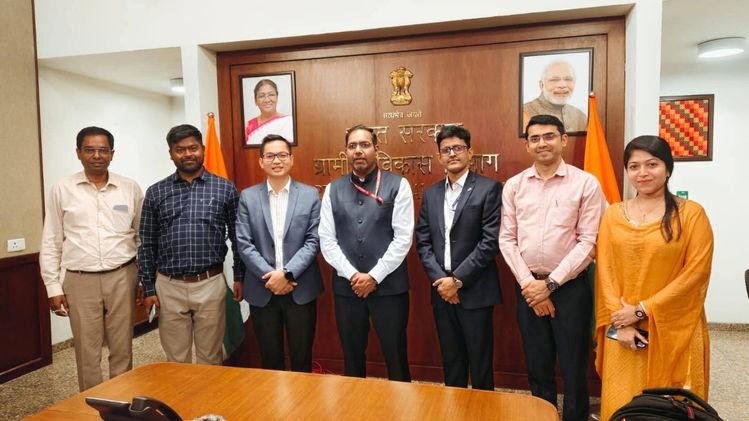
The Tripura Rural Livelihood Mission plan has set an ambitious target to transform the socio-economic landscape of the state by aiming to create 1.35 lakh “Lakhpati Didis” by the financial year 2026–27. The initiative focuses on empowering women through sustainable livelihood opportunities, skill development, and financial inclusion.
Officials announced that the plan will build on existing Self-Help Group (SHG) networks while introducing new income-generating activities. As a result, thousands of rural women are expected to achieve an annual income of at least Rs 1 lakh, thereby improving their quality of life.
Read More: Tripura Assembly Session Cut Short, Ends on March 23
Focus on Women Empowerment Through SHGs
At the core of the Tripura Rural Livelihood Mission plan lies the strengthening of Self-Help Groups. These SHGs have already played a crucial role in mobilizing rural women and providing them with financial support.
Under the new roadmap, the government aims to expand SHG coverage across villages and enhance their operational capacity. Training programs, access to credit, and market linkages will be provided to ensure sustainable income generation.
Moreover, the initiative emphasizes capacity building, enabling women to manage enterprises effectively. Therefore, SHGs will not only act as financial units but also as platforms for entrepreneurship and leadership.
Creating 1.35 Lakh Lakhpati Didis
The concept of “Lakhpati Didis” refers to women earning an annual income of Rs 1 lakh or more through various livelihood activities. The mission aims to achieve this target by diversifying income sources and promoting micro-enterprises.
Activities such as agriculture, animal husbandry, handicrafts, food processing, and small-scale businesses will be encouraged. Additionally, the government plans to provide technical support and training to help women scale their operations.
This targeted approach is expected to significantly boost household incomes in rural areas. Consequently, it will contribute to reducing poverty and enhancing economic stability.
Strengthening Market Linkages and Infrastructure
One of the key aspects of the plan is improving market access for SHG products. The government intends to establish better supply chains and connect rural producers with larger markets.
Efforts will be made to promote branding and packaging of products to increase their competitiveness. Furthermore, digital platforms will be utilized to expand market reach and facilitate direct sales.
Infrastructure development will also play a crucial role. Storage facilities, transportation networks, and processing units are expected to be strengthened to support the growth of rural enterprises.
Financial Inclusion and Credit Support
Access to financial resources remains a critical factor in the success of livelihood initiatives. Therefore, the Tripura Rural Livelihood Mission will focus on enhancing credit availability for SHGs and individual entrepreneurs.
Banks and financial institutions will be encouraged to provide loans at favorable terms. Additionally, government support in the form of subsidies and grants will help reduce financial barriers.
The plan also includes initiatives to improve financial literacy among rural women. This will enable them to make informed decisions and manage their finances effectively.
Role of Technology and Skill Development
The integration of technology is expected to play a vital role in achieving the mission’s objectives. Digital tools will be used for training, monitoring, and market access.
Skill development programs will be tailored to meet the needs of various sectors. Women will receive training in modern agricultural techniques, business management, and digital literacy.
As a result, they will be better equipped to adapt to changing market demands and enhance productivity. This focus on skill enhancement will ensure long-term sustainability of income-generating activities.
Government’s Vision for Inclusive Growth
The Tripura government has emphasized that the initiative aligns with its broader vision of inclusive growth and rural development. By empowering women, the mission aims to create a ripple effect that benefits entire communities.
Officials believe that increasing women’s income will lead to improved education, healthcare, and living standards for families. Therefore, the program is not just an economic initiative but also a social transformation effort.
The government has also highlighted its commitment to providing continuous support and monitoring progress to ensure the successful implementation of the plan.
Challenges and Way Forward
While the plan is ambitious, its success will depend on effective implementation and coordination among various stakeholders. Challenges such as market fluctuations, access to resources, and capacity building need to be addressed.
However, with a structured approach and strong institutional support, these challenges can be overcome. The government’s focus on training, infrastructure, and financial inclusion provides a solid foundation for success.
Going forward, regular monitoring and feedback mechanisms will be essential to track progress and make necessary adjustments.
Conclusion
The Tripura Rural Livelihood Mission plan represents a significant step toward empowering rural women and boosting the state’s economy. By targeting 1.35 lakh Lakhpati Didis by 2026–27, the initiative aims to create sustainable livelihood opportunities and promote financial independence.
As the plan unfolds, its impact will be closely watched. If implemented effectively, it has the potential to transform rural communities and set a benchmark for similar initiatives across the country.
Read More: India Prepares for Census 2027 in Two Phases Amid Manipur Protests