


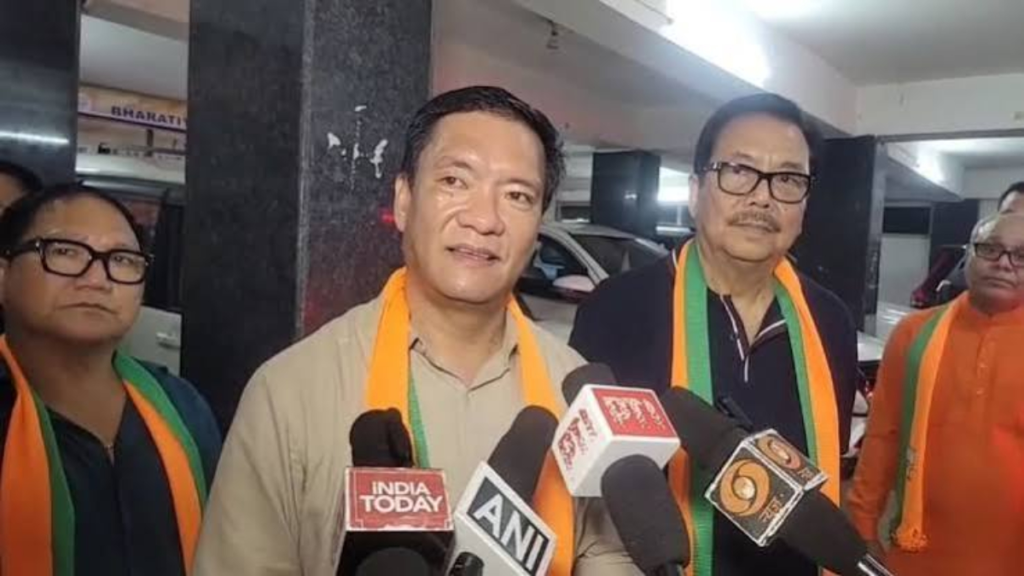
The SUMP row has triggered a strong response from Arunachal Pradesh Chief Minister Pema Khandu, who said people in the Siang region are “innocent” and have been misguided by groups opposing the proposed project.
Khandu’s remarks come amid concerns and opposition surrounding the Siang Upper Multipurpose Project, or SUMP. The proposed hydropower project has remained a sensitive issue in the Siang belt, where local communities have raised concerns about its possible impact.
SUMP row puts Siang concerns in focus
The SUMP row has brought renewed attention to the debate over development and local concerns in Arunachal Pradesh. The Siang region has strong social and cultural ties to the river, making any large project involving the river particularly sensitive.
Khandu, however, maintained that local people should not be viewed as opponents of development. Instead, he described them as innocent and suggested that outside groups opposing the project had influenced public opinion.
His remarks underline the government’s position that misinformation or external influence may be shaping resistance to SUMP.
SUMP row highlights project debate
The SUMP row also reflects a wider debate over major infrastructure projects in Arunachal Pradesh. The state has significant hydropower potential, and successive governments have promoted the sector as an important source of investment, revenue and infrastructure development.
At the same time, large dams can raise concerns over land, livelihoods, environmental impacts and community interests. Therefore, discussions around such projects often involve both development priorities and demands for greater safeguards.
The Siang project has consequently remained a closely watched issue among local communities and political groups.
Local concerns remain central to SUMP row
While defending the project’s broader development potential, the government faces the challenge of addressing concerns raised by people living in the affected region.
For communities in the Siang belt, the river is more than a source of water. It also carries economic, cultural and environmental significance. As a result, any proposal involving major changes to the river system can generate strong public reactions.
The SUMP row therefore involves questions that go beyond power generation. Local participation, rehabilitation, environmental protection and the long-term interests of affected communities remain important parts of the discussion.
SUMP row and the government’s position
Khandu’s comments indicate that the Arunachal Pradesh government wants to counter narratives that portray the project only through the concerns surrounding it. His description of Siang residents as “innocent” suggests that he sees a distinction between local communities and organisations campaigning against the project.
However, the government’s position will need to be matched by continued engagement with residents and stakeholders. Clear communication can help address concerns and reduce the scope for misunderstanding.
Moreover, transparent information about the project’s potential benefits, risks and safeguards could help communities assess the proposal on the basis of available facts.
SUMP row keeps development and consent in balance
The SUMP row is likely to remain an important issue in Arunachal Pradesh as the state weighs its hydropower ambitions against local expectations. The government’s latest remarks have again placed the focus on how public opinion is being shaped in the Siang region.
For the project to move forward with wider acceptance, meaningful dialogue with affected communities will remain essential. At the same time, concerns over environmental and social impacts will require careful consideration.
Overall, the debate surrounding SUMP shows the difficult balance between infrastructure development and community confidence. The government’s challenge now is to ensure that development plans address local concerns while keeping the interests of Siang residents at the centre of the process.
Five-Year GPS Study Tracks Wild Elephants’ Movements Across Assam