


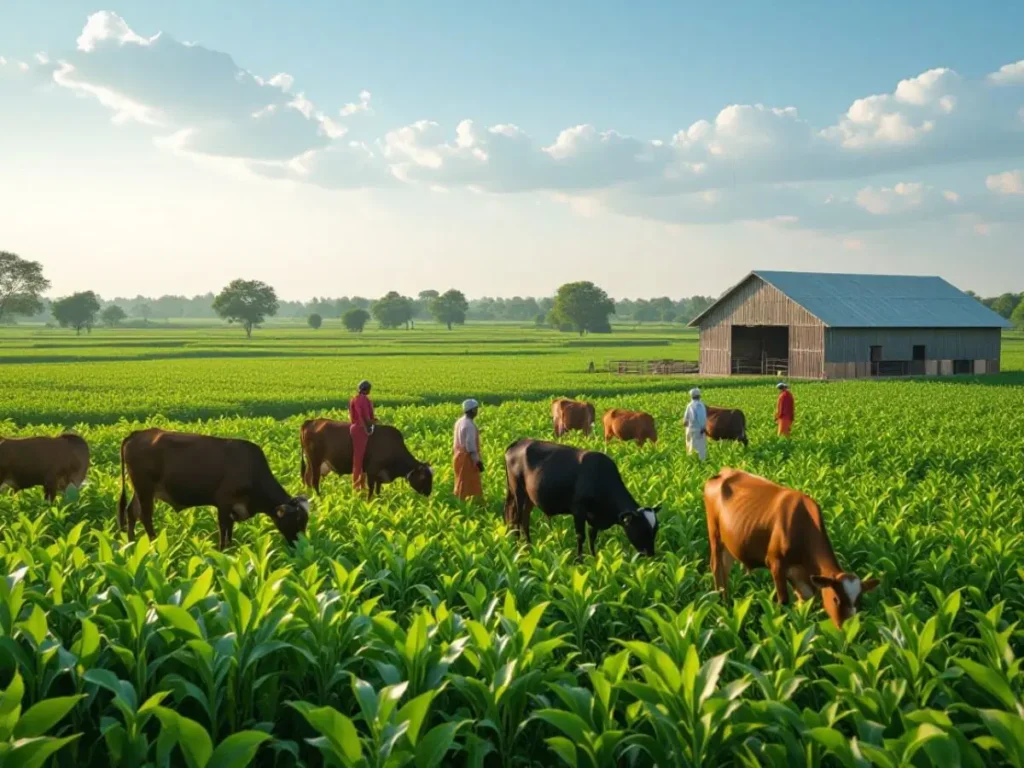
The state government has intensified rural welfare efforts as Cow Distribution Employment Scheme becomes a key development focus following a review of Tripura’s flagship initiative aimed at supporting 5,000 families through livestock-based livelihood generation. Assembly Chief Whip Kalyani Roy assessed the implementation progress of the programme, which is designed to strengthen rural income sources and promote self-employment through animal husbandry. The scheme is positioned as part of broader efforts to improve economic stability in rural households.
Agartala Hosts Free Health Camp Initiative
Tripura Sepahijala Jan Sunwai Drive Ends
Background
Livestock-based welfare programmes have long played an important role in rural development strategies across India. Such initiatives aim to provide sustainable income sources for families engaged in agriculture and allied activities.
In this context, Cow Distribution Employment Scheme reflects Tripura’s approach to strengthening rural livelihoods through asset-based support. By providing livestock to selected households, the government aims to enhance milk production, improve nutrition, and generate consistent income opportunities.
Over time, similar schemes have contributed to rural self-reliance and reduced dependency on seasonal employment.
Current Update
On 23 May, Assembly Chief Whip Kalyani Roy reviewed the implementation of the cow distribution programme targeting 5,000 beneficiary families. The review focused on distribution progress, beneficiary identification, and scheme efficiency.
The Cow Distribution Employment Scheme is being monitored to ensure timely delivery and proper utilization of resources. Officials discussed ways to improve coordination between departments and strengthen field-level execution.
Authorities emphasized that effective implementation is essential to achieving intended livelihood outcomes and ensuring long-term sustainability.
Key Details
The scheme provides cows to eligible rural families to support dairy-based income generation. It includes beneficiary selection, veterinary support, and training on livestock management.
The significance of the Cow Distribution Employment Scheme lies in its focus on creating sustainable rural employment opportunities through asset-based welfare delivery. By promoting dairy production, the programme aims to improve household income and rural economic resilience.
Experts note that such schemes require continuous veterinary support, feed management, and market linkage systems to ensure long-term success.
Impact and Public Significance
The initiative is expected to strengthen rural livelihoods by creating a more stable income source for participating families. In addition, increased access to dairy resources may improve nutritional outcomes through greater milk availability and household consumption.
From a governance perspective, Cow Distribution Employment Scheme reflects a growing focus on self-employment-driven welfare models rather than direct financial assistance alone. Consequently, the programme aims to encourage long-term economic participation and strengthen rural income generation.
Moreover, successful implementation could support local economic activity and create broader development benefits across rural communities. Therefore, effective monitoring and continued support will remain important for achieving sustainable outcomes.
What Happens Next
Authorities are expected to continue reviewing distribution progress and resolving implementation challenges through regular field monitoring. At the same time, departments may expand training programmes and strengthen beneficiary support mechanisms.
Future phases may also increase beneficiary coverage and improve veterinary and livestock support infrastructure. Additionally, officials could introduce stronger monitoring systems to track outcomes more effectively.
Ultimately, the long-term success of the Cow Distribution Employment Scheme will depend on sustained administrative support, timely execution, and consistent field-level coordination.
Conclusion
The review of Tripura’s cow distribution initiative highlights ongoing efforts to strengthen rural employment through livestock-based welfare. As implementation moves forward, Cow Distribution Employment Scheme reflects a structured approach to improving household incomes and promoting economic self-reliance.
Furthermore, the programme demonstrates a broader policy focus on sustainable livelihood creation rather than short-term assistance. The coming months will therefore play an important role in determining how effectively the initiative delivers long-term rural development outcomes.
FAQs
1. What is the Tripura cow distribution welfare scheme?
The scheme aims to distribute cows to eligible families to support livelihood generation and strengthen rural employment opportunities.
2. Who reviewed the implementation of the programme?
Assembly Chief Whip Kalyani Roy reviewed the execution and progress of the welfare initiative.
3. How many families are expected to benefit?
The programme targets distribution support for 5,000 families across the state.
4. What is the main objective of the scheme?
The initiative focuses on improving household income and encouraging sustainable rural economic activity.
5. How can beneficiary families benefit from the programme?
Families may improve income opportunities through dairy-related activities and livestock-based livelihoods.
6. What may happen in the next phase of implementation?
Authorities may continue monitoring execution, expand outreach, and strengthen beneficiary support systems.