


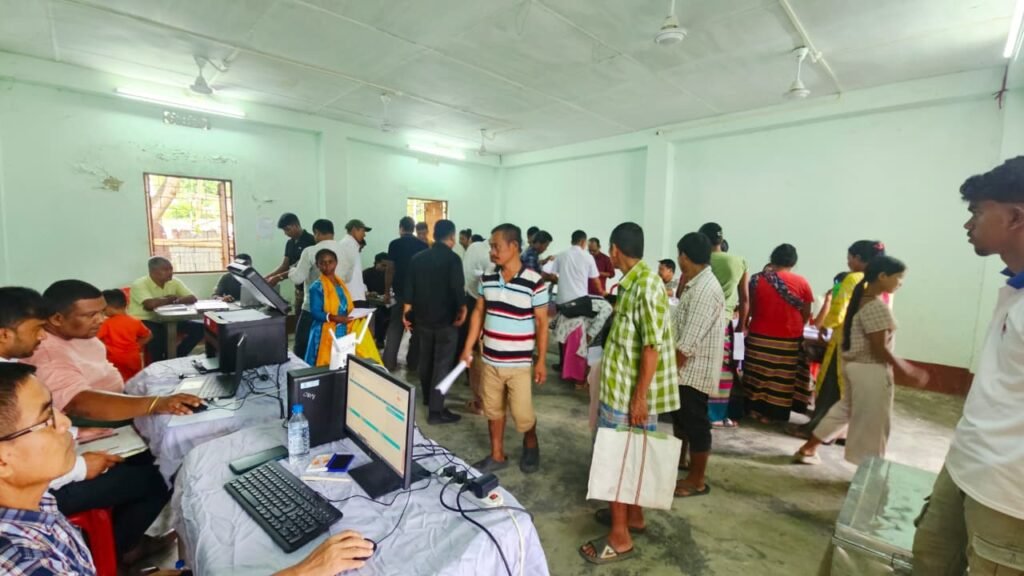
The completion of a major outreach initiative marks an important step in grassroots governance as Sepahijala Jan Sunwai Drive concludes in Tripura’s Sepahijala district under the Pradhan Mantri Jan Bhagidari Abhiyan. The targeted tribal welfare grievance camp, held on 23 May, focused on direct service delivery and resolving public complaints in remote and underserved regions. The initiative aimed to improve last-mile governance by connecting citizens directly with administrative departments and welfare schemes.
Tripura Hosts Military Civil Cooperation Seminar
Tripura Records Historic Drop in Infant Mortality Rate
Background
Public grievance redressal systems have become an essential part of governance reforms in India, especially in tribal and rural regions where access to administrative offices remains limited. Over time, these outreach programmes have helped bridge gaps between citizens and government institutions. Moreover, they have improved service accessibility and encouraged stronger community participation.
In this context, Sepahijala Jan Sunwai Drive represents a structured effort to strengthen participatory governance through direct interaction between officials and local communities. These initiatives aim to ensure that welfare schemes reach eligible beneficiaries without delays or procedural barriers. As a result, authorities increasingly promote door-to-door governance models and community-based grievance resolution mechanisms.
Furthermore, such programmes support quicker issue resolution and improve public confidence in administrative systems.
Current Update
On 23 May, authorities officially concluded the Jan Sunwai Drive in Sepahijala district after conducting targeted grievance redressal camps under the Pradhan Mantri Jan Bhagidari Abhiyan. During the programme, officials addressed multiple public service concerns and interacted directly with residents.
The Sepahijala Jan Sunwai Drive focused on resolving complaints related to welfare schemes, documentation matters, and access to government services. Additionally, administrative teams engaged with local communities to ensure timely action on pending issues.
Officials stated that the initiative strengthened coordination between citizens and local departments. Consequently, the programme helped improve trust in public service delivery.
Key Details
The drive mainly targeted remote tribal regions where residents often face challenges in reaching administrative offices. Therefore, authorities organized on-site grievance registration, beneficiary verification, and immediate processing of eligible cases.
The significance of the Sepahijala Jan Sunwai Drive lies in its emphasis on direct governance and real-time problem-solving at the community level. In addition, these outreach efforts reduce procedural delays and improve transparency in welfare delivery.
Experts also emphasize that continuous engagement remains essential for ensuring equitable access to government services in geographically isolated regions.
Impact and Public Significance
The initiative is expected to increase awareness of welfare schemes and strengthen public trust in administrative institutions. At the same time, it improves service delivery efficiency across remote tribal areas.
From a governance perspective, Sepahijala Jan Sunwai Drive demonstrates the value of participatory administration and citizen-focused implementation. Moreover, it supports better monitoring and stronger accountability at the grassroots level.
Public response generally reflects appreciation for localized grievance systems because they reduce the need for long-distance travel and make services more accessible.
What Happens Next
Authorities are expected to review information collected during the drive and identify recurring concerns that require policy-level attention. Subsequently, departments may expand similar outreach programmes to additional districts.
Future actions may include digital grievance tracking, faster service timelines, and stronger coordination among departments. Therefore, the long-term impact of the Sepahijala Jan Sunwai Drive will depend on sustained execution and continued citizen participation.
Conclusion
The completion of the outreach programme in Sepahijala highlights Tripura’s growing focus on grassroots governance. As administrative systems become more citizen-focused, Sepahijala Jan Sunwai Drive reflects a stronger push toward accessible, transparent, and responsive public service delivery. Ultimately, the initiative reinforces the importance of direct engagement in improving welfare outcomes across remote regions.
FAQs
1. What was the Tripura Sepahijala Jan Sunwai Drive?
The initiative served as a targeted public outreach and grievance redressal programme under the Pradhan Mantri Jan Bhagidari Abhiyan.
2. Where did the drive conclude?
Authorities concluded the programme in Sepahijala district of Tripura.
3. What services were provided during the drive?
Officials conducted grievance collection, public service outreach, welfare support activities, and beneficiary assistance.
4. Who benefited from the initiative?
Residents in remote and tribal areas received access to government services and direct administrative engagement.
5. Why is the Jan Sunwai programme important?
The initiative strengthens public participation and helps improve last-mile delivery of welfare schemes.
6. What may happen after the conclusion of the drive?
Departments may review feedback, process pending requests, and continue follow-up service delivery measures.