


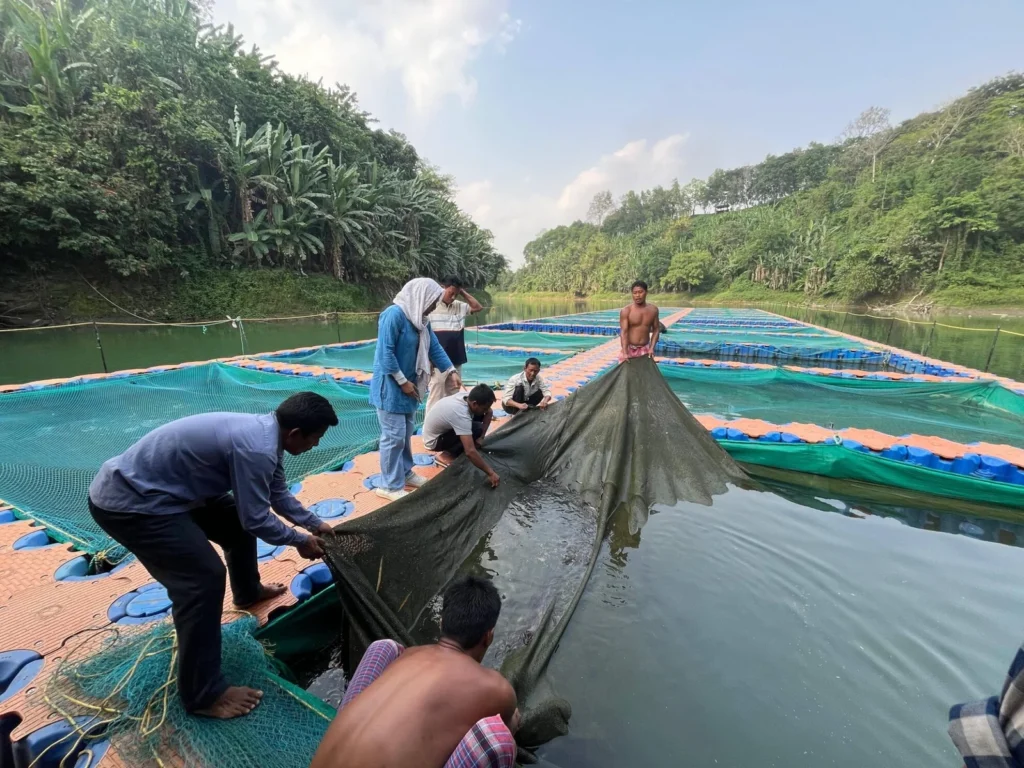
Tripura is witnessing a major push in its fisheries sector as Tata Trusts and ONGC Tripura Power Company Limited intensify efforts to promote community-based hatchery systems across rural districts. The initiative aims to improve fish seed production, strengthen scientific aquaculture practices, and support sustainable livelihoods for tribal and small-scale fish farmers. Under the programme, 14 Fibre Reinforced Plastic (FRP) hatcheries have already been established in Dhalai, Khowai, Sepahijala, and Gomati districts.
The project is being implemented by the Centre for Microfinance & Livelihood (CML) under Tata Trusts. Officials believe the initiative will reduce dependence on external fish seed suppliers while encouraging cooperative-led fisheries entrepreneurship in Tripura.
Read More: Arunachal Scientists Discover 3 New Berberis Species
Key Facts
- State: Tripura
- Organisations Involved:
- Tata Trusts
- ONGC Tripura Power Company Limited
- Centre for Microfinance & Livelihood
- Main Objective: Community-based fish seed production and sustainable aquaculture
- Total Hatcheries Installed: 14 FRP hatcheries
- Districts Covered:
- Dhalai
- Khowai
- Sepahijala
- Gomati
- Fish Species: Rohu
- Fish Spawn Produced: Nearly 1800 ml during the current cycle
- Additional Nursery Activity: 600 ml Rohu spawn stocked at Lalcharra under Manu Block
Tripura Strengthens Fisheries Sector Through Community Hatchery Programme
The fisheries sector in Tripura is receiving a significant boost through a new community hatchery initiative supported by Tata Trusts and ONGC Tripura Power Company Limited.
The programme focuses on decentralised fish seed production and aims to improve access to quality fish seed in remote rural areas of the state.
Officials stated that the initiative encourages scientific aquaculture practices while creating livelihood opportunities for local communities.
14 FRP Hatcheries Established Across Four Districts
As part of the project, the Centre for Microfinance & Livelihood (CML) under Tata Trusts has established 14 Fibre Reinforced Plastic hatcheries across four districts.
The districts include Dhalai, Khowai, Sepahijala, and Gomati.
The first operational phase started this year at South Dhumachara under the supervision of Magna Mohan Tripura.
Experts involved in the project described the hatchery network as an important step toward decentralised and community-driven fish seed production in Tripura.
Cooperative-Based Fish Seed Production Expands
With continuous technical assistance from the Centre for Microfinance & Livelihood, the Longtharai Matsaya Samabay Samiti Ltd. adopted a joint venture model with local FRP hatchery farmers.
Through this approach, the cooperative and local hatchery operators worked together to produce fish spawn and quality fish seed for nursery entrepreneurs.
During the current production cycle, the hatcheries generated nearly 1800 ml of Rohu spawn. Authorities distributed the spawn among local fish nursery entrepreneurs developed under the programme.
Officials believe the initiative will improve fingerling production capacity and increase fish availability ahead of the upcoming fish farming season.
Rohu Nursery Development Underway in Manu Block
In another development, fisheries teams stocked around 600 ml of Rohu spawn in a one-kani waterbody at Lalcharra under Manu Block.
Authorities expect the fingerlings to become ready for supply within the next two months.
The nursery activity forms part of the broader effort to strengthen local fish production systems and improve self-reliance among rural fish farmers.
Additionally, officials said scientific hatchery support would help improve fish survival rates and productivity.
Farmers Expect Better Livelihood Opportunities
Local fish farmers and cooperative members have expressed optimism regarding the project’s long-term impact on rural livelihoods.
Farmers believe easier access to quality fish seed and technical support will reduce production costs and improve fish farming output.
Moreover, the initiative is expected to reduce dependence on fish seed suppliers from outside the state, thereby strengthening the local fisheries economy.
Officials also stated that the programme could create new opportunities for rural entrepreneurship, especially among tribal communities and small-scale fish farmers.
Sustainable Aquaculture Gains Importance in Tripura
The fisheries sector plays an important role in rural livelihoods and food security across Tripura.
As demand for fish continues to rise, sustainable aquaculture practices and local hatchery systems have become increasingly important for improving productivity and reducing supply gaps.
The current initiative also aligns with broader efforts to modernise agriculture and allied sectors in Northeast India through scientific techniques and community participation.
Importance of Tripura in Northeast India’s Fisheries Sector
Tripura has significant potential for fisheries development due to its water resources, rural workforce, and growing aquaculture activities.
Therefore, initiatives promoting fish seed production, cooperative-based hatcheries, and scientific aquaculture can strengthen the state’s rural economy and improve livelihood opportunities in Northeast India.
Question and Answer Section
What is the new fisheries initiative in Tripura?
The initiative promotes community-based hatchery systems to improve fish seed production and support rural livelihoods.
Which organisations are implementing the project?
Tata Trusts, ONGC Tripura Power Company Limited, and the Centre for Microfinance & Livelihood are implementing the programme.
How many hatcheries have been established?
Authorities have set up 14 FRP hatcheries across four districts in Tripura.
Which fish species is being produced?
The project is currently focusing on Rohu fish spawn and fingerling production.
Why is the project important?
The programme aims to improve fish production, support rural entrepreneurship, and reduce dependence on outside fish seed suppliers.
Also Read: Kangpokpi Rally Supports Manipur Dy CM Nemcha Kipgen