


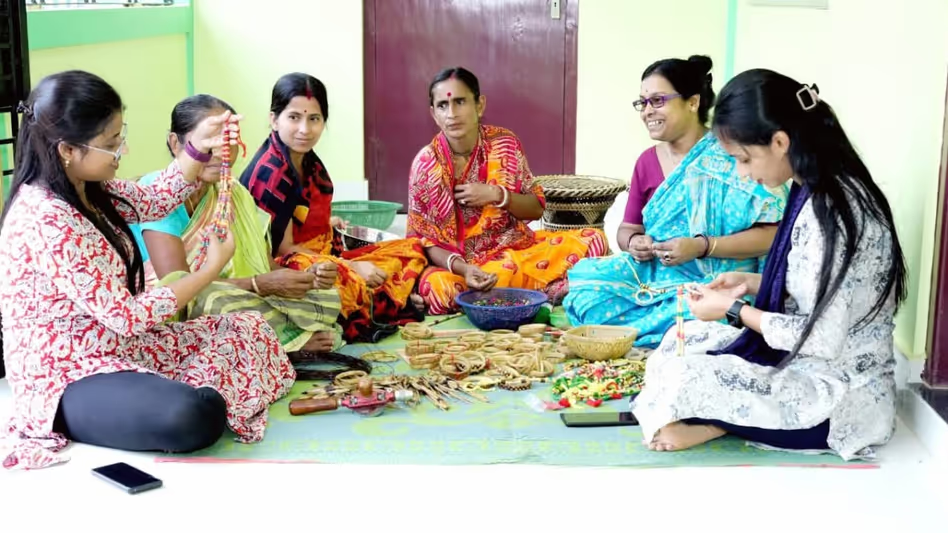
Tripura’s rural women entrepreneurs are gaining wider visibility through Self-Help Group products, livelihood enterprises and dedicated exhibition stalls. The Tripura Lakhpati Didi stalls highlight how women supported through the Tripura Rural Livelihood Mission are moving across handloom, handicrafts, agriculture, food processing and other livelihood activities. The initiative connects income generation with product promotion and market access.
The showcase comes as Tripura expands its Lakhpati Didi programme and strengthens support for women-led enterprises. Moreover, the state recently entered a three-year partnership with IIT Roorkee to modernise traditional handloom activities involving 500 women weavers across North Tripura, Unakoti and Dhalai districts.
Tripura Hosts State Consultation Panel on Technology in Governance at IT Bhavan
Tripura Lakhpati Didi Stalls Highlight Women-Led Enterprises
The Tripura Lakhpati Didi stalls provide a visible platform for women associated with Self-Help Groups to display products and explain their livelihood activities. Such exhibitions allow visitors to see how rural enterprises can move beyond traditional household production and develop into organised income-generating businesses.
The Tripura Rural Livelihood Mission works under the broader framework of the Deendayal Antyodaya Yojana-National Rural Livelihoods Mission. Its activities cover institution building, financial inclusion, livelihoods, social development and convergence with other government programmes.
Livelihood support covers both farm and non-farm activities. These include agriculture, livestock, fisheries, enterprises and other income-generating initiatives. Consequently, products displayed by SHG members can represent very different local skills and business models.
Tripura has already developed a substantial SHG network. A 2026 PIB release said the state had around 54,000 SHGs with approximately 5.40 lakh women connected to them. It also reported around 1.30 lakh Lakhpati Didis in Tripura as of June 2026.
The figures demonstrate the scale of the women-led livelihood movement in the state. At the same time, exhibition opportunities can help individual members present their products to consumers, officials and potential market partners.
Multi-Sector Crafts Expand Rural Livelihood Opportunities
The range of activities associated with Tripura’s SHGs extends well beyond handicrafts. Women participate in farm-based livelihoods, livestock activities, fisheries, food-related enterprises, handloom weaving and other micro-enterprises.
The state’s Economic Review 2024-25 recorded more than 52,000 SHGs, along with producer groups and non-farm collectives supporting livelihood expansion. It also noted substantial bank credit and community funds for women’s livelihood institutions.
Such diversification matters because rural households often depend on more than one source of income. A woman may combine farming with livestock, food production, craft work or a small enterprise. Therefore, livelihood programmes can help households build several income streams instead of depending on a single activity.
A recent example comes from Junu Bala Roy, a member of Joy Ram Self-Help Group under Natun Alo Cluster Level Federation. Her vermicompost enterprise has expanded into seed trading, vegetable cultivation and fishery. Reports said her peak-season monthly sales exceed ₹5 lakh.
Her experience illustrates the principle behind the Lakhpati Didi initiative. Rather than relying on one product, women can develop multiple activities with access to training, credit, community institutions and market opportunities.
Handloom Sector Gets Fresh Technology Push
Handloom is another important area receiving attention from TRLM. On October 5, the mission signed a three-year Memorandum of Understanding with IIT Roorkee to strengthen women-led handloom enterprises in Tripura.
The partnership will cover around 500 women weavers from North Tripura, Unakoti and Dhalai. Its five focus areas include technological intervention, knowledge transfer, branding and packaging, entrepreneurship development and modern business practices.
IIT Roorkee will support areas such as design development, quality standards, product diversification and sustainable production. This approach aims to connect traditional weaving skills with changing consumer preferences and contemporary markets.
The development is particularly relevant to exhibition stalls. Attractive products can gain attention at fairs, but sustained market growth also requires consistent quality, appropriate packaging and reliable production.
Furthermore, branding can help rural products communicate their local identity while reaching customers beyond their immediate communities. Digital tools and modern business practices can add another layer to that process.
The handloom partnership therefore complements the wider Lakhpati Didi strategy. While stalls provide a physical marketplace and promotional platform, design and enterprise support can strengthen the businesses behind those products.
Lakhpati Didi Programme Focuses on Sustainable Income
The Lakhpati Didi initiative aims to help women belonging to SHGs achieve sustainable annual income of at least ₹1 lakh. The Ministry of Rural Development defines the milestone around maintaining that income level across at least four agricultural seasons or business cycles.
The programme does not depend on one occupation. Instead, it encourages diversified livelihood activities and convergence between government departments, Panchayati Raj institutions, private-sector partners and market players.
This approach explains why exhibition platforms can be important. A successful livelihood enterprise needs customers as well as production capacity. Market exposure can help women understand demand, receive feedback and identify opportunities for improving their products.
Tripura has set ambitious targets under the initiative. The national Lakhpati Didi portal lists a target of 1.87 lakh Lakhpati Didis for Tripura for the 2026-29 period.
The target also indicates that the programme is moving into a new phase. The emphasis is increasingly on sustaining and expanding enterprises rather than simply increasing the number of SHG members.
Training, credit access, product development and market connections will consequently remain important. Without these elements, women may struggle to scale even when their products attract consumer interest.
Exhibition Platforms Strengthen Market Access
The importance of stalls became particularly visible during the Vice President’s March 2026 visit to Tripura. C. P. Radhakrishnan interacted with SHG members and Lakhpati Didis at the International Trade & Fair Centre in Hapania and visited stalls displaying products made by Self-Help Groups.
The programme gave women entrepreneurs an opportunity to present locally produced goods and explain their experiences. The Vice President also highlighted the role of SHGs in strengthening women’s economic participation.
Similarly, a June 2026 PIB release reported that Union Minister Annapurna Devi visited exhibition stalls displaying products made by SHG members after interacting with women in Tripura. The ministry described the groups as an important part of the state’s rural economy.
These events demonstrate how exhibitions can connect grassroots producers with wider audiences. However, a stall alone does not guarantee long-term commercial success.
Women entrepreneurs also need repeat customers, dependable supply chains, appropriate pricing and access to larger markets. Therefore, exhibition programmes work best when they form part of a broader livelihood strategy.
Tripura’s rural livelihood institutions can play an important role in creating those connections. SHG federations, producer groups, training institutions and government departments can collectively support women as they move from small production to more organised enterprises.
From Local Crafts to Sustainable Rural Businesses
The development of Tripura Lakhpati Didi stalls reflects a broader shift in the state’s rural livelihood approach. Women are increasingly being encouraged to treat traditional skills and local resources as foundations for sustainable enterprises.
Handloom provides one example. Agriculture, vermicompost, fisheries and other activities provide others. Together, they demonstrate the diversity of rural businesses that can emerge through SHG networks.
Moreover, the latest IIT Roorkee partnership shows that TRLM is seeking technical and design support alongside conventional financial assistance. This can help women improve products while preserving the skills and local knowledge that give them their identity.
The strategy also supports the wider objective of women-led development. When women earn independently, they can contribute more directly to household finances and local economic activity. Successful enterprises can also create work opportunities for other SHG members.
At the community level, this can strengthen the economic role of women beyond individual households. Producer groups and federations can further help members cooperate on production, marketing and enterprise development.
Conclusion
The Tripura Lakhpati Didi stalls offer more than an exhibition space for rural products. They provide a platform for women entrepreneurs to demonstrate skills, promote enterprises and connect local production with wider markets.
Tripura’s expanding SHG network, diversified livelihood activities and new handloom partnership with IIT Roorkee show that the state is combining financial support with training, technology and market-oriented development. Therefore, the next challenge will be to convert greater visibility into sustained sales and stronger rural enterprises.
FAQs
What are the Tripura Lakhpati Didi stalls?
The Tripura Lakhpati Didi stalls are exhibition and market-facing platforms where women associated with SHGs can showcase products and livelihood enterprises.
What products can SHG members showcase?
SHG activities in Tripura cover several sectors, including handloom, handicrafts, agriculture, livestock, fisheries, food-related enterprises and other micro-businesses.
How many Lakhpati Didis are there in Tripura?
A June 2026 PIB release reported around 1.30 lakh Lakhpati Didis in Tripura. The national Lakhpati Didi portal now lists a state target of 1.87 lakh for the 2026-29 period.
What is the new TRLM-IIT Roorkee partnership?
TRLM and IIT Roorkee signed a three-year MoU to strengthen traditional handloom enterprises. The partnership will cover around 500 women weavers and focus on technology, design, branding, entrepreneurship and modern business practices.
What does the Lakhpati Didi initiative aim to achieve?
The initiative aims to help SHG women achieve sustainable annual income of at least ₹1 lakh through diversified livelihood activities and enterprise development.