


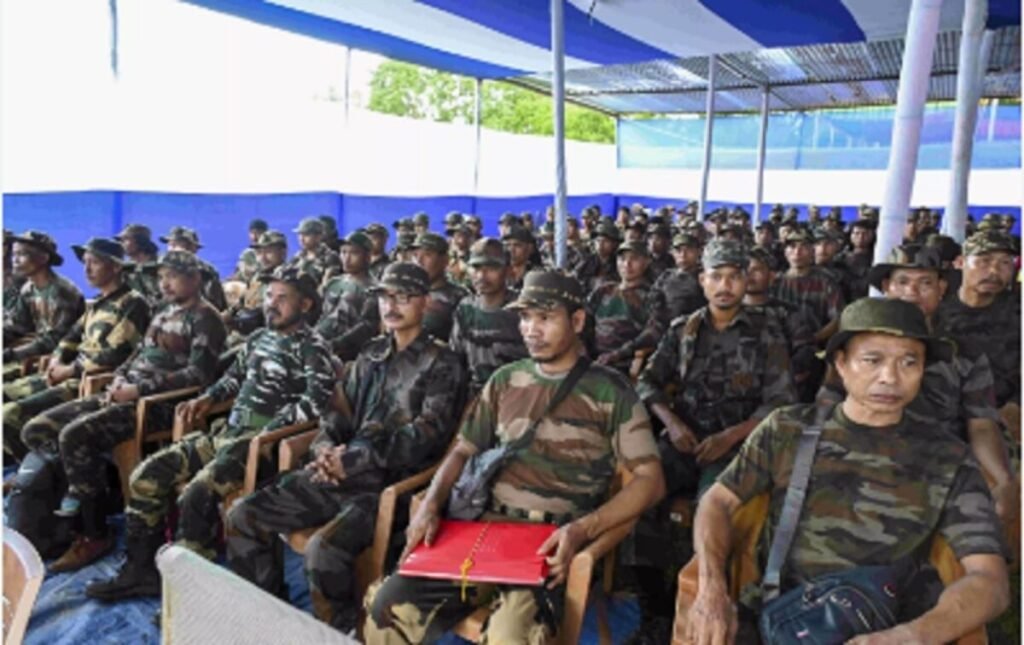
The Tripura rehabilitation agreement demands have come into sharp focus after surrendered militant groups warned of an indefinite rail and highway blockade beginning June 5. The former insurgent members claim that authorities have not fully implemented several commitments linked to their rehabilitation and reintegration process. Consequently, the groups have intensified pressure on the government by announcing plans for a large-scale protest. Meanwhile, officials are expected to review the concerns and assess possible responses. The development has raised concerns about potential disruptions to transportation, public movement, and economic activity if a resolution is not reached before the proposed blockade date.
AJP Vice President Resigns Amid Restructuring
Assembly Representation Debate Triggers Political Exchanges
Former Militant Groups Announce Protest Plan
Surrendered militant organizations have announced their intention to launch an indefinite blockade of key rail and highway routes across Tripura. According to representatives of the groups, the decision stems from dissatisfaction over delays in implementing rehabilitation-related commitments.
Furthermore, the organizations argue that several agreed measures remain pending despite repeated appeals to authorities. As a result, they believe stronger action is necessary to draw attention to their concerns. The Tripura rehabilitation agreement demands have therefore become the central issue behind the proposed protest movement.
Rehabilitation Commitments At The Center Of Dispute
The former militants maintain that rehabilitation packages and reintegration measures formed an important part of earlier agreements. They contend that timely implementation of these commitments is essential for ensuring long-term stability and supporting individuals who abandoned armed activities.
Moreover, group representatives have stated that unresolved issues continue to affect the livelihoods and welfare of many former members. Therefore, they are urging authorities to accelerate action on pending matters. The Tripura rehabilitation agreement demands include calls for the prompt fulfillment of assurances that participants say were made during the surrender and rehabilitation process.
Potential Impact On Transportation Networks
If implemented, the proposed blockade could affect both rail and road connectivity within the state. Rail routes and major highways serve as important transportation corridors for passengers, trade, and essential supplies. Consequently, prolonged disruptions could have economic and logistical implications.
Additionally, transport operators and businesses may face challenges if movement restrictions affect normal operations. Officials are therefore monitoring the situation closely. The Tripura rehabilitation agreement demands have attracted wider attention because of the potential impact that any blockade could have on public mobility and commercial activities.
Authorities Expected To Review Concerns
Government agencies are expected to examine the issues raised by the surrendered groups and evaluate possible avenues for dialogue. In many similar situations, discussions between stakeholders have played an important role in reducing tensions and identifying practical solutions.
Furthermore, authorities may seek to engage with representatives to better understand the specific concerns behind the protest warning. Constructive communication often helps address disputes before they escalate into larger disruptions. Therefore, the Tripura rehabilitation agreement demands could become the subject of further consultations in the coming days.
Rehabilitation Remains Key To Long-Term Stability
Experts frequently highlight rehabilitation and reintegration programs as essential components of long-term peace-building efforts. Successful implementation of such measures can help former militants transition into civilian life and contribute positively to society.
At the same time, delays or disagreements regarding commitments can create frustration among beneficiaries. Consequently, governments often prioritize regular reviews of rehabilitation schemes to ensure effective delivery. The current dispute underscores the importance of maintaining confidence in rehabilitation frameworks through consistent engagement and timely implementation.
Conclusion
The Tripura rehabilitation agreement demands have emerged as a significant issue following the warning by surrendered militant groups of an indefinite rail and highway blockade from June 5. While the groups argue that pending rehabilitation commitments require urgent attention, authorities are expected to assess the concerns and explore possible solutions. Moreover, the situation highlights the broader importance of effective reintegration policies and constructive dialogue. As the proposed protest date approaches, stakeholders will closely watch whether discussions can prevent disruptions and help address the issues raised by former militant members.
FAQs
Q1. Why have surrendered militant groups threatened a blockade?
They claim that several rehabilitation-related commitments remain unfulfilled.
Q2. When is the proposed blockade expected to begin?
The groups have announced June 5 as the starting date for the indefinite protest.
Q3. What are the Tripura rehabilitation agreement demands?
They refer to calls for the implementation of rehabilitation and reintegration commitments made to surrendered militants.
Q4. Which transport networks could be affected?
The proposed action may impact major rail routes and highways across the state.
Q5. How are authorities expected to respond?
Officials are likely to review the concerns and consider dialogue with the groups.
Q6. Why are rehabilitation programs important?
They help former militants reintegrate into civilian life and support long-term peace and stability.