


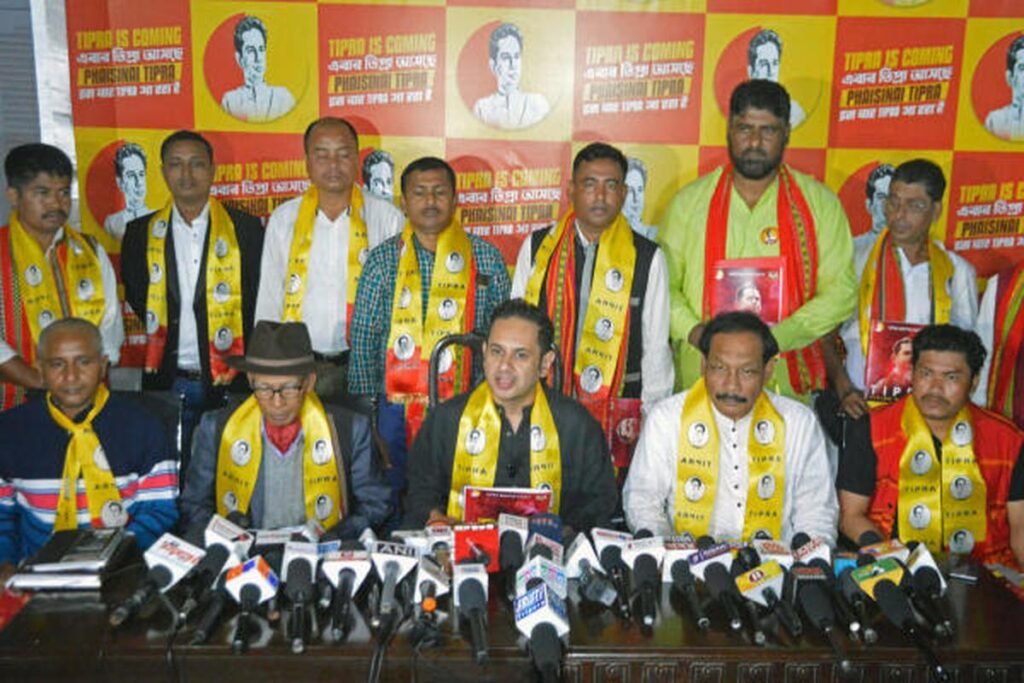
TIPRA Motha’s decision to maintain an independent stance ahead of Tripura’s village elections is reshaping political calculations across the state’s tribal areas. The party’s position has increased uncertainty for rival political forces that may have expected broader electoral coordination.
The development comes as parties prepare for a competitive grassroots contest involving hundreds of village-level seats. Moreover, TIPRA Motha’s independent approach could influence candidate selection, vote-sharing calculations, and potential alliances across tribal constituencies.
The party has continued to emphasise indigenous rights, land protection, language, political representation, and local development. However, whether its independent strategy significantly changes the balance of power will depend on candidate strength, voter preferences, turnout, and the final electoral arrangements.
Tripura Election Commission Gears Up for Intense Voter Roll Upgrades
TIPRA Motha Chooses Independent Path
TIPRA Motha’s decision to maintain an independent electoral position has become a major feature of the upcoming village elections.
The party can use an independent campaign to promote its own political agenda without having to accommodate the priorities of an alliance partner. Furthermore, independent contests can give TIPRA Motha greater flexibility over candidate selection and campaign messaging.
This approach could strengthen the party’s ability to present itself as a distinct political alternative.
However, an independent strategy also requires strong grassroots organisation across the constituencies it chooses to contest.
Village Elections Become Political Test
The village elections will provide an important test of TIPRA Motha’s grassroots strength.
Local contests often depend heavily on candidate credibility, community relationships, and development concerns. Additionally, political parties must maintain strong networks to mobilise voters across dispersed rural communities.
TIPRA Motha’s performance will therefore offer an indication of its current organisational reach.
However, village-level results do not automatically translate into statewide political trends.
Ruling Bloc Faces New Electoral Calculations
TIPRA Motha’s independent stance could complicate the calculations of parties seeking to consolidate support in tribal areas.
If the party contests aggressively, competing organisations may face three-way or multi-cornered contests in areas where they previously expected closer coordination. Moreover, the division of votes could affect outcomes in closely contested villages.
The ruling bloc may consequently need to reconsider its campaign strategy.
However, the actual electoral impact will depend on how many seats TIPRA Motha contests and the strength of its candidates.
Tribal Areas Remain Key Battleground
The upcoming village elections have particular significance because of their focus on Tripura’s tribal areas.
TIPRA Motha has established its political identity around indigenous rights and greater political representation. Furthermore, the party’s grassroots support makes its electoral strategy important for other organisations competing in the same areas.
A strong independent campaign could reinforce its position as a major tribal political force.
However, local priorities can vary significantly between villages.
Land and Language Issues Gain Importance
TIPRA Motha’s independent campaign can place greater emphasis on land and language safeguards.
Land protection remains closely connected with indigenous livelihoods and community identity. Additionally, preservation and promotion of tribal languages can form part of broader demands for cultural recognition.
These issues could feature prominently in campaign messaging.
However, voters may balance identity-related concerns against immediate development needs.
Development Could Shape Voter Choices
The village elections will not focus exclusively on political identity.
Residents may also assess candidates on roads, drinking water, electricity, healthcare, schools, employment, agriculture, and welfare delivery. Moreover, local development performance can influence voters regardless of their broader political preferences.
TIPRA Motha and rival parties will therefore need to present practical solutions.
However, the relative importance of each issue will differ across communities.
Independent Contest Could Strengthen Bargaining Power
An independent electoral strategy does not necessarily prevent future political negotiations.
A strong performance could improve TIPRA Motha’s bargaining position in later discussions with other parties. Furthermore, winning a significant number of village seats could demonstrate that the party can maintain support without relying on a major alliance.
That possibility may influence how rival parties approach TIPRA Motha after the elections.
However, poor electoral performance could produce the opposite effect.
Candidate Selection Becomes Crucial
TIPRA Motha’s independent stance places greater responsibility on its candidates.
Without the organisational advantages of a broader alliance, candidates must rely heavily on their own community networks and party structures. Additionally, local credibility can become especially important in village-level contests.
The party will therefore need careful candidate selection.
However, candidate popularity alone may not overcome strong competition or local political alliances.
Vote Division Could Shape Results
Independent contests can create more competitive electoral fields.
If multiple parties field candidates in the same villages, the winning candidate may secure victory with a relatively limited share of the overall vote. Moreover, established alliances or local community networks could influence how votes divide among competing candidates.
This makes the electoral arithmetic difficult to predict.
However, the actual effect will become clearer only after candidate lists and polling results emerge.
Ruling Parties May Adjust Campaign Strategy
The ruling political establishment could respond by strengthening its grassroots outreach.
Parties may increase community meetings, highlight development programmes, and focus on local candidates. Furthermore, they may attempt to prevent vote fragmentation by building local understandings with smaller political organisations.
TIPRA Motha’s independent position could therefore indirectly influence the strategies of its competitors.
However, political responses will vary according to individual constituencies.
Youth and Employment Remain Important
Young voters could influence the direction of the campaign.
Employment opportunities, education, skills training, entrepreneurship, and digital connectivity can become important local concerns. Moreover, political parties may attempt to connect these issues with their broader development plans.
TIPRA Motha’s independent campaign could give it space to develop its own proposals on these subjects.
However, voters will ultimately assess the credibility and feasibility of campaign promises.
Election Results Could Reshape Political Equations
The outcome of the village elections could affect political calculations across Tripura’s tribal areas.
A strong TIPRA Motha performance could reinforce its independence and increase its influence in future negotiations. Conversely, if rival parties perform strongly, they could challenge the party’s claim to dominant grassroots influence.
The results could therefore shape political strategies beyond the village level.
However, the significance of the outcome will depend on the number of seats contested and won by each party.
Independent Stance Tests TIPRA Motha
The upcoming contest represents a strategic test for TIPRA Motha.
An independent campaign gives the party an opportunity to measure its support without the influence of alliance partners. Furthermore, the results can provide valuable information about voter priorities and the strength of its local organisation.
The party could use that information to refine its approach to future elections.
However, independence also carries electoral risks because competing parties can divide the same voter base.
Conclusion
TIPRA Motha’s independent stance has added uncertainty to the political calculations surrounding Tripura’s village elections. By choosing to maintain its own electoral identity, the party can emphasise indigenous rights, land protection, language, representation, and local development without having to compromise its campaign message with alliance partners.
Moreover, the strategy could complicate the plans of rival parties in closely contested tribal areas by creating more multi-cornered contests. However, it is too early to conclude that the independent stance has destabilised the ruling bloc.
Overall, the village elections will provide an important test of TIPRA Motha’s grassroots strength. A strong performance could increase the party’s political leverage, while weaker results could encourage a reassessment of its independent strategy.
FAQs
1. Why is TIPRA Motha contesting independently?
An independent campaign allows TIPRA Motha to maintain control over its political messaging, candidates, and key demands.
2. Could the decision affect the ruling bloc?
Yes. If TIPRA Motha contests strongly in tribal areas, it could create more competitive contests and alter vote-sharing calculations.
3. What issues will TIPRA Motha highlight?
Indigenous rights, land protection, language safeguards, political representation, employment, and local development are likely to remain important themes.
4. Could vote division benefit another party?
Yes. Multi-cornered contests can divide votes among several candidates, potentially affecting outcomes in closely contested villages.
5. What will determine TIPRA Motha’s success?
Candidate strength, grassroots organisation, alliances among rival parties, local issues, voter turnout, and public response to the party’s independent campaign will all matter.