


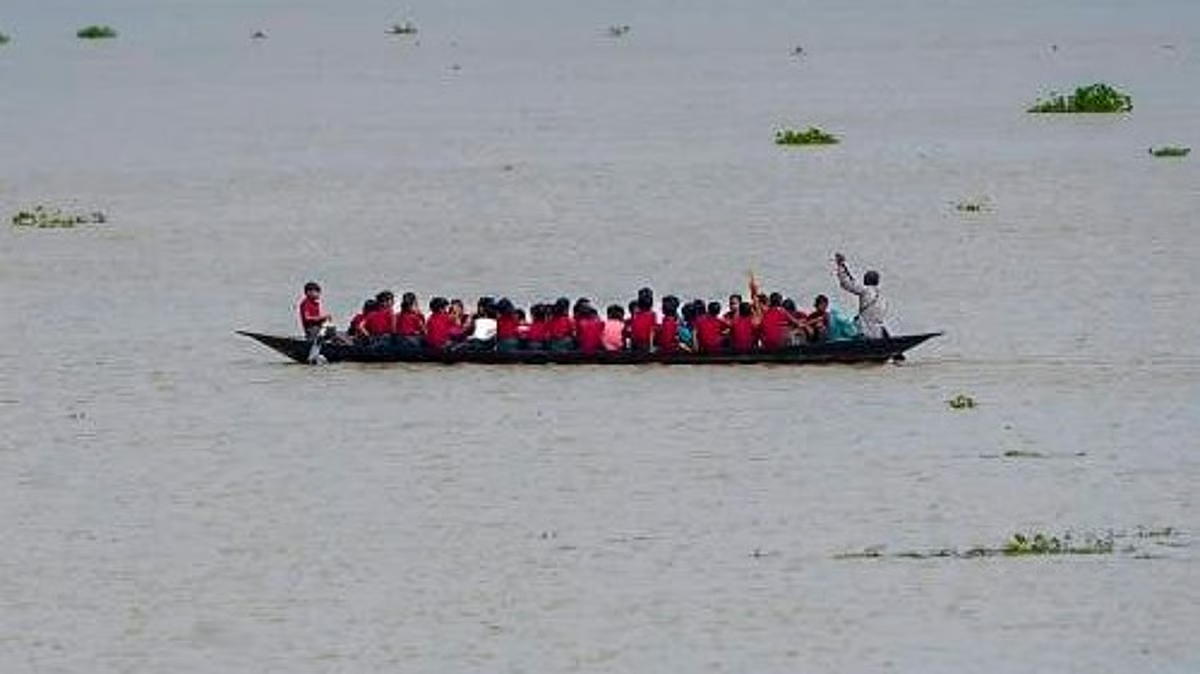
Assam’s flood crisis has triggered a major political confrontation after the reported death toll reached 95. The scale of the disaster has intensified criticism of the state government, with opposition leaders questioning disaster preparedness, flood-control measures, rescue operations, relief distribution, and support for affected families.
Opposition Slams Himanta Biswa Sarma Government Over 95 Flood Deaths
The political debate has grown alongside the humanitarian emergency. Moreover, several affected communities continue to face displacement, damaged homes, agricultural losses, disrupted transport, and limited access to essential services.
However, political allegations should remain separate from verified findings. Authorities must continue confirming casualty figures and assessing the effectiveness of emergency measures while ensuring that affected residents receive timely assistance.
95 Deaths Intensify Political Confrontation
The reported 95 fatalities have placed Assam’s flood response at the centre of political debate.
Opposition parties have questioned whether the government adequately prepared vulnerable communities for severe flooding. Furthermore, leaders have raised concerns about evacuation systems, embankment maintenance, rescue operations, and relief distribution.
The casualty figure has consequently increased pressure on the administration.
However, the reported number can change as authorities verify individual cases.
Opposition Targets Government Response
Opposition leaders have used the crisis to demand greater accountability from the state government.
Their criticism has focused on disaster management, infrastructure, compensation, and the delivery of relief to affected communities. Additionally, political representatives have highlighted grievances reported by residents in flood-hit areas.
The confrontation could therefore continue throughout the recovery period.
However, criticism from political parties does not independently establish negligence or wrongdoing.
Sivasagar Faces Particular Attention
Sivasagar has emerged as an important centre of the flood-related political debate.
The district has reportedly suffered significant casualties and disruption. Moreover, residents have faced challenges involving shelter, healthcare, agriculture, transportation, and access to essential supplies.
These conditions have increased scrutiny of local and state-level disaster management.
However, conditions vary between communities, so district-level assessments remain important.
Charaideo Also Faces Heavy Impact
Charaideo has also attracted attention because of reported flood-related fatalities and damage.
Floodwaters can disrupt roads, agricultural land, homes, and public services. Furthermore, isolated communities can face difficulties accessing hospitals and relief centres.
Authorities therefore need to maintain strong rescue and relief coordination.
However, individual casualty figures require official verification.
Relief Operations Under Pressure
The political confrontation comes as relief agencies continue supporting displaced residents.
Affected families require food, drinking water, medicines, sanitation facilities, and temporary shelter. Additionally, authorities must maintain accurate records of displaced people to ensure effective resource distribution.
The quality of relief operations could influence public confidence.
However, widespread flooding can create logistical challenges that affect supply delivery.
Embankment Management Faces Questions
Flood-control infrastructure has become another major issue in the political debate.
Embankment breaches can allow floodwaters to spread quickly into residential and agricultural areas. Moreover, damaged roads and drainage systems can make evacuation and rescue operations more difficult.
Opposition leaders may therefore demand stronger inspection and maintenance systems.
However, extreme rainfall and river conditions can place substantial pressure on flood-control structures.
Agriculture Adds to Public Pressure
Flooding has caused serious concerns among farmers.
Crops, livestock, stored produce, and agricultural equipment can suffer damage during prolonged inundation. Furthermore, farmers may face difficulty returning to their fields after floodwaters recede.
Opposition parties may consequently demand faster compensation and livelihood assistance.
However, authorities need verified assessments to determine the extent of eligible losses.
Government Defends Emergency Measures
The Assam government can highlight rescue operations, relief camps, emergency supplies, and coordination with disaster-management agencies.
Officials may also point to evacuation efforts and assistance provided to affected families. Moreover, the state can seek additional resources from central agencies when local capacity faces heavy pressure.
These measures will form an important part of the government’s defence.
However, residents’ experiences will also shape perceptions of the response.
Political Accountability Takes Centre Stage
The flood crisis has placed accountability at the heart of Assam’s political debate.
Opposition leaders may seek information about relief expenditure, infrastructure maintenance, evacuation planning, and compensation. Additionally, they can demand reviews of flood-control measures and emergency preparedness.
Such scrutiny can encourage greater transparency.
However, accusations require evidence before authorities can establish responsibility.
Healthcare Services Face Greater Demand
Flooding can disrupt healthcare access while increasing demand for emergency medical services.
Residents may need medicines, treatment, medical teams, and continued care for existing conditions. Furthermore, relief camps need clean water, sanitation, and health monitoring.
Authorities must therefore maintain healthcare access during prolonged displacement.
However, health needs vary according to local flood conditions.
Compensation Becomes a Political Issue
Families affected by deaths, damaged homes, and lost livelihoods may seek government assistance.
Authorities need to assess damage and determine eligible support under applicable relief rules. Moreover, families that lose their primary income sources may require longer-term rehabilitation.
The speed and transparency of compensation could influence public sentiment.
However, assistance depends on verified losses and government guidelines.
Central-State Coordination Gains Importance
A disaster affecting multiple districts can require substantial coordination.
Central agencies may provide specialised rescue personnel, equipment, medical support, and logistical assistance. Furthermore, national disaster-response mechanisms can supplement state resources when necessary.
Such cooperation can strengthen Assam’s emergency response.
However, local administrations remain essential for delivering assistance to communities.
Political Opposition Could Intensify
The reported death toll could encourage opposition parties to coordinate their criticism.
Different political groups may focus on common concerns involving relief, infrastructure, flood preparedness, and compensation. Moreover, public protests and visits to affected areas could increase pressure on the government.
The political confrontation may therefore continue beyond the immediate emergency.
However, differences among opposition parties may remain over strategy and priorities.
Recovery Will Test the Government
The government’s handling of the recovery phase could determine how the political debate develops.
Timely compensation, infrastructure restoration, and livelihood assistance could improve public confidence. Conversely, delays or unresolved grievances could give opposition parties additional opportunities to criticise the administration.
Recovery will therefore carry both humanitarian and political significance.
However, the eventual political impact remains uncertain.
Long-Term Flood Management Returns to Focus
The crisis has once again highlighted Assam’s vulnerability to recurring floods.
Authorities may need to review embankment maintenance, drainage systems, river management, flood forecasting, evacuation routes, and community preparedness. Additionally, stronger infrastructure could help reduce the impact of future monsoon emergencies.
Long-term planning will remain essential.
However, flood risk cannot be eliminated completely because Assam’s geography and monsoon conditions create recurring challenges.
Conclusion
The reported 95 flood deaths in Assam have transformed the disaster into a major political confrontation, with opposition parties questioning the government’s preparedness, relief operations, infrastructure management, and accountability. The debate has intensified as affected communities continue to seek shelter, healthcare, compensation, and livelihood support.
Moreover, the government’s response during the recovery phase could shape public perceptions of its disaster-management record. At the same time, political allegations must remain distinguished from verified findings, particularly when assigning responsibility for individual deaths or administrative decisions.
Overall, Assam faces a dual challenge: addressing the immediate humanitarian crisis and responding to growing political scrutiny. Effective relief, transparent compensation, infrastructure restoration, and stronger flood preparedness will remain crucial as the state moves toward recovery.
FAQs
1. Why have the Assam floods triggered a political showdown?
The reported death toll of 95 has increased opposition criticism over disaster preparedness, relief operations, infrastructure, compensation, and government accountability.
2. Which areas have received particular attention?
Sivasagar and Charaideo have received significant attention because of reported casualties and the disruption caused by flooding.
3. What are the opposition parties demanding?
Their concerns include stronger disaster preparedness, improved relief distribution, infrastructure repairs, transparent compensation, and greater accountability.
4. Does political criticism prove government negligence?
No. Political criticism or allegations do not independently establish negligence or wrongdoing. Authorities need credible evidence and appropriate verification.
5. What will determine the government’s next challenge?
The effectiveness of rescue operations, relief delivery, compensation, rehabilitation, and long-term flood-management measures will remain important.