


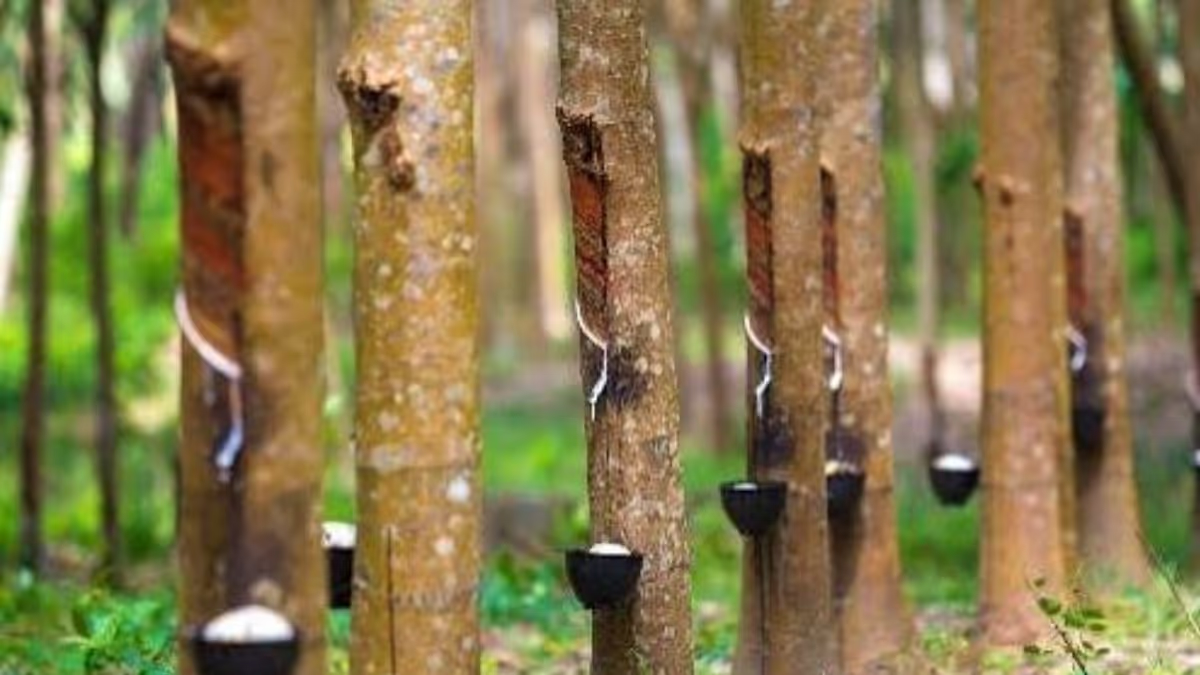
The Tripura Rubber Mission Extension proposal has gained support after Rubber Board chairman N. Hari assured the state government that he would raise its request with the Centre. Tripura wants a two-year extension of the Chief Minister Rubber Mission under a proposed second phase called Rubber Mission 2.0. The government says demand for rubber cultivation continues to grow, particularly among tribal communities. The initiative has already brought around 70,000 hectares under rubber cultivation across the state. However, the proposed extension still requires approval from the central government.
Manik Saha Orders Probe Into Masked BJP Rally
BJP Secures 77 Tripura Civic Seats Unopposed
Rubber Board Chairman Agrees to Raise State’s Proposal
Rubber Board chairman N. Hari gave the assurance during his recent visit to Tripura. State officials briefed him on the mission’s progress and requested his support for another two years of implementation.
Additional Secretary of the Tribal Welfare Department Subhasish Das shared details of the discussion on November 24. He said the chairman would take up the proposal with Union Commerce Minister Piyush Goyal.
Tribal Welfare Minister Bikash Debbarma and Chief Secretary J. K. Sinha have also written to the Centre seeking the extension.
The Tripura Rubber Mission Extension proposal reflects the state’s effort to continue plantation development and support communities interested in rubber cultivation. However, Hari’s assurance to raise the matter does not mean the Centre has approved the extension.
Rubber Mission Has Covered Around 70,000 Hectares
The Chief Minister Rubber Mission began in 2015-16 with support from the Rubber Board. Since then, the programme has expanded rubber cultivation across approximately 70,000 hectares in Tripura.
The initiative aims to strengthen the state’s rubber sector and create livelihood opportunities, particularly in rural and tribal areas.
Rubber cultivation can provide households with a long-term source of agricultural income. It also supports activities linked to processing, transportation and local industries.
The growing interest among tribal communities has encouraged the state government to seek another phase. Officials believe continued support could help more interested growers enter the sector and strengthen existing plantations.
The proposed second phase would build on the infrastructure and cultivation base developed under the original mission.
Processing Infrastructure Supports Rubber Growers
The mission has also helped expand facilities for processing harvested rubber.
According to the Tribal Welfare Department, authorities have established 42 integrated rubber processing centres and 36 smoke houses under the programme.
These facilities help growers process their produce and improve its marketability. They can also reduce the need to transport raw material over long distances before processing.
The infrastructure forms an important part of the state’s wider rubber development strategy. Officials want growers to receive better prices through improved processing, quality control and market access.
The Tripura Rubber Mission Extension proposal could provide an opportunity to strengthen these facilities and support additional value-added activities.
Rubber Board Calls for Greater Value Addition
During discussions with state officials, Hari stressed the need to focus more strongly on value addition.
Tripura produces substantial quantities of natural rubber. However, the state still largely produces Grade 3 and Grade 4 rubber sheets, according to Subhasish Das.
The Rubber Board chairman suggested improving sheet quality to Grades 1 and 2. Higher-quality products could help growers secure better prices and reduce dependence on intermediaries.
Better processing standards would also improve the competitiveness of Tripura’s rubber sector.
The proposal therefore involves more than extending plantation activity. It also highlights the need to improve the quality of output and strengthen the supply chain.
Expansion of Rubber-Wood Furniture Production Proposed
Hari also recommended expanding Tripura’s rubber processing factory to increase rubber-wood furniture production.
The Tripura Forest Development Corporation operates the state’s only rubber-wood factory at Anandanagar in West Tripura.
Rubber trees can provide timber after their productive latex-yielding period ends. Manufacturers can use the wood to make furniture and other products for domestic markets.
Expanding this activity could create another source of income from existing rubber plantations. It could also support local manufacturing and generate employment linked to processing and furniture production.
The chairman’s suggestion places greater emphasis on using rubber resources beyond latex production.
Tripura Seeks Stronger Opportunities for Tribal Growers
The state government has linked its extension request to rising interest in rubber cultivation among tribal communities.
The Tribal Welfare Department has played a central role in implementing the mission. Its officials have worked with the Rubber Board and other agencies to expand cultivation and processing support.
A further two-year phase could help the state respond to demand from communities seeking new livelihood opportunities.
At the same time, long-term benefits will depend on access to planting material, technical guidance, processing facilities and reliable markets.
The proposed extension would therefore need to balance plantation expansion with support for existing growers. Improving product quality and developing local industries could also help communities earn more from their produce.
Centre’s Decision Will Determine the Next Phase
The state’s proposal now requires consideration by the central government. The Rubber Board chairman has agreed to raise the issue with the Union Commerce Minister, but the final decision remains pending.
Approval would allow Tripura to pursue the proposed Rubber Mission 2.0 for another two years. It could also provide a framework for expanding cultivation, improving processing standards and strengthening rubber-based industries.
Meanwhile, the state government is highlighting the programme’s existing achievements to support its request.
The Tripura Rubber Mission Extension proposal now enters an important stage as the state seeks central backing for its next phase.
Conclusion
The Tripura Rubber Mission Extension proposal has received an assurance of support from Rubber Board chairman N. Hari, who will raise the state’s request with the Centre. Tripura wants a two-year continuation of the Chief Minister Rubber Mission under Rubber Mission 2.0, citing growing demand among tribal communities. The existing programme has brought around 70,000 hectares under rubber cultivation and established processing infrastructure across the state. The next phase could focus on better-quality rubber sheets, rubber-wood furniture and stronger value addition. However, central approval remains necessary before the extension can proceed.
FAQs
1. What is Tripura Rubber Mission 2.0?
It is the state’s proposed two-year extension of the Chief Minister Rubber Mission to continue supporting rubber cultivation and related activities.
2. Who assured Tripura of support for the extension proposal?
Rubber Board chairman N. Hari assured state officials that he would raise the proposal with Union Commerce Minister Piyush Goyal.
3. How much land has the existing mission brought under rubber cultivation?
The programme has brought approximately 70,000 hectares under rubber cultivation across Tripura.
4. How many processing centres has the mission established?
The initiative has established 42 integrated rubber processing centres and 36 smoke houses.
5. Why does Tripura want to extend the mission?
The state cites rising demand for rubber cultivation, particularly among tribal communities, and wants to strengthen growers’ livelihood opportunities.
6. Has the Centre approved the two-year extension?
No approval has been confirmed. The Rubber Board chairman has only assured the state that he will raise the proposal with the Centre.