


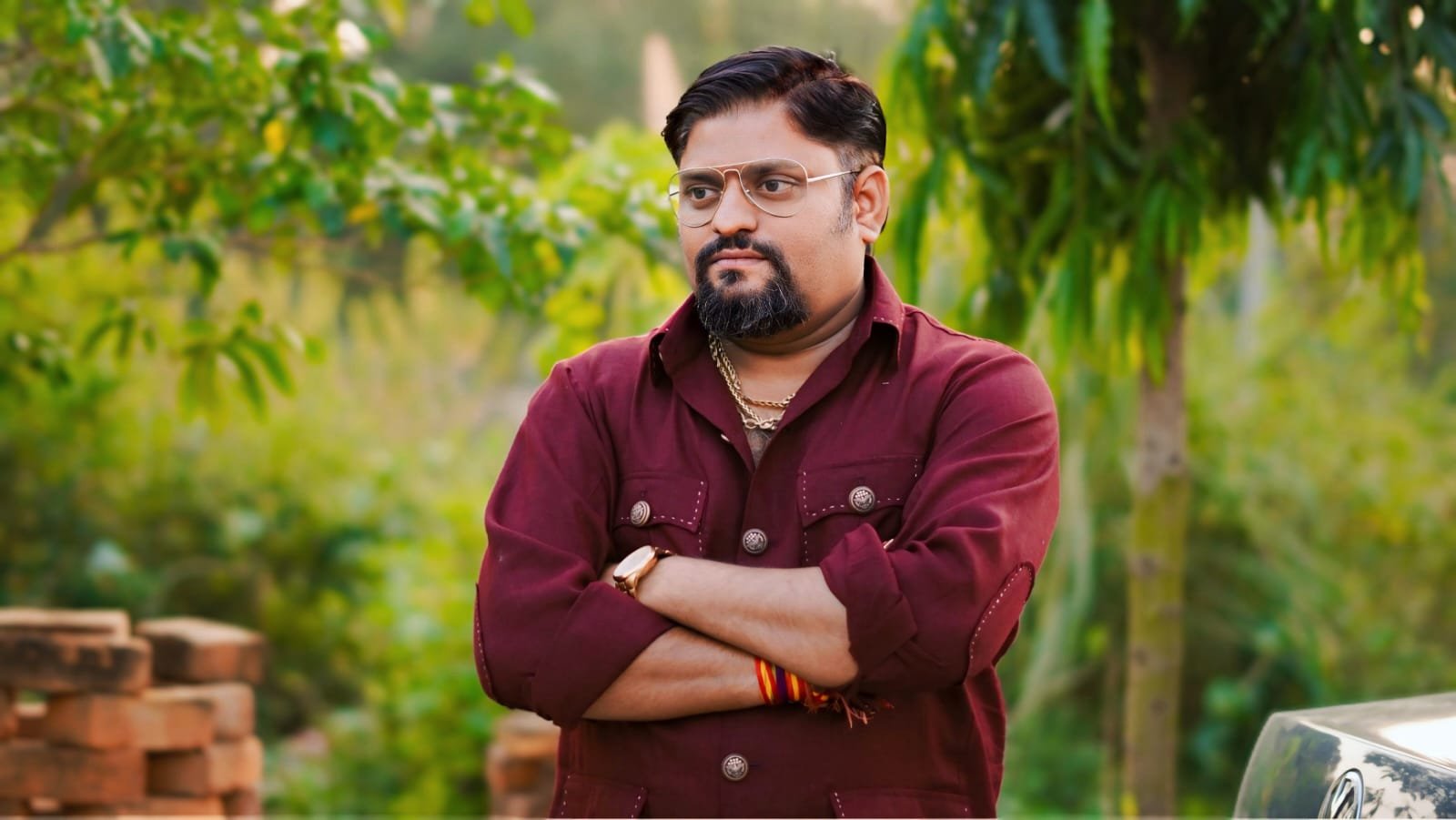
In a country where millions admire the uniform but few understand the life beyond it, Abhishek Kumar Tripathi represents a rare transition—one where discipline becomes direction, service becomes leadership, and success becomes responsibility. His journey is not defined by a single role. He is a former serviceman, an entrepreneur, a social reformer, a family man, and above all, a believer in collective progress.
Born in 1984 in Kannauj, Uttar Pradesh, Abhishek’s life has been shaped by simplicity, struggle, and an early understanding that responsibility is not optional—it is earned. From his student years to his long service in the Indian Air Force, and from founding a construction company to becoming a voice for ex-servicemen, his story is one of continuous evolution.
Early Life: Discipline Before Destiny
Abhishek Kumar Tripathi’s early years were grounded in education, moral values, and cultural awareness. A bright and focused student, he showed an inclination toward structured life and national service from a young age. His academic path—BA, LLB, and later an MBA in Material Management—was not pursued for prestige, but for preparedness. Even as a student, he believed knowledge must serve a larger purpose.
This mindset eventually led him to the armed forces, where he would spend over two decades learning the meaning of commitment in its purest form.
Life in Uniform: Learning Leadership the Hard Way
Serving in the Indian Air Force was not merely a profession for Abhishek—it was a formative experience that reshaped his worldview. Military life taught him precision, accountability, teamwork, and the courage to make decisions under pressure. More importantly, it taught him that leadership is not about command, but about responsibility for those who stand behind you.
During his service years, Abhishek observed how systems function, how discipline creates efficiency, and how collective effort always outperforms individual brilliance. These lessons would later become the foundation of his business philosophy and social work.
Yet, like many servicemen, he also witnessed a hard truth—while the nation celebrates soldiers during service, life after the uniform often lacks structure, guidance, and protection.
The Transition: When the Uniform Comes Off
Retirement from military service is not a celebration; it is a psychological shift. For Abhishek, the transition was deeply reflective. The regimented environment, clear hierarchy, and built-in respect were suddenly replaced by uncertainty and fragmented civilian systems.
Instead of withdrawing, he chose to respond.
He asked himself a fundamental question:
“How can I continue serving—without the uniform?”
The answer came through entrepreneurship, community leadership, and social responsibility.
MG Construction: Business With a Backbone
In 2022, Abhishek Kumar Tripathi founded MG Construction, not as a conventional business venture, but as a platform to create employment, discipline, and dignity in the civilian workforce. Headquartered in Lucknow, the company soon gained recognition for its professionalism, timely execution, and ethical approach.
MG Construction reflects Abhishek’s military ethos:
• systems over shortcuts
• accountability over excuses
• people before profit
Under his leadership, the company grew steadily, handling residential, commercial, and infrastructure projects while maintaining strict quality and safety standards. But what truly set MG Construction apart was its internal culture—workers were treated with respect, vendors were paid fairly, and long-term relationships were prioritized over short-term gains.
For Abhishek, construction was never just about buildings.
It was about creating stability for families.
Beyond Construction: A Vision for Employment Generation
While MG Construction established his credibility as an entrepreneur, Abhishek’s vision extended further. He recognized a deeper national issue—lack of sustainable employment, especially for youth, veterans, and rural communities.
This realization led to the expansion of the MG Group of Companies, with future-focused ventures designed to generate jobs, support local supply chains, and promote self-reliance. His upcoming initiatives are not driven by market trends alone, but by social need.
He often states that real success is not measured by revenue, but by how many families earn with dignity because of your work.
Advocacy for Ex-Servicemen: A Personal Mission
Among all his roles, Abhishek’s work for ex-servicemen holds the deepest personal significance. Having lived the transition himself, he understands the silent struggles veterans face—pension complications, healthcare issues, employment exploitation, and social isolation.
As President of the Lucknow Mandal under the Ex-Servicemen Joint Organisation, Uttar Pradesh, he took on the responsibility of uniting veterans across multiple districts. His leadership focuses on three core principles:
1. Awareness – veterans must know their rights
2. Unity – no ex-serviceman should fight alone
3. Protection – exploitation must end
Through meetings, grievance redressal, guidance sessions, and direct intervention, Abhishek has helped numerous veterans navigate bureaucracy without falling prey to middlemen. His message is clear:
“Your service earned your rights. Never pay for what is already yours.”
Understanding Exploitation—and Stopping It
One of the harsh realities Abhishek openly addresses is the exploitation of ex-servicemen. From pension agents to fake job offers and financial traps, veterans are often targeted because of their discipline and trust.
Abhishek believes exploitation thrives where there is isolation.
Organisation, he argues, is the antidote.
By encouraging veterans to remain connected, attend meetings, and share information, he is slowly dismantling the culture of fear and misinformation. His leadership is not about authority—it is about reassurance.
Spirituality and Social Responsibility
Despite his professional commitments, Abhishek’s life is deeply rooted in spirituality. His belief in Sanatan values, seva (service), and humility reflects in his daily conduct. He regularly participates in religious activities, supports temples and gurukuls, and organizes community food services.
For him, spirituality is not ritual—it is responsibility.
Whether it is helping underprivileged families, supporting kanya vivah initiatives, feeding saints, or contributing to environmental causes, his actions stem from a belief that wealth has meaning only when it uplifts others.
Family: The Silent Strength
Behind Abhishek’s public roles stands a strong family foundation. A devoted husband and father, he considers family his emotional anchor. His children are raised with the same values he lives by—discipline, compassion, and respect for service.
Even celebrations in his household reflect this mindset. Birthdays are often marked by acts of charity, shared meals with children or saints, and moments of gratitude rather than extravagance.
His love for animals, especially his dogs Sartaj and Khalifa, further reflects his empathetic nature and belief in coexistence.
Leadership Style: Calm, Firm, Inclusive
What distinguishes Abhishek Kumar Tripathi as a leader is his temperament. He is not loud, not impulsive, and not driven by ego. His leadership is calm, firm, and inclusive.
He listens before he speaks.
He acts before he announces.
He believes leadership is not visibility, but reliability.
Whether in business meetings, veteran gatherings, or community interactions, his approach remains consistent—solve problems quietly and stand by people when it matters most.
The Road Ahead: Building a Meaningful Legacy
Looking ahead, Abhishek’s vision is expansive but grounded. He aims to:
• expand employment-generating businesses
• create skill-development opportunities
• strengthen veteran support systems
• promote ethical entrepreneurship
• and build institutions that last beyond individuals
He does not seek political power or public spectacle. His ambition is simpler and stronger—to leave behind systems that continue to serve people even in his absence.
Conclusion: A Life Still in Motion
Abhishek Kumar Tripathi’s story is not one of arrival—it is one of direction. From the discipline of military life to the challenges of entrepreneurship, from personal struggle to collective leadership, he continues to evolve with clarity and conviction.
He represents a generation that believes service does not end with retirement, that business must have a conscience, and that leadership must be earned daily.
In a time of noise and haste, his journey reminds us that true impact is built quietly, patiently, and with purpose.
And perhaps that is his greatest contribution—not just the buildings he constructs, or the organisations he leads, but the example he sets:
that a soldier never stops serving—he only changes the way he does it.