


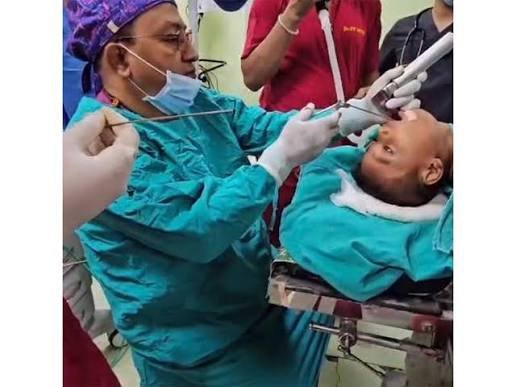
The AGMC coin removal procedure brought relief to the family of a four-year-old boy after doctors at Agartala Government Medical College (AGMC) successfully removed a coin lodged in his food pipe during the Lakshmi Puja holiday. The medical team performed the procedure on the morning of October 25, 2026, despite the public holiday. The child, who belongs to a Janajati family in Bangshibari village of Tripura’s Sepahijala district, received specialist treatment at the hospital. Doctors monitored his condition after the procedure, and the hospital discharged him on October 26.
Tripura Education Department Distributes Scooties to Meritorious Female Students
AGMC Coin Removal Procedure Provides Timely Treatment
The incident highlighted the importance of timely medical attention when a young child swallows a foreign object. The four-year-old boy’s parents initially took him to Indira Gandhi Memorial Hospital (IGM Hospital) in Agartala after a coin became lodged in his food pipe.
Following an initial assessment, doctors referred the child for further treatment at Govind Ballabh Pant Hospital, which operates alongside Agartala Government Medical College. The child reached the ENT Department on the evening of October 24.
The medical team assessed his condition and prepared him for the required procedure. Since the coin remained lodged in his food pipe, the doctors arranged specialist intervention rather than relying on home remedies or waiting for the object to pass naturally.
Moreover, the case required careful management because the patient was only four years old. Young children may struggle to explain their symptoms clearly, so doctors must assess their condition and determine the safest course of treatment.
The team proceeded with the treatment on October 25, which coincided with the Lakshmi Puja holiday. The successful intervention ensured that the child received medical attention despite the festive break.
The incident also demonstrated the importance of coordination between hospitals. The initial assessment at IGM Hospital helped direct the child to the specialist team at AGMC for further care.
Doctors Remove Coin Under General Anaesthesia
The AGMC medical team admitted the boy to the ENT Department on the evening of October 24. Doctors kept him nil orally overnight, meaning he could not eat or drink before the planned procedure.
This preparation helped the team manage the requirements for general anaesthesia. The doctors then removed the coin from the child’s food pipe on the morning of October 25.
General anaesthesia allows medical teams to carry out certain procedures while the patient remains unconscious. In young children, doctors carefully assess the patient and follow appropriate precautions before administering anaesthesia.
The reported details confirm that the team successfully removed the coin under general anaesthesia. However, the available information does not specify the exact instrument or technique used during the procedure.
Following the intervention, the hospital team observed the child and assessed his condition. Doctors discharged him on October 26 after completing the necessary post-procedure assessment.
The successful outcome brought relief to the family and marked the completion of the child’s hospital treatment. Furthermore, the case underlined the value of specialist medical services for emergencies involving swallowed objects.
The procedure also required cooperation among doctors and nursing staff. Each member of the medical team contributed to the care provided before, during or after the intervention.
AGMC Medical Team Handles Emergency During Lakshmi Puja
Dr Tanmoy Deb led the team responsible for the procedure. Dr Binoy Deb Barma, Dr Deepsikha Bhattacharjee and Dr Sourav Saha also participated in the treatment. Nursing Officer Subrata Paul supported the team.
Their coordinated efforts helped the hospital provide the required specialist care during the festive holiday. Although public holidays can affect routine hospital services, emergency medical needs continue to require prompt assessment and appropriate treatment.
The successful procedure also drew attention to the role of the ENT Department in managing foreign objects lodged in the food pipe. Ear, nose and throat specialists treat conditions affecting these areas and may also handle certain emergencies involving swallowed objects.
In this case, the child’s parents sought medical help and followed the referral process. The hospital teams then assessed his condition and arranged treatment at the appropriate facility.
Meanwhile, the incident serves as a reminder that families should seek professional medical advice whenever a child swallows a coin or another potentially dangerous object. The seriousness of such incidents depends on factors such as the object’s size, location and nature, as well as the child’s symptoms.
Not every swallowed object requires the same treatment. Doctors decide the appropriate approach after assessing the patient and identifying the object’s location. Therefore, parents should avoid assuming that a coin will pass safely through the digestive system without medical assessment.
The case also illustrates why hospitals need coordinated emergency services, trained staff and access to specialist care. Timely evaluation can help medical professionals identify risks and determine whether an urgent procedure is necessary.
Why Swallowed Coins Require Medical Attention
Young children sometimes place small objects in their mouths while playing or exploring their surroundings. Coins and small toy parts can therefore create serious health concerns when children swallow them accidentally.
A swallowed coin may travel into the stomach, but it can also become lodged in the food pipe, or oesophagus. When this happens, the object may cause difficulty swallowing, pain, vomiting or excessive drooling. In some cases, it can lead to more serious complications.
Parents should seek immediate medical advice if they suspect that a child has swallowed a coin. They should not wait for symptoms to worsen or attempt to remove the object through unverified home remedies.
Caregivers should also avoid forcing food or water down the child’s throat or trying to induce vomiting. Such actions may increase the risk of complications. Medical professionals can determine the next steps after examining the child and, where necessary, using appropriate investigations.
Certain objects pose particularly serious risks. Button batteries and powerful magnets can cause severe internal injuries, so suspected ingestion requires urgent medical attention even if the child initially appears well.
If a child has difficulty breathing, cannot speak or cannot cough effectively, caregivers should treat the situation as an emergency and seek immediate help.
Prevention remains important as well. Parents should keep coins, button batteries, magnets and other small objects out of young children’s reach. They should also choose age-appropriate toys and check that toys do not contain loose parts that a child could swallow.
The successful treatment at AGMC offers a useful reminder for families across Tripura: quick access to medical assessment and appropriate specialist care can make a significant difference when children swallow foreign objects.
Conclusion
The AGMC coin removal procedure successfully treated a four-year-old boy from Bangshibari village in Sepahijala district after a coin became lodged in his food pipe. Doctors admitted him to the ENT Department on October 24 and carried out the procedure under general anaesthesia the following morning. The team completed the intervention during the Lakshmi Puja holiday, demonstrating the importance of timely care for medical emergencies.
Dr Tanmoy Deb led the procedure, supported by Dr Binoy Deb Barma, Dr Deepsikha Bhattacharjee, Dr Sourav Saha and Nursing Officer Subrata Paul. After the procedure, the hospital team observed the child and assessed his condition. The hospital discharged him on October 26.
The incident also highlights the need for parental awareness about swallowed objects. Families should seek prompt medical advice whenever a child swallows a coin or another foreign object. By keeping small items away from young children and avoiding unsafe home remedies, caregivers can reduce preventable risks and help children receive appropriate care when emergencies occur.
FAQs
1. What happened at AGMC during the Lakshmi Puja holiday?
Doctors at Agartala Government Medical College successfully removed a coin lodged in a four-year-old boy’s food pipe on October 25, 2026, despite the public holiday.
2. Where did the child come from?
The child belonged to a Janajati family in Bangshibari village in Tripura’s Sepahijala district. His parents initially took him to IGM Hospital in Agartala before doctors referred him for specialist treatment.
3. Who led the AGMC coin removal procedure?
Dr Tanmoy Deb led the medical team. Dr Binoy Deb Barma, Dr Deepsikha Bhattacharjee, Dr Sourav Saha and Nursing Officer Subrata Paul also participated in the treatment.
4. When did doctors discharge the child?
The hospital discharged the boy on October 26, 2026, following the procedure on October 25 and subsequent observation and assessment.
5. What should parents do if a child swallows a coin?
Parents should seek prompt medical advice and avoid forcing food or water, inducing vomiting or attempting to remove the coin at home. If the child has difficulty breathing, caregivers should seek emergency assistance immediately.