


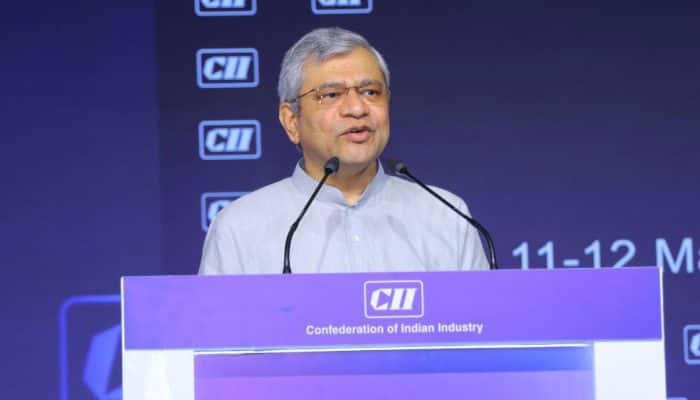
Union Minister Ashwini Vaishnaw on Tuesday said artificial intelligence (AI), semiconductors, and modern railways will drive India’s next phase of economic and technological transformation.
Speaking at a technology and infrastructure-focused event, Vaishnaw highlighted the government’s long-term vision for strengthening India’s digital economy, manufacturing sector, and transportation network.
Read More: NIA Team Leaves For Bengaluru After PM Modi Convoy Scare
The Union minister stated that India is entering a new era where technology and infrastructure will play a central role in shaping economic growth, innovation, and global competitiveness.
According to him, sectors such as AI, semiconductor manufacturing, and railway modernisation are expected to create major opportunities for employment, industrial expansion, and technological advancement.
Vaishnaw also stressed that India must continue investing in innovation and infrastructure to emerge as a global economic powerhouse.
AI expected to transform multiple sectors
Ashwini Vaishnaw said artificial intelligence is rapidly changing industries across the world and India must position itself as a major player in the field.
According to him, AI has the potential to transform healthcare, education, agriculture, governance, logistics, and manufacturing.
The minister stated that India’s large talent pool and digital infrastructure provide strong advantages for AI-driven growth.
He also highlighted the importance of developing indigenous AI solutions tailored to Indian needs and challenges.
Vaishnaw said the government is encouraging innovation, research, and startup growth in the AI sector.
The Union minister added that AI technologies could significantly improve efficiency and productivity across industries.
Experts believe India’s growing startup ecosystem and digital economy may help accelerate AI adoption in coming years.
Semiconductors key to technological growth
Vaishnaw also described semiconductor manufacturing as one of the most strategic sectors for India’s future.
He said semiconductors remain essential for electronics, telecommunications, automobiles, defence systems, and digital devices.
According to the minister, India has already taken major steps toward establishing a domestic semiconductor ecosystem.
The government has launched multiple initiatives to attract semiconductor manufacturers and strengthen supply chains.
Vaishnaw stated that India wants to reduce dependence on imports and become a global hub for electronics and chip manufacturing.
He also stressed the importance of building research capabilities and skilled manpower in the semiconductor sector.
Political observers believe semiconductor manufacturing has become a major national priority because of global supply chain disruptions and rising demand for electronic products.
Railways central to economic expansion
The Union minister highlighted railway modernisation as another major pillar of India’s transformation.
According to him, Indian Railways has witnessed rapid infrastructure upgrades, electrification, technological integration, and safety improvements in recent years.
Vaishnaw stated that railways remain critical for economic growth because they support trade, connectivity, logistics, and passenger transportation.
The government has focused heavily on high-speed rail corridors, station redevelopment, freight corridors, and modern train systems.
The minister also highlighted the expansion of Vande Bharat trains and railway electrification projects across the country.
Officials said railway infrastructure development has generated employment opportunities and improved regional connectivity.
Experts believe efficient rail transport can strengthen industrial growth and reduce logistical costs for businesses.
Government pushes technology-driven growth
The Centre has increasingly focused on technology-driven economic development under Prime Minister Narendra Modi’s leadership.
Vaishnaw stated that India’s digital transformation has already improved governance, financial inclusion, and access to public services.
He highlighted initiatives such as Digital India, startup promotion, semiconductor incentives, and manufacturing support programmes.
The Union minister also said India’s technological growth should remain inclusive and benefit all sections of society.
According to him, investments in innovation and infrastructure will help India become one of the world’s leading economies.
Political analysts believe technology and infrastructure development have become central themes in the government’s economic strategy.
India aims for global competitiveness
Ashwini Vaishnaw said India must compete globally in advanced technology sectors to secure long-term economic growth.
He stressed that countries leading in AI, semiconductor production, and advanced infrastructure will shape the future global economy.
The minister said India has already demonstrated strength in software, digital services, and information technology.
Now, the government wants to expand into hardware manufacturing, advanced electronics, and emerging technologies.
Vaishnaw also highlighted the importance of research institutions, startups, and industry collaboration in achieving technological leadership.
Experts noted that India’s large consumer market and skilled workforce provide strong advantages for industrial expansion.
Startups and innovation ecosystem expanding
The Union minister praised India’s startup ecosystem and said young entrepreneurs are playing a major role in innovation.
According to him, startups working in AI, electronics, robotics, logistics, and digital technologies are helping drive economic transformation.
The government has introduced policies aimed at supporting entrepreneurs, research centres, and innovation-driven businesses.
Vaishnaw also encouraged students and young professionals to focus on technology, engineering, and research-based careers.
He said India’s future growth depends heavily on innovation and scientific advancement.
Political observers believe the government’s focus on startups aligns with its broader vision of creating a knowledge-based economy.
Infrastructure and connectivity remain priorities
Apart from technology, Vaishnaw stressed the importance of physical infrastructure for economic development.
He said railways, highways, ports, airports, and digital connectivity together create the foundation for industrial growth.
The minister noted that improved infrastructure reduces logistical costs and strengthens business competitiveness.
The government has significantly increased spending on infrastructure projects during the past decade.
Officials believe better connectivity can support trade, tourism, investment, and regional development across India.
Railway modernisation in particular remains one of the largest ongoing infrastructure initiatives in the country.
India entering new economic phase
Vaishnaw said India is now entering a new phase where innovation and infrastructure will determine future progress.
He argued that the combination of AI, semiconductors, and transport modernisation can accelerate India’s transition into a developed economy.
The minister also highlighted the importance of self-reliance in technology and manufacturing.
According to him, India should not depend excessively on foreign supply chains in critical sectors.
Experts noted that global competition in semiconductors and AI has intensified in recent years, making strategic investments increasingly important.
The government therefore wants to position India as a major global player in these sectors.
Vision for future India
Concluding his remarks, Ashwini Vaishnaw expressed confidence about India’s technological and economic future.
He said the country’s talent, innovation capacity, and infrastructure investments would help achieve long-term transformation.
The Union minister also stressed that technology should improve the lives of ordinary citizens while creating economic opportunities.
According to him, India’s progress in AI, semiconductors, and railways reflects the country’s broader development ambitions.
Political analysts believe the government will continue prioritising technology, manufacturing, and infrastructure as key pillars of national growth.
As India expands its digital and industrial capabilities, sectors such as artificial intelligence, semiconductors, and modern transportation are expected to play increasingly important roles in shaping the country’s future economy and global position.
Read More: Assam Congress Leader Urges BJP To Focus On Welfare