


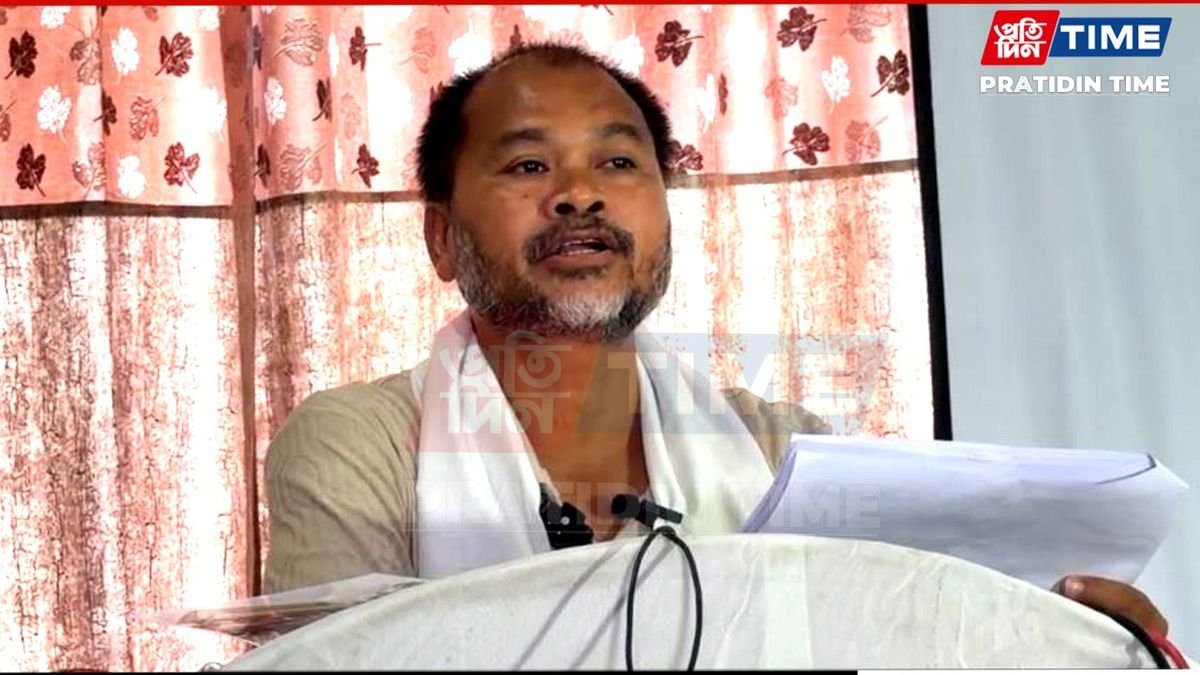
Assam MLA Akhil Gogoi has accused BJP leader and former minister Bimal Borah of corruption, linking his criticism to the government’s handling of the state’s flood crisis. The allegations have added a political dimension to the disaster as Assam confronts a reported flood-related death toll of 95.
Gogoi’s criticism comes amid growing political debate over disaster preparedness, relief distribution, infrastructure, and government accountability. Moreover, opposition leaders have used the crisis to question whether authorities have done enough to protect vulnerable communities and deliver timely assistance.
However, allegations of corruption remain claims unless competent authorities establish them through evidence or legal proceedings. Borah’s response, if any, remains important to assessing the political dispute fairly.
Tanishka Chugera: Beyond Goodbye, A Daughter’s Journey Through Love, Loss and Healing
Akhil Gogoi Targets Bimal Borah
Akhil Gogoi has intensified his criticism of Bimal Borah amid the ongoing political debate surrounding Assam’s flood response.
Gogoi has raised allegations of corruption while questioning governance and accountability. Furthermore, the timing has increased attention because the state continues to deal with deaths, displacement, damaged infrastructure, and pressure on relief operations.
The accusation has consequently become part of the broader political confrontation over flood management.
However, an allegation from a political leader does not by itself establish that corruption occurred.
Flood Death Toll Raises Political Pressure
The reported death toll of 95 has increased pressure on Assam’s government.
Flood emergencies require authorities to coordinate rescue operations, relief camps, healthcare, food distribution, transportation, and rehabilitation. Moreover, each reported death can intensify public demands for accountability and stronger disaster preparedness.
Opposition leaders can therefore use the crisis to question government performance.
However, flood-related casualties can result from multiple factors, including extreme weather, geography, infrastructure limitations, and difficulties during evacuation.
Corruption Allegations Enter Flood Debate
Gogoi’s accusations add a governance dimension to the flood crisis.
Questions about corruption can involve public spending, infrastructure projects, relief distribution, or administrative decisions. Additionally, political leaders may demand investigations when they believe government resources have not produced adequate results.
Such allegations can increase scrutiny of public administration.
However, authorities must establish any wrongdoing through evidence and due process.
Government Accountability Under Spotlight
The flood crisis has placed Assam’s disaster-management system under renewed examination.
Officials must demonstrate that relief resources reach affected communities and that emergency measures operate effectively. Furthermore, authorities face questions about preparedness, infrastructure maintenance, embankment protection, and rehabilitation.
These issues can shape public perceptions of government performance.
However, accountability requires evidence-based assessment rather than relying solely on political accusations.
Relief Operations Face Greater Scrutiny
Relief camps and emergency distribution centres have become important indicators of the government’s response.
Authorities need to provide displaced families with food, drinking water, medical support, sanitation, and temporary shelter. Moreover, officials must maintain accurate records of affected households and changing camp populations.
Failures in these areas can generate political criticism.
However, conditions can vary considerably between districts and individual relief camps.
Infrastructure Becomes Political Issue
Assam’s recurring floods have repeatedly raised questions about infrastructure resilience.
Embankments, drainage systems, roads, bridges, and flood-control structures can influence how communities experience flooding. Additionally, damage to infrastructure can delay rescue operations and prevent relief supplies from reaching isolated areas.
Political leaders can therefore demand greater scrutiny of infrastructure spending.
However, severe flooding can overwhelm even functioning infrastructure.
Bimal Borah’s Response Matters
The allegations against Bimal Borah require a response from the person named in the claims.
A fair assessment should consider any explanation, evidence, or rebuttal that Borah provides. Furthermore, independent investigations would carry greater weight than competing political statements when determining whether wrongdoing occurred.
This distinction remains important during a politically sensitive disaster.
However, the absence of an immediate response would not itself prove the allegations.
Opposition Intensifies Government Scrutiny
The flood crisis gives opposition parties an opportunity to raise broader questions about governance.
Leaders can demand information about spending, relief distribution, infrastructure maintenance, and disaster preparedness. Moreover, they can visit affected communities and highlight concerns raised by residents.
Such scrutiny can encourage greater transparency.
However, political criticism should remain separate from conclusions that require formal investigation.
Relief Spending Could Face Questions
Large disasters require significant public expenditure.
Governments may allocate funds for emergency shelters, food, medicines, rescue operations, infrastructure repair, and rehabilitation. Additionally, authorities can face questions about how efficiently they use these resources.
Transparency in public spending can therefore become a major issue.
However, expenditure alone does not establish corruption.
Flood-Affected Communities Seek Assistance
For affected residents, immediate relief remains the priority.
Families may need temporary shelter, food, drinking water, healthcare, and assistance after losing homes or livelihoods. Furthermore, farmers can require support after damage to crops, livestock, and agricultural land.
Political controversies can therefore intersect with urgent humanitarian needs.
However, relief delivery should remain focused on affected communities regardless of political disagreements.
Agriculture Adds Economic Pressure
Flooding can cause substantial disruption to Assam’s rural economy.
Farmers may lose crops, livestock, equipment, and access to agricultural land. Moreover, repeated flooding can create longer-term financial stress for households that depend heavily on agriculture.
Government compensation and rehabilitation can consequently become politically important.
However, authorities must assess losses before determining eligible assistance.
Calls for Investigation Could Grow
If political allegations continue, demands for an independent investigation could increase.
Such an inquiry could examine relevant contracts, public expenditure, infrastructure projects, or administrative decisions if authorities consider those issues within its scope. Furthermore, documentary evidence and official records would provide a stronger basis for determining whether misconduct occurred.
An investigation could therefore move the dispute beyond political statements.
However, any investigation must follow applicable legal and administrative procedures.
Political Fallout Remains Uncertain
The accusations could deepen political tensions in Assam.
Opposition leaders may continue to connect governance questions with the flood response, while the government and its supporters may defend the administration’s actions. Additionally, public reaction will depend on the quality of relief and rehabilitation efforts.
The political debate could therefore continue after floodwaters recede.
However, it remains too early to predict the accusations’ long-term electoral consequences.
Conclusion
Akhil Gogoi’s corruption allegations against Bimal Borah have added another layer to Assam’s political debate as the state deals with a reported flood death toll of 95. The accusations have brought renewed attention to government accountability, relief spending, infrastructure, and disaster preparedness.
Moreover, the allegations should remain clearly distinguished from established findings. Any determination of corruption would require credible evidence, appropriate investigation, and due process. At the same time, the flood crisis has created legitimate public demands for transparency and effective relief.
Overall, the political dispute highlights the pressure facing Assam’s leadership during a major humanitarian emergency. The government’s handling of relief, rehabilitation, and any credible allegations of wrongdoing will remain central to the state’s political conversation.
FAQs
1. What did Akhil Gogoi allege against Bimal Borah?
Akhil Gogoi accused Bimal Borah of corruption while criticising governance amid Assam’s flood crisis. The allegation remains a political claim unless established through evidence or an official investigation.
2. Why has the allegation gained attention?
The accusation comes amid a reported flood death toll of 95, increasing public and political scrutiny of government accountability and disaster management.
3. Does the allegation prove corruption?
No. A political allegation does not establish wrongdoing. Authorities would need credible evidence and an appropriate investigation to determine whether corruption occurred.
4. What issues are central to the flood-related political debate?
Relief distribution, disaster preparedness, infrastructure, public spending, compensation, rehabilitation, and government accountability remain key issues.
5. Could the dispute lead to an investigation?
It could, if competent authorities decide that the allegations warrant formal examination. Any investigation would need to follow applicable legal and administrative procedures.