


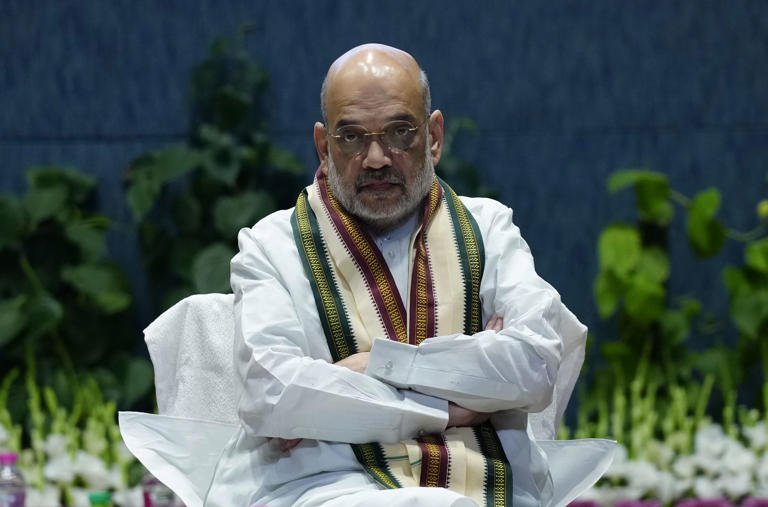
Union Home Minister Amit Shah arrived in Siliguri on Friday to begin a three-day visit to West Bengal, during which he is scheduled to attend several important programmes, including events related to border security. His visit comes at a time when border management and security remain significant issues for the Centre and the state.
Siliguri holds strategic importance because of its location near India’s international borders and the narrow Siliguri Corridor, which connects the country’s northeastern states with the rest of India. Shah’s visit is therefore expected to focus on security arrangements and the role of central agencies in protecting sensitive border areas.
Read More: Himanta Directs Atul Bora to Coordinate With Meghalaya Over Shillong Violence
During his three-day stay, the Union Home Minister is also expected to attend other official and organisational programmes. The visit is likely to draw attention because of the political importance of West Bengal and the BJP’s continued efforts to strengthen its presence in the state.
The Amit Shah Siliguri visit will bring the spotlight on border security, regional connectivity and the broader political situation in West Bengal.
Amit Shah Begins Three-Day West Bengal Visit
Amit Shah arrived in Siliguri to begin his three-day programme in West Bengal. The visit includes events related to security and meetings connected with the region’s political and administrative landscape.
The Union Home Minister’s schedule reflects the strategic importance of north Bengal. The region shares close geographical links with several neighbouring countries and serves as an important gateway to the northeastern states.
Siliguri also remains a major centre for trade, transport and communication. Its location makes it important from both an economic and security perspective.
Shah’s presence in the region is expected to bring greater attention to issues connected with border management and national security.
His three-day visit will also give the BJP leadership an opportunity to engage with party workers and local leaders in West Bengal.
Focus on Border Security
Border security is expected to remain one of the key themes of Shah’s visit.
West Bengal shares international borders with Bangladesh, Bhutan and Nepal. The state therefore plays an important role in India’s border management system.
The Border Security Force and other agencies remain responsible for maintaining security and preventing illegal activities along sensitive stretches of the border.
The Union Home Minister is expected to attend programmes connected with the security forces and review issues related to border protection.
Border security involves several challenges, including difficult terrain, cross-border movement and attempts at smuggling.
The government has increasingly focused on strengthening surveillance and improving infrastructure along international borders.
Shah’s visit to the region highlights the Centre’s continued focus on these concerns.
Strategic Importance of the Siliguri Corridor
The Amit Shah Siliguri visit also draws attention to the strategic importance of the Siliguri Corridor.
The narrow stretch of land connects mainland India with the northeastern states. It remains an important route for the movement of people, goods and essential supplies.
The corridor also has major strategic value because of its location near several international borders.
Any disruption in the region can affect connectivity with the Northeast.
The government has therefore focused on improving infrastructure and strengthening security in and around north Bengal.
Siliguri serves as an important hub for road, rail and air connectivity. Its location has also made it a key centre for military and security planning.
The Union Home Minister’s visit is expected to highlight the importance of maintaining strong security arrangements in this strategically sensitive region.
Interaction With Security and Border Forces
During his visit, Shah is expected to participate in events involving security personnel and border forces.
Such interactions provide an opportunity for the Union Home Minister to acknowledge the role played by personnel working in difficult conditions.
Border forces operate in challenging environments and remain responsible for monitoring long stretches of international borders.
The Centre has repeatedly stressed the importance of modern equipment, improved infrastructure and better coordination among security agencies.
The events during Shah’s visit may also focus on the government’s broader approach to strengthening India’s border security.
Security personnel play an important role in preventing illegal cross-border activities and protecting the country’s territorial integrity.
The visit could therefore include discussions on improving operational preparedness and strengthening border infrastructure.
Political Importance of the Bengal Visit
Apart from security-related programmes, Shah’s visit also carries political importance.
West Bengal remains one of the key states for the BJP. The party has been working to expand its organisation and strengthen its support base across different regions.
Visits by senior BJP leaders often provide an opportunity to review organisational activities and interact with party workers.
North Bengal has also remained an important political region, with several districts playing a key role in state and national elections.
Shah may use his visit to assess the party’s preparedness and encourage workers ahead of future political challenges.
The BJP and the ruling Trinamool Congress remain engaged in a strong political contest in West Bengal.
As a result, visits by senior leaders from either side often attract significant public and media attention.
North Bengal’s Role in State Politics
North Bengal holds a distinct place in West Bengal’s political landscape.
The region includes areas with different social, ethnic and economic concerns. Tea garden workers, farmers, tribal communities and residents of border districts often raise issues specific to the region.
Political parties therefore need to develop strategies that address local concerns.
The BJP has attempted to build support across north Bengal by focusing on development, infrastructure and regional issues.
The Trinamool Congress, meanwhile, has also worked to strengthen its organisation in the region.
Shah’s visit may help the BJP connect with local leaders and understand issues that could influence future political developments.
The three-day programme could also provide a platform for discussions about the party’s organisational strategy in West Bengal.
Border Infrastructure and Development
Border security is closely connected with infrastructure development.
Security forces require proper roads, communication systems and facilities to operate effectively in sensitive areas.
Improved infrastructure can also support the economic development of border communities.
People living near international borders often face unique challenges. Better roads, healthcare and public services can improve their quality of life.
At the same time, strong infrastructure can help security agencies respond quickly to emerging situations.
The central government has placed increasing emphasis on improving border infrastructure across India.
Shah’s programmes in Siliguri are expected to highlight the importance of maintaining security while supporting development in strategically important regions.
Centre’s Wider Focus on National Security
As Union Home Minister, Amit Shah oversees several key areas related to internal security and border management.
The government’s approach includes strengthening security forces, improving intelligence coordination and investing in modern technology.
Border security remains a major part of this wider strategy.
The challenges differ from one border region to another. West Bengal’s international boundaries require coordination between central agencies, state authorities and local communities.
Effective border management depends on regular communication and timely responses to security concerns.
Shah’s visit provides an opportunity to review these broader issues and interact with officials and security personnel involved in protecting the region.
Looking Ahead
The Amit Shah Siliguri visit marks the beginning of a three-day programme in West Bengal that combines border security events with wider official and political engagements.
His visit highlights the strategic importance of Siliguri and north Bengal, particularly because of the region’s proximity to international borders and the crucial Siliguri Corridor.
Border security is expected to remain a central focus, with programmes involving security forces and discussions on the challenges faced by the region.
At the same time, the visit carries political significance as the BJP continues its efforts to strengthen its organisation in West Bengal.
The coming days will see the Union Home Minister participate in several events across the state. His engagements are likely to focus on national security, regional development and the BJP’s wider presence in Bengal.
As Shah begins his three-day visit, attention will remain on the outcomes of his meetings and events, especially those connected with strengthening border security in one of India’s most strategically important regions.
Read More: India’s Sports Minister Unveils Ambitious Plan for Olympic Talent Development