


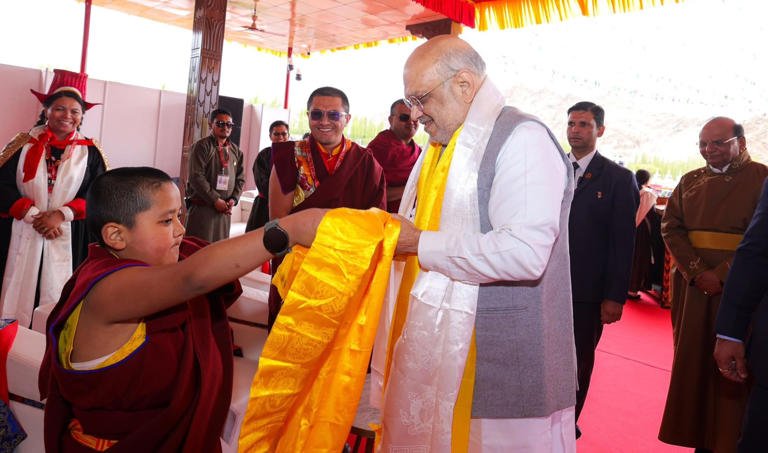
Union Home Minister Amit Shah held a crucial meeting with leaders from Ladakh, including noted climate activist Sonam Wangchuk, ahead of the scheduled May 22 talks. The meeting marked a significant step toward addressing long-standing concerns raised by the people of Ladakh regarding governance, representation, and constitutional safeguards.
During the interaction, Amit Shah emphasized the need for a constructive and “open mind” approach from all stakeholders. He urged Ladakh leaders to engage in dialogue with a spirit of cooperation and mutual understanding. The meeting comes at a time when demands for greater autonomy and constitutional protections have gained momentum in the region.
Participants described the discussion as positive and forward-looking. They expressed hope that the upcoming talks would lead to meaningful outcomes. The Centre has indicated its willingness to listen to concerns and explore viable solutions that align with national interests and local aspirations.
Read More: Tripura Assembly Special Session on Women’s Reservation
Key Issues Raised by Ladakh Leaders
Ladakh leaders, including Sonam Wangchuk, raised several critical issues during the meeting. One of the primary demands revolves around granting statehood or constitutional safeguards under provisions such as the Sixth Schedule. These measures aim to protect the region’s unique cultural identity, environment, and land rights.
Sonam Wangchuk has been a prominent voice advocating for sustainable development in Ladakh. He has repeatedly highlighted the fragile ecology of the region and the need for policies that prioritize environmental protection. During the meeting, he reiterated the importance of involving local communities in decision-making processes.
In addition, leaders discussed concerns related to employment opportunities, land ownership, and political representation. Since Ladakh became a Union Territory in 2019, many residents have sought greater participation in governance. They believe that stronger institutional mechanisms can ensure balanced development.
Amit Shah acknowledged these concerns and assured the delegation that the government is committed to addressing them. He emphasized that any decision would be taken after careful consideration and consultation with all stakeholders.
Call for an Open Mind and Constructive Dialogue
Amit Shah’s call for an open-minded approach formed the core message of the meeting. He stressed that dialogue is the most effective way to resolve differences and build consensus. According to him, both the government and Ladakh leaders must approach the talks with flexibility and a willingness to understand each other’s perspectives.
The Home Minister also highlighted the importance of maintaining peace and stability in the region. Ladakh holds strategic significance for India, and its development must align with broader national priorities. At the same time, Shah acknowledged the need to respect local sentiments and address genuine concerns.
Leaders who attended the meeting welcomed this approach. They noted that open communication could pave the way for long-term solutions. Moreover, they expressed readiness to participate actively in the upcoming talks and present their viewpoints in a constructive manner.
Role of Sonam Wangchuk in the Dialogue
Sonam Wangchuk’s involvement in the discussions adds a unique dimension to the ongoing dialogue. Known for his work in education and environmental conservation, Wangchuk has become a key representative of Ladakh’s civil society.
He has previously organized campaigns and awareness drives to highlight issues faced by the region. His advocacy focuses on sustainable development, climate resilience, and community participation. During the meeting with Amit Shah, Wangchuk emphasized the need for policies that safeguard Ladakh’s ecological balance.
He also called for transparent governance and stronger local institutions. According to him, empowering local communities is essential for achieving inclusive growth. His presence in the discussions reflects the growing role of civil society in shaping policy debates.
Expectations from the May 22 Talks
The upcoming May 22 talks are expected to play a crucial role in determining the future course of Ladakh’s governance. Both the Centre and Ladakh leaders have expressed optimism about reaching a consensus on key issues.
Observers believe that the talks could address demands related to constitutional safeguards, administrative reforms, and economic development. The government is likely to explore options that balance regional aspirations with national interests.
For Ladakh residents, the talks represent an opportunity to voice their concerns at the highest level. They hope that the dialogue will lead to concrete measures that improve governance and protect their cultural and environmental heritage.
At the same time, experts stress the importance of realistic expectations. Achieving consensus on complex issues requires time, patience, and continuous engagement. Therefore, the May 22 talks should be seen as part of an ongoing process rather than a one-time solution.
Broader Implications for Ladakh and India
The outcome of these discussions could have broader implications for Ladakh and the country as a whole. Ladakh’s strategic location and unique cultural identity make it an important region in India’s geopolitical landscape.
Addressing local concerns effectively can strengthen trust between the government and the people. It can also contribute to stability and development in the region. Furthermore, the dialogue sets an example of how democratic processes can be used to resolve complex issues.
The Centre’s approach to engaging with Ladakh leaders reflects its commitment to inclusive governance. By encouraging open dialogue, the government aims to build consensus and ensure that policies are aligned with the needs of the people.
Conclusion
The meeting between Amit Shah and Ladakh leaders, including Sonam Wangchuk, marks a significant step ahead of the May 22 talks. The emphasis on an open mind and constructive dialogue highlights the importance of collaboration in addressing regional concerns.
As the talks approach, expectations remain high among Ladakh residents. The outcome will likely shape the region’s future and influence its development trajectory.
Ultimately, the success of the dialogue will depend on the willingness of all parties to engage sincerely and work toward common goals. If approached with mutual respect and understanding, the discussions could pave the way for meaningful progress in Ladakh.
Read More: Nagaland Conducts Mega Mock Drill on Earthquake Preparedness