


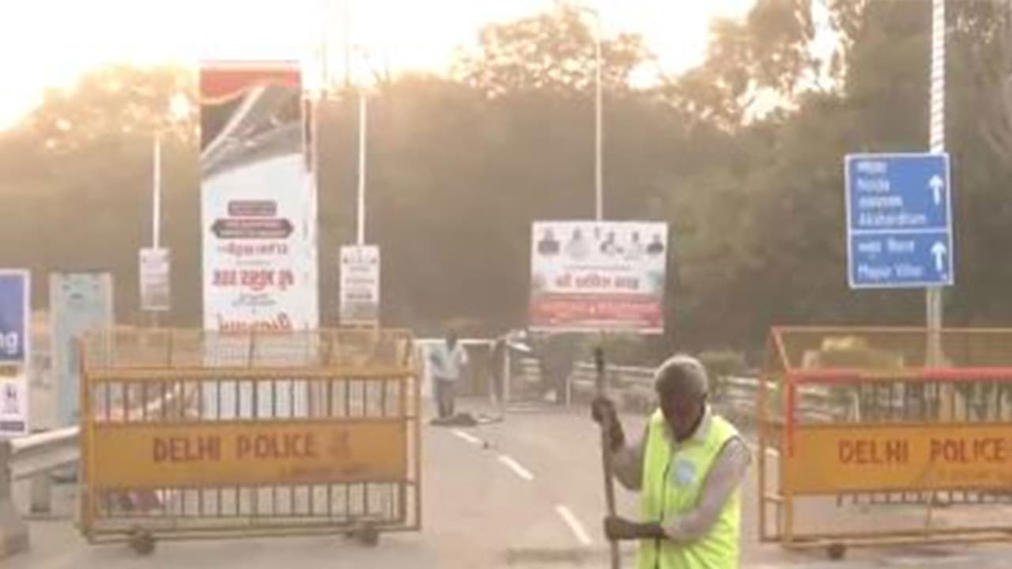
Union Home Minister Amit Shah is set to inaugurate two major infrastructure projects in Delhi — Barapullah Phase-3 and the Mukarba Chowk underpass. The projects aim to improve road connectivity and ease traffic movement across several important parts of the national capital.
The two projects form part of Delhi’s ongoing efforts to expand road infrastructure and address congestion at major traffic corridors. Their opening is expected to improve connectivity for commuters and reduce pressure on existing routes.
Barapullah Phase-3 to improve connectivity
The third phase of the Barapullah elevated corridor is an important part of Delhi’s road infrastructure network. The project aims to provide a smoother connection between major parts of the city and reduce congestion on busy surface roads.
The Barapullah corridor has developed in phases over the years. Its expansion seeks to create additional capacity for vehicles travelling through the eastern and central parts of Delhi.
The latest phase is expected to provide commuters with an alternative route and improve traffic flow around key junctions.
Mukarba Chowk underpass targets congestion
The Mukarba Chowk underpass is another significant road project scheduled for inauguration.
Mukarba Chowk remains one of Delhi’s important traffic intersections. Heavy traffic volumes have often resulted in congestion around the junction, particularly during peak hours.
The new underpass will allow vehicles to pass beneath the busy intersection. This could reduce conflicts between crossing traffic and improve the movement of vehicles along the corridor.
The project is expected to benefit commuters travelling towards northern Delhi and areas connected to the Outer Ring Road.
Projects aim to reduce travel time
Improving traffic flow remains one of Delhi’s major infrastructure challenges. The capital experiences high vehicle density across several arterial roads, leading to delays during peak travel periods.
Grade-separated infrastructure such as elevated roads and underpasses can separate traffic movements and reduce interruptions at busy junctions.
The Barapullah Phase-3 project and Mukarba Chowk underpass could therefore help commuters avoid some of the bottlenecks on existing routes.
Reduced congestion could also make journeys more predictable for daily commuters.
Focus on Delhi’s road infrastructure
The projects come as authorities continue to focus on improving Delhi’s transportation infrastructure.
Several major road projects have sought to address congestion through flyovers, underpasses, elevated corridors and improved intersections. Such infrastructure can increase road capacity while allowing traffic to move more efficiently.
The Barapullah corridor has become one of the more prominent examples of this approach. Its phased development has aimed to create faster links between different parts of the city.
Potential benefits for commuters
The two projects could provide benefits to thousands of commuters who travel through the affected corridors every day.
The Mukarba Chowk underpass could reduce waiting time at the intersection by allowing through traffic to bypass surface-level crossings. The improved traffic movement could also benefit buses, commercial vehicles and emergency services.
Similarly, Barapullah Phase-3 could provide an additional high-capacity route for vehicles travelling across the city.
The projects may also reduce congestion on nearby roads by distributing traffic across multiple routes.
Infrastructure projects could support economic activity
Better road connectivity can have wider economic benefits. Efficient transport links can reduce travel times for workers and improve the movement of goods and commercial vehicles.
Businesses located along the connected corridors could benefit from improved accessibility. Reduced congestion can also lower fuel consumption for vehicles that otherwise spend long periods in traffic.
For Delhi’s large commuter population, even small improvements in travel efficiency can have a significant cumulative impact.
Inauguration marks another step in Delhi’s development
The inauguration of Barapullah Phase-3 and the Mukarba Chowk underpass marks another step in Delhi’s ongoing road infrastructure expansion.
Both projects seek to address congestion through grade-separated road infrastructure and improved connectivity. Their effectiveness will depend on traffic management, integration with existing roads and how commuters use the new routes.
With Delhi continuing to face heavy traffic volumes, projects that increase road capacity and improve junction efficiency remain an important part of the city’s infrastructure planning.