


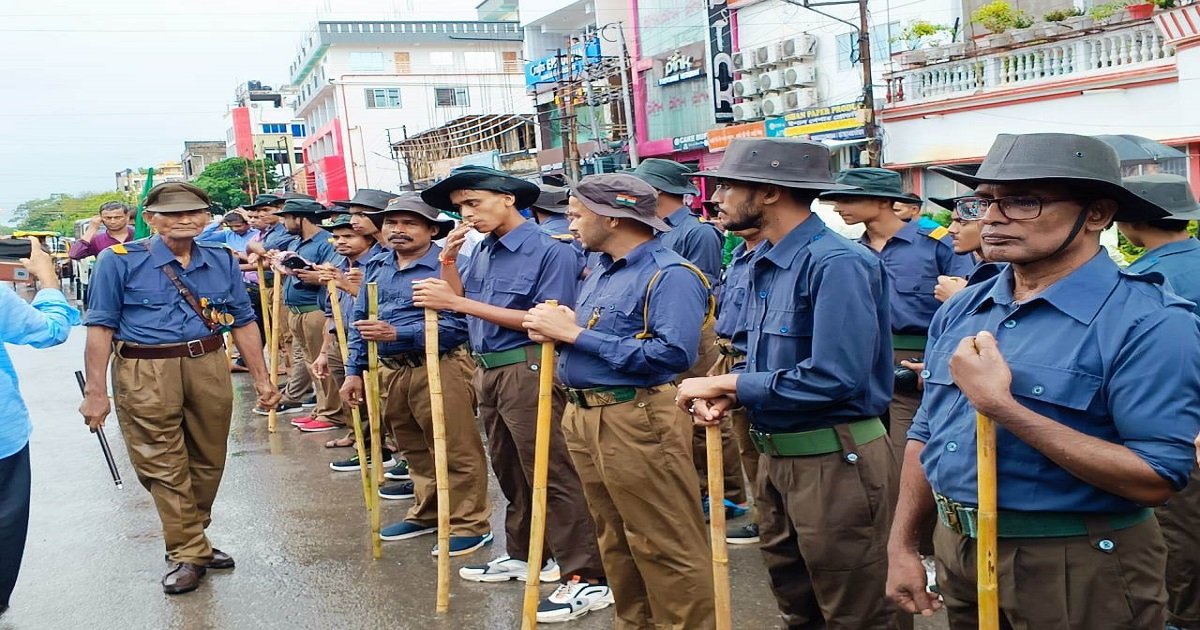
A worrying trend is emerging in Tripura with regional political group Amra Bangali escalating its activities by projecting Bengalis as a community under threat. The outfit, which has been attempting to counter the narrative that “Bengalis are outsiders and refugees,” recently organised a parade of its so-called Bangali Bahini — a move critics fear could ignite unnecessary communal divisions in the state.
For months now, attempts have been made to portray Bengalis in Tripura as non-indigenous. While the debate on identity and migration is not new to the state, the current approach of Amra Bangali — marked by aggressive symbolism and rhetoric — is being seen as a dangerous strategy that risks disturbing the delicate social harmony.
On Saturday, party leaders led by state president Gauranga Rudra Pal held a rally and protest meeting at Orient Chowmuhani in Agartala. Pal accused security forces of wrongfully detaining and deporting Bengali-speaking Indians under the pretext of checking illegal immigration. He further alleged that genuine citizens were being harassed and stripped of their identity documents, calling it an insult to the Bengali language and heritage.
While the party has tried to frame its agitation as a struggle for justice and dignity, its high-pitched narrative and formation of an “action squad” raise serious concerns. Political observers fear that such theatrics might not only deepen mistrust between communities but also turn communal in nature if unchecked.
Tripura has a complex demographic history shaped by migration, partition, and ethnic struggles. Any attempt to single out communities — whether as “outsiders” or as “victims” — risks reviving past tensions. Instead of fostering unity, movements like that of Amra Bangali may further polarise society along ethnic and linguistic lines.
If political leaders and civil society fail to intervene, this aggressive campaign could spiral into communal discord, undoing years of hard-earned peace in Tripura. At a time when the state needs inclusive politics and harmony, such divisive mobilisations only cast a shadow on Tripura’s future.