


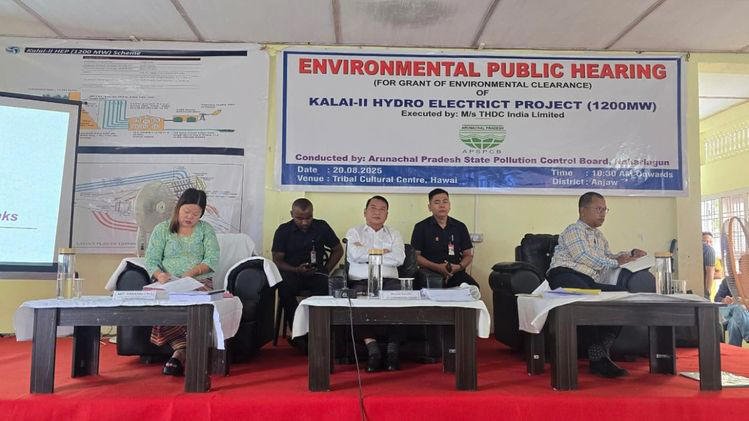
Anjaw district administration recently conducted a public hearing on the proposed 1200 MW Kalai-II hydropower project. The meeting brought together officials, company representatives, and local communities to discuss the project’s scope, benefits, and concerns.
The hearing aimed to ensure transparency while giving residents an opportunity to voice their opinions before the project moves forward. By addressing environmental issues and community interests, the administration highlighted the importance of public participation in large-scale infrastructure development.
Read More: 6 Health Benefits of Amla Juice and Daily Use Tips
Anjaw Holds Public Hearing on Kalai-II Hydropower Project
The Kalai-II project, proposed on the Lohit River in Arunachal Pradesh, has the potential to generate 1200 MW of power. At the public hearing, experts explained that the project would not only boost the state’s energy capacity but also contribute significantly to the national grid.
District officials emphasized that the consultation was essential to maintain balance between development and ecological preservation. People from nearby villages attended in large numbers, expressing both support and apprehensions about the project’s long-term impact.
The hearing provided a platform for open dialogue, with residents raising issues related to land acquisition, rehabilitation, and environmental risks. Officials assured the public that all concerns would be carefully reviewed before granting approvals.
Environmental and Social Concerns Highlighted
One of the key aspects of the hearing was the discussion on environmental sustainability. Participants questioned how the project might affect the Lohit River’s flow, surrounding forests, and biodiversity. Environmental experts explained that detailed impact assessments were being carried out to minimize risks.
Locals also raised concerns about displacement and loss of agricultural land. The administration clarified that adequate compensation and rehabilitation measures would be implemented. They stressed that the project cannot progress without ensuring fair treatment of affected families.
The hearing also touched upon the potential impact on traditional practices and livelihoods. Communities dependent on farming, fishing, and forest produce wanted guarantees that their way of life would not be permanently disrupted. Officials responded by promising mitigation measures and alternative livelihood opportunities.
Development Prospects and Economic Benefits
While concerns were evident, many participants also saw the Kalai-II project as a chance for growth. Hydropower projects bring opportunities for infrastructure development, job creation, and local business growth. For Anjaw, one of the state’s less developed districts, the project could mean better roads, healthcare facilities, and educational support.
Officials explained that during construction, the project would generate a large number of skilled and unskilled jobs, prioritizing local youth. Long-term benefits would also include revenue generation for the state and reliable electricity supply to power industries and households.
The administration highlighted how hydropower, as a renewable source, fits into India’s commitment to clean energy and reducing carbon emissions. By contributing to the national renewable energy goals, Arunachal Pradesh would play a critical role in addressing climate change challenges.
Balancing Development with Sustainability
The Anjaw hearing reflected a broader debate across Arunachal Pradesh: how to pursue rapid development while protecting fragile ecosystems. With multiple hydropower projects planned in the state, maintaining ecological balance remains a major challenge.
Anjaw holds public hearing on Kalai-II hydropower project not only to assess its feasibility but also to underline the need for inclusive decision-making. Officials reiterated that development cannot come at the cost of environmental destruction. The project developers must comply with strict environmental clearance procedures before moving ahead.
The district administration also urged communities to actively participate in monitoring and implementation once the project starts. Such cooperation would help ensure that promises made during the consultation are translated into action.
Way Forward for the Kalai-II Project
The hearing concluded with officials noting down all feedback and promising further reviews with higher authorities. The next steps involve analyzing the environmental and social impact assessments in detail. Approvals from state and central agencies will depend on how effectively concerns are addressed.
Residents were assured that they would remain involved in subsequent stages of the project. The administration encouraged them to continue voicing opinions, emphasizing that inclusive participation is the foundation of transparent governance.
If approved, the Kalai-II project could become one of the largest hydropower projects in Arunachal Pradesh. However, its success will depend on how well authorities balance the twin goals of development and environmental protection.
The public hearing in Anjaw on the 1200 MW Kalai-II hydropower project marks an important step in Arunachal Pradesh’s energy journey. By bringing together officials, developers, and local communities, the administration ensured that concerns about displacement, environment, and livelihoods were openly addressed.
Anjaw holds public hearing on Kalai-II hydropower project not just as a formality but as a genuine platform for dialogue. The session reinforced that while hydropower offers enormous potential, its benefits must reach communities fairly and without ecological compromise.
The outcome of this consultation will shape the way forward, determining whether the Kalai-II project proceeds as a model of sustainable development. With continued cooperation, Arunachal Pradesh can harness its rivers responsibly, securing both clean energy and community well-being.
Read More: Manipur Forest Officials Demolish Illegal Structures in Heingang