


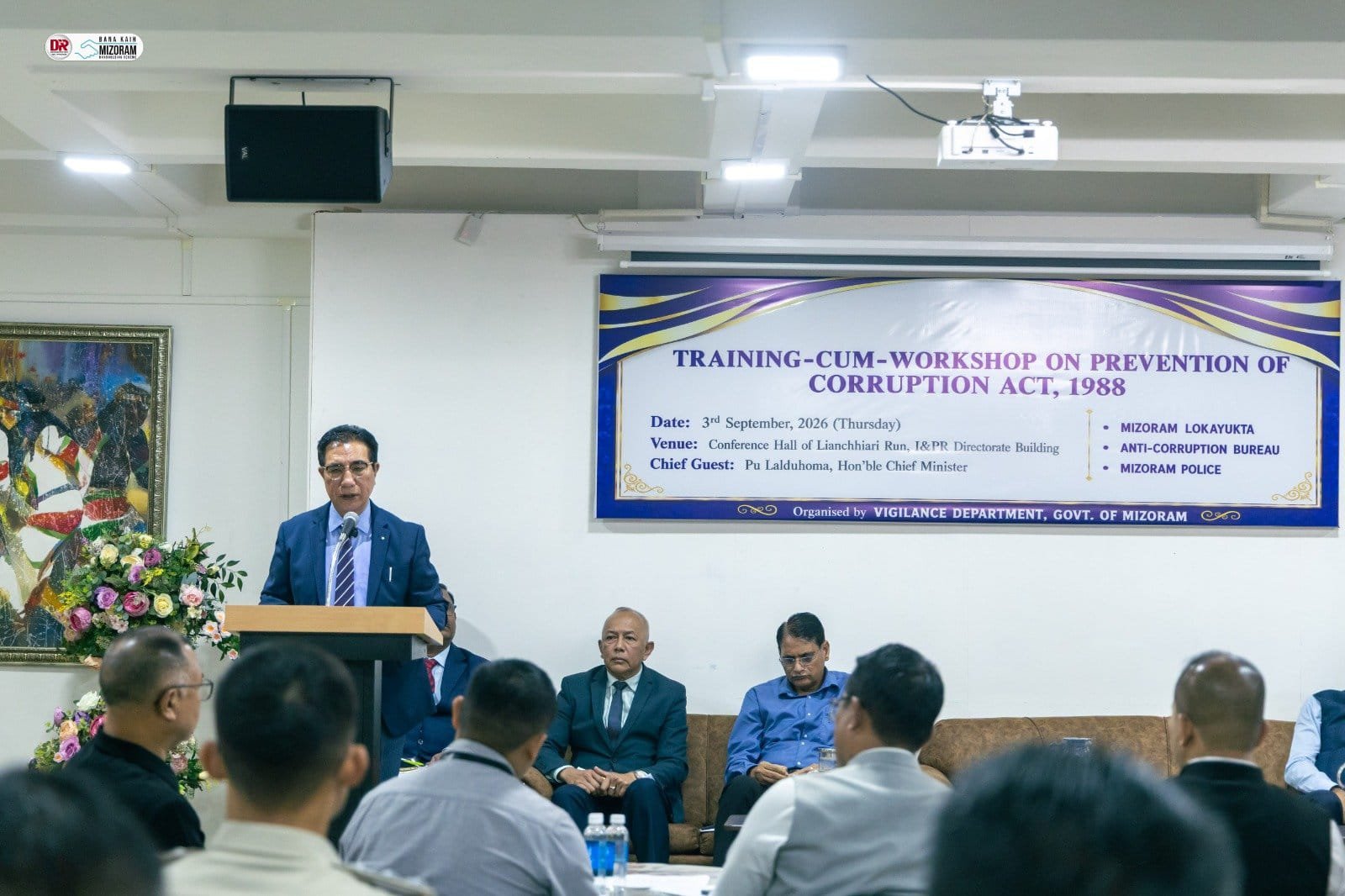
The Anti-Corruption Training initiative received a major boost in Mizoram as Chief Minister Lalduhoma inaugurated a specialised training-cum-workshop focused on the Prevention of Corruption Act, 1988. The programme aims to strengthen awareness of anti-corruption laws among officials and improve administrative practices. Moreover, the workshop places transparency, accountability and ethical governance at the centre of public administration. The initiative reflects Mizoram’s efforts to build stronger institutional mechanisms for preventing corruption.
Aviation Boom: Northeast Functional Airports Count Hits 17, Up From 9 in 2014
Anti-Corruption Training Focuses on Legal Awareness
The specialised workshop focuses on the Prevention of Corruption Act, 1988, which provides an important legal framework for addressing corruption-related offences in public administration.
Furthermore, training officials on the provisions of the law can improve their understanding of legal responsibilities and administrative procedures.
Participants can gain greater awareness of the standards expected from public servants while handling government responsibilities. Consequently, better legal awareness can help officials make decisions with greater clarity and accountability.
Additionally, such programmes can provide a platform for discussing practical administrative challenges and strengthening institutional understanding of anti-corruption measures.
Anti-Corruption Training Strengthens Administrative Transparency
Transparency plays an important role in maintaining public confidence in government institutions. Citizens expect public authorities to make decisions fairly and follow established procedures.
Moreover, greater awareness of anti-corruption regulations can encourage officials to follow appropriate processes while carrying out their responsibilities.
The workshop also highlights the importance of accountability within government departments. Therefore, officials can better understand the consequences of failing to meet legal and ethical responsibilities.
Meanwhile, regular training can help keep administrative personnel informed about relevant legal provisions and evolving approaches to preventing corruption.
Anti-Corruption Training Promotes Accountable Governance
Good governance requires public institutions to operate responsibly and maintain clear standards for official conduct. The training programme contributes to this objective by focusing attention on corruption prevention.
Furthermore, workshops can encourage officials to identify potential risks within administrative processes and respond according to established rules.
The involvement of senior government leadership also signals the importance of integrity within public administration. Consequently, the initiative can reinforce the message that transparency and accountability should remain fundamental principles of governance.
Additionally, stronger institutional awareness can support more consistent implementation of anti-corruption measures across government departments.
The programme therefore combines legal education with broader efforts to strengthen administrative integrity.
Anti-Corruption Training Supports Long-Term Institutional Reform
A single workshop cannot eliminate corruption by itself. However, continued training and effective institutional mechanisms can contribute to long-term improvements in public administration.
Moreover, departments can reinforce lessons from such programmes through clear procedures, internal oversight and appropriate accountability systems.
Regular capacity-building programmes can also help officials understand their responsibilities and identify appropriate channels for addressing suspected misconduct.
Therefore, sustained efforts will remain important for transforming awareness of anti-corruption legislation into consistent administrative practices.
The Anti-Corruption Training initiative consequently represents another step toward strengthening transparency and accountability in Mizoram’s administration. By combining legal awareness with institutional responsibility, the programme can support the state’s broader objective of promoting ethical and accountable governance.
Conclusion
The Anti-Corruption Training initiative, inaugurated by Chief Minister Lalduhoma, focuses on the Prevention of Corruption Act, 1988, while promoting transparency and accountability in public administration. The specialised workshop can strengthen officials’ understanding of anti-corruption regulations and ethical responsibilities. Moreover, continued training, institutional oversight and consistent implementation will remain essential for building stronger and more accountable governance systems.
FAQs
1. Who inaugurated the anti-corruption workshop?
Mizoram Chief Minister Lalduhoma inaugurated the specialised training-cum-workshop.
2. What law does the training focus on?
The workshop focuses on the Prevention of Corruption Act, 1988.
3. What is the main purpose of the training?
The programme aims to strengthen awareness of anti-corruption provisions while promoting transparency and accountability in administration.
4. Why is legal training important for public officials?
It can help officials understand their legal responsibilities and follow appropriate administrative procedures.
5. Can one workshop eliminate corruption?
No. Long-term progress requires continued training, effective oversight, clear procedures and consistent accountability across institutions.