


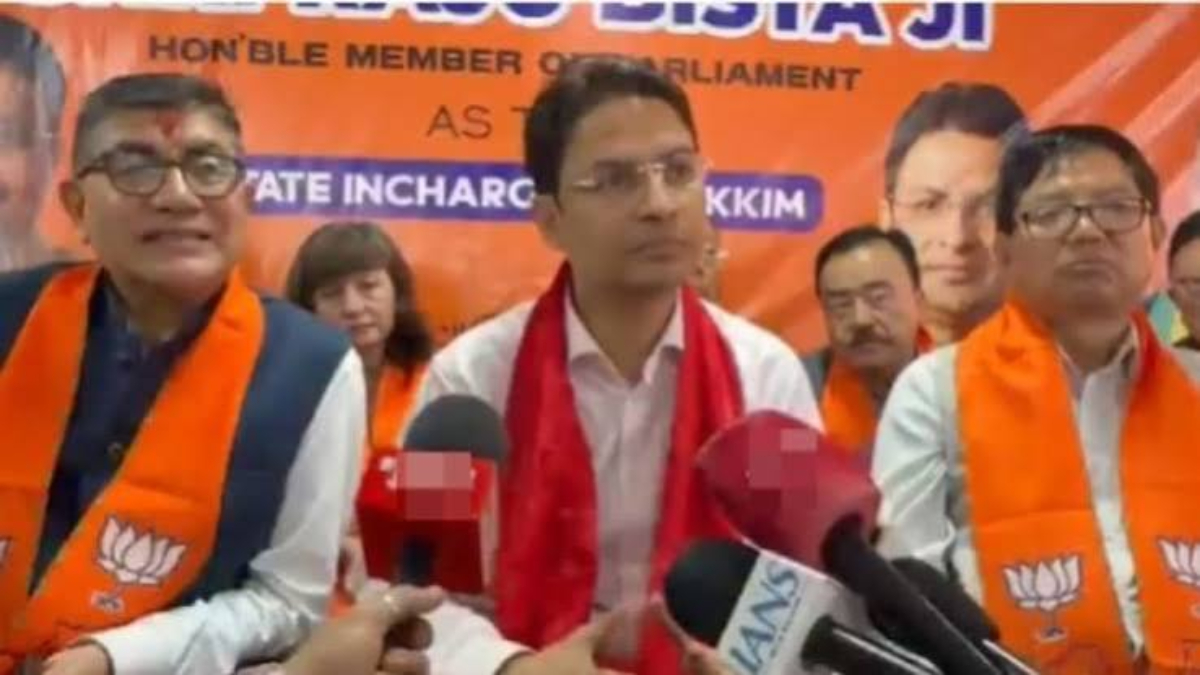
Article 371F has no connection with any proposal to merge Darjeeling with Sikkim, Darjeeling BJP MP Raju Bista has said, seeking to clarify recent political discussions around the region and Sikkim’s constitutional protections.
Bista said there was no proposal before the government to merge Darjeeling with Sikkim. He also stressed that Article 371F, which provides special constitutional provisions for Sikkim, is permanent and remains an important safeguard for the state.
Bista rejects merger speculation
Bista’s remarks come amid renewed political discussion over Darjeeling, the Gorkha community’s long-standing demands and Sikkim’s special constitutional position.
The MP maintained that the issues concerning Darjeeling and Sikkim should not be linked through speculation about a merger. According to him, there is no government proposal to combine Darjeeling with Sikkim.
The clarification is significant because any discussion involving Sikkim’s constitutional status can generate concern among political groups and residents. Article 371F has a special place in Sikkim’s constitutional framework, following the state’s transition from a protectorate to a full-fledged state of India in 1975.
Article 371F protects Sikkim’s status
Article 371F was introduced through the Constitution (Thirty-sixth Amendment) Act, 1975. It contains special provisions for Sikkim and provides constitutional safeguards linked to the state’s unique historical and political circumstances.
Bista said the provision should not be viewed as temporary. Instead, he described Article 371F as a permanent constitutional protection for Sikkim.
The provision covers several aspects of governance and representation in the state. It also gives the President specific powers concerning the application of laws and other constitutional arrangements in Sikkim.
Therefore, discussions about changes to Sikkim’s status require a clear understanding of the constitutional framework rather than political speculation.
Why Article 371F matters
Sikkim became India’s 22nd state in 1975 after a constitutional process that followed a referendum and subsequent parliamentary action. The special provisions under Article 371F formed part of that constitutional settlement.
The article also contains safeguards concerning the rights and interests of different sections of Sikkim’s population. Over the years, political leaders in the state have repeatedly stressed the importance of preserving these protections.
Bista’s statement therefore seeks to separate the debate over Darjeeling from questions surrounding Sikkim’s constitutional identity.
Darjeeling issue remains separate
Darjeeling has a distinct political history and has witnessed prolonged demands for greater political and administrative autonomy. The Gorkhaland movement, in particular, has shaped regional politics for decades.
However, the demand for a separate Gorkhaland state and the constitutional provisions applicable to Sikkim are separate matters.
Bista’s comments indicate that discussions over Darjeeling should not be interpreted as an attempt to alter Sikkim’s existing constitutional status. Moreover, a merger between Darjeeling and Sikkim would involve significant constitutional, administrative and political questions.
The MP’s clarification comes as political parties and organisations continue to debate the future of the Darjeeling hills and the wider Gorkha political issue.
Political debate needs clear facts
The question of Sikkim’s special status has remained politically sensitive. Consequently, statements on Article 371F often receive close attention in both Sikkim and neighbouring Darjeeling.
Also reinforces the distinction between regional political demands and Sikkim’s constitutional safeguards.
Meanwhile, political leaders in Darjeeling have continued to raise issues related to identity, development, governance and representation. These concerns have frequently featured in debates involving the Gorkha community.
Any future political discussion involving the region will therefore need to account for the separate constitutional and administrative positions of Darjeeling and Sikkim.
Sikkim safeguards remain central
Bista’s remarks place Article 371F at the centre of the clarification over Sikkim’s status.
For Sikkim, the constitutional safeguard remains closely tied to the state’s political history and institutional arrangements. For Darjeeling, meanwhile, questions of identity, representation and regional aspirations continue to drive political debate.
As a result, keeping the two issues distinct may help avoid confusion over their constitutional and political implications. Bista’s latest statement makes clear that, according to him, no proposal exists to merge Darjeeling with Sikkim, while Article 371F continues to protect Sikkim’s special constitutional position.
Akhil Gogoi now challenges Sarma over Kamakhya oath