


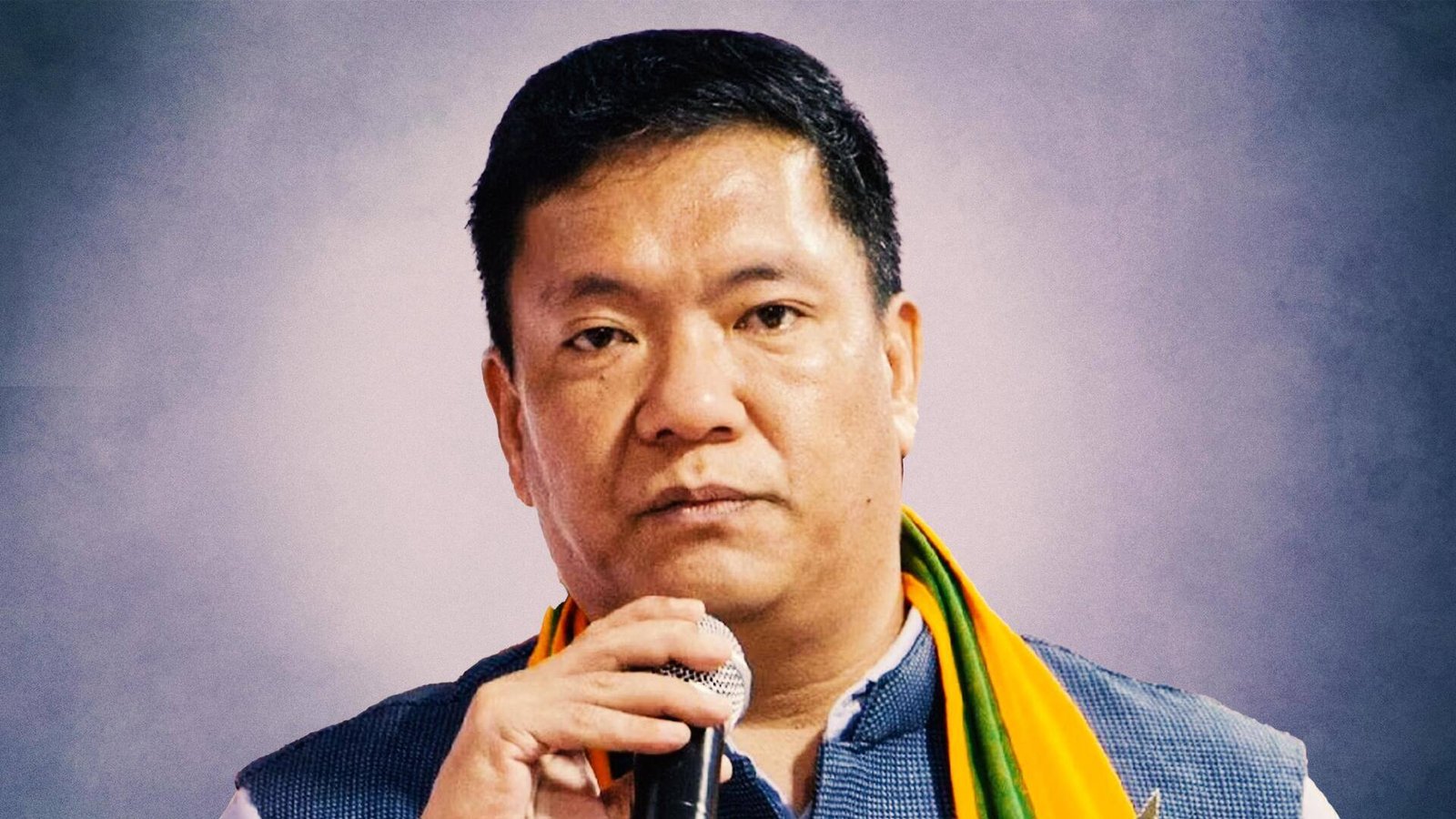
Arunachal Pradesh Chief Minister Pema Khandu laid foundation stones and inaugurated development projects in Lower Siang district worth over Rs 150 crore, reinforcing the state government’s focus on infrastructure-led and people-centric growth. The projects span key sectors such as roads, public buildings, drinking water, healthcare, and urban amenities, aiming to improve quality of life and strengthen regional connectivity.
Addressing local residents and officials during the programme, the chief minister said development projects in Lower Siang district reflect the government’s commitment to balanced growth across Arunachal Pradesh. He stressed that remote and semi-urban districts must receive focused attention so that development reaches every household.
The event marked a major milestone for Lower Siang, a district that plays a strategic and economic role due to its location and growing population.
Read More: Tripartite Pact Signed for Frontier Nagaland Authority
Development projects in Lower Siang district boost infrastructure
The development projects in Lower Siang district include a mix of newly inaugurated works and foundation stones for upcoming initiatives. Officials said these projects were designed to address long-standing infrastructure gaps and support future growth.
Road connectivity forms a major component of the package. Improved roads will enhance access between villages, administrative centres, and markets. The chief minister said better roads reduce travel time, support trade, and improve access to essential services.
In addition, public infrastructure such as office buildings and community facilities will strengthen administrative efficiency and public service delivery in the district.
Focus on roads and connectivity
Improving connectivity remains central to the development projects in Lower Siang district. CM Khandu said roads serve as the backbone of development, especially in hilly and riverine regions like Arunachal Pradesh.
New and upgraded road projects will connect interior areas with district headquarters and neighbouring regions. Officials said these roads are designed to withstand challenging terrain and weather conditions.
Enhanced connectivity is expected to benefit farmers, traders, students, and patients by making travel safer and more reliable throughout the year.
Strengthening healthcare and public services
Healthcare infrastructure also features prominently among the development projects in Lower Siang district. The chief minister inaugurated and laid foundations for facilities aimed at improving access to medical services.
Officials said upgraded healthcare centres will reduce the need for residents to travel long distances for treatment. Better facilities, they added, contribute to early diagnosis and improved health outcomes.
Alongside healthcare, projects related to water supply and sanitation were highlighted. Clean drinking water and improved sanitation directly impact public health and living standards.
Urban development and civic amenities
Urban development initiatives form another key component of the development projects in Lower Siang district. CM Khandu said towns and growing settlements require planned infrastructure to manage expansion sustainably.
Projects related to drainage, public spaces, and civic amenities aim to improve urban living conditions. Such investments, officials said, help prevent flooding, improve hygiene, and create more liveable public environments.
The chief minister emphasised that urban planning must keep pace with population growth to avoid future challenges.
Economic impact and employment generation
The development projects in Lower Siang district are expected to generate local employment during both construction and operational phases. CM Khandu said infrastructure projects stimulate economic activity by creating jobs and supporting local businesses.
Contractors, suppliers, and skilled workers from nearby areas are likely to benefit. Over time, improved infrastructure can attract private investment and promote entrepreneurship.
The chief minister said development must translate into livelihoods. Therefore, infrastructure growth and economic opportunity should progress together.
District-specific development approach
CM Khandu said the government follows a district-specific development approach, recognising that each region faces unique challenges. The development projects in Lower Siang district were planned after assessing local needs and priorities.
He added that decentralised planning allows more effective use of resources. By empowering district administrations, the government aims to ensure timely execution and better outcomes.
Officials said feedback from local representatives and communities guided project selection.
Government commitment to timely execution
During the programme, CM Khandu directed officials to ensure quality and timely completion of all projects. He said public trust depends on delivery rather than announcements.
According to him, delays increase costs and inconvenience citizens. Therefore, strict monitoring and accountability remain essential.
The chief minister assured that the state government would regularly review progress and address implementation challenges.
Public response and local optimism
Residents of Lower Siang welcomed the launch of development projects worth over Rs 150 crore. Many said the initiatives would address long-pending demands related to roads, water supply, and public facilities.
Local leaders described the visit as a sign of the government’s attention to district-level issues. They expressed hope that improved infrastructure would enhance education, healthcare, and economic prospects.
Community members also urged authorities to maintain transparency and involve locals during execution.
Alignment with Arunachal’s development vision
The development projects in Lower Siang district align with Arunachal Pradesh’s broader development vision focused on connectivity, human development, and inclusive growth. CM Khandu said the government aims to reduce regional disparities by prioritising infrastructure in less-developed areas.
He added that development should respect local culture and environment. Sustainable construction practices and community participation remain important considerations.
The projects also complement central government initiatives aimed at improving infrastructure in the Northeast.
Strategic importance of Lower Siang
Lower Siang holds strategic importance due to its location and demographic profile. Strengthening infrastructure in the district contributes to administrative efficiency and regional stability.
CM Khandu said development in border and riverine districts strengthens the state as a whole. By improving living standards, the government aims to retain population and reduce migration pressures.
Officials noted that infrastructure growth also enhances disaster preparedness and response capability.
Looking ahead
As foundation stones were laid and projects inaugurated, attention now turns to execution. The success of the development projects in Lower Siang district will depend on coordination, monitoring, and community cooperation.
CM Khandu expressed confidence that the projects would bring visible change in the coming years. He reiterated that development remains an ongoing process rather than a one-time effort.
Overall, the launch of development projects worth over Rs 150 crore marks a significant step for Lower Siang district. By focusing on roads, healthcare, water supply, and civic amenities, the Arunachal Pradesh government aims to strengthen infrastructure, improve livelihoods, and ensure that growth reaches every corner of the district.
Read More: Nagaland Recruitment Issue Raised in Parliament