


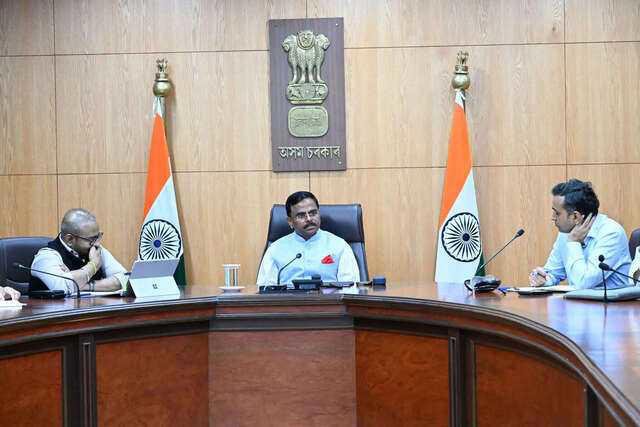
Assam is taking significant steps towards integrating artificial intelligence (AI) into governance and public administration, with the state’s Chief Secretary leading efforts to modernise government functioning and improve service delivery. The move reflects Assam’s growing focus on digital governance and technology-driven administrative reforms.
The initiative aims to use AI tools and data-driven systems to enhance decision-making, improve transparency, and ensure faster delivery of public services across departments. Officials believe that the integration of advanced technologies into governance can help improve efficiency and reduce administrative delays.
Read More: Arunachal Highway Expansion Targets Remote Border Areas
The Chief Secretary has reportedly been reviewing various possibilities for incorporating AI into government operations, including data analysis, public grievance management, disaster monitoring, healthcare administration, and education services. The effort aligns with broader national initiatives promoting digital transformation and smart governance.
Assam focuses on technology-driven governance
The Assam government has been steadily increasing its emphasis on digital infrastructure and technology-based governance over the past few years. Officials say the introduction of AI tools could further strengthen administrative efficiency and improve communication between departments.
According to government sources, AI-based systems may help authorities analyse large volumes of data more effectively, allowing faster policy implementation and better monitoring of development projects. Automated systems can also assist departments in identifying gaps in public service delivery.
The Chief Secretary stressed the importance of adopting modern technologies to meet the growing administrative demands of a rapidly developing state. He reportedly highlighted that digital innovation is essential for ensuring transparent and responsive governance.
Officials noted that AI integration could help simplify several government processes that currently require extensive manual work. From document verification to data management, automated tools are expected to improve operational efficiency across departments.
The state government is also exploring how AI can support real-time monitoring systems in sectors such as agriculture, water resources, urban planning, and transportation.
AI expected to improve public service delivery
One of the key objectives behind AI integration is to improve the delivery of public services and make governance more citizen-centric. Authorities believe that advanced technology can help reduce waiting times and improve access to government schemes and services.
AI-powered systems can assist in handling public grievances more efficiently by categorising complaints, tracking responses, and ensuring timely resolution. Officials say this could strengthen accountability and improve public satisfaction.
The government is also examining the use of AI in healthcare services. Experts believe data-based systems can support hospitals and health departments by improving patient management, disease monitoring, and resource allocation.
In the education sector, digital tools and AI-based learning systems could help enhance teaching methods and administrative coordination. Authorities are reportedly studying ways to improve educational planning through technology.
The Chief Secretary said the use of artificial intelligence should ultimately benefit citizens by ensuring faster, transparent, and accessible governance. He emphasised that technology must serve as a tool for inclusive development.
AI integration may support disaster management
Assam frequently faces natural disasters such as floods, erosion, and landslides, particularly during the monsoon season. Officials believe AI-based monitoring systems could significantly strengthen disaster preparedness and response mechanisms in the state.
Real-time data analysis and predictive tools may help authorities identify vulnerable areas and issue early warnings before disasters occur. Such systems could also improve coordination among departments during emergency situations.
Experts suggest that AI can assist in analysing weather patterns, river water levels, and rainfall trends more accurately. This information may help the government take preventive measures and reduce losses caused by floods and erosion.
The Chief Secretary reportedly stressed the importance of combining technology with disaster management planning to protect lives and infrastructure. Assam’s experience with recurring floods has increased the need for advanced monitoring systems.
Authorities are also looking at how AI can support environmental protection and resource management through improved data collection and analysis.
Officials and experts discuss future possibilities
Government officials, technology experts, and administrative officers have reportedly been discussing various models for implementing AI in governance. Workshops and review meetings are being organised to identify practical solutions and challenges.
Experts believe that successful AI integration requires strong digital infrastructure, skilled manpower, and effective cybersecurity measures. Data privacy and ethical use of technology are also being considered as part of the planning process.
Officials said the state government aims to adopt AI gradually and responsibly, ensuring that technology complements human decision-making rather than replacing it entirely.
The Chief Secretary reportedly encouraged departments to identify areas where automation and digital tools can improve efficiency. Departments may soon begin pilot projects to test AI-based systems in specific administrative sectors.
Technology specialists believe Assam’s focus on AI-driven governance could position the state as one of the emerging leaders in digital administration in the Northeast region.
Digital transformation gaining momentum in Assam
The push for AI integration comes as Assam continues expanding its digital governance initiatives. The state government has already introduced several online platforms and technology-based systems to improve administrative services.
Digital land records, online grievance portals, e-office systems, and electronic service delivery platforms have become increasingly common across government departments. Officials say AI could become the next major step in this transformation journey.
The Assam government has also focused on improving internet connectivity and digital access in rural and remote areas. Better digital infrastructure is expected to support future technology-driven governance initiatives.
Experts believe the use of AI in governance can help reduce paperwork, improve transparency, and strengthen public trust in administrative systems. However, they also caution that proper training and awareness will be essential for smooth implementation.
The Chief Secretary reportedly emphasised that technology should be used to empower citizens and improve governance outcomes. He highlighted the importance of adapting to changing technological trends while ensuring inclusivity and accessibility.
Assam aims for smarter governance system
With the Chief Secretary leading the initiative, Assam’s efforts towards AI integration reflect a broader vision of building a smarter and more efficient governance system. The state government appears determined to modernise administrative processes and improve service delivery through innovation.
The proposed use of artificial intelligence across departments could help Assam address long-standing challenges related to efficiency, disaster management, and public service accessibility. Officials believe technology-driven governance will become increasingly important in the coming years.
As discussions and planning continue, Assam is expected to gradually introduce AI-based systems in selected sectors before expanding their use more widely. The initiative marks another important step in the state’s digital transformation journey.
By focusing on innovation and modern governance tools, Assam hopes to create a more transparent, responsive, and citizen-friendly administration capable of meeting the demands of a rapidly evolving society.
Read More: Even Former CM Can Be Probed In RG Kar Case, Says Suvendu Adhikari