


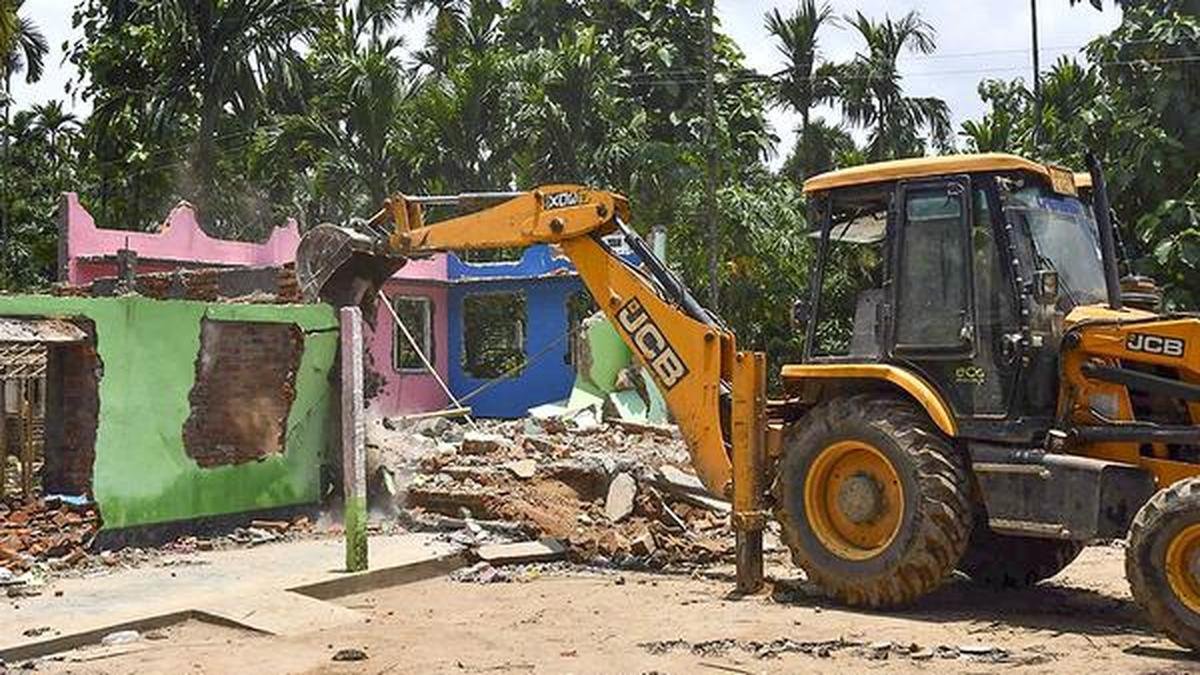
Assam encroachment eviction drives intensified after Chief Minister Himanta Biswa Sarma announced that the state administration is actively reclaiming more than 1,250 square kilometres of allegedly encroached government and forest land. Meanwhile, the Chief Minister stated that large-scale field operations are currently underway across multiple districts to clear illegal settlements and restore public land under state ownership. The announcement triggered strong political and public reactions because the eviction campaigns have become one of the most significant governance initiatives undertaken by the Assam administration in recent years. Additionally, officials confirmed that district authorities, police units, and forest departments remain heavily engaged in coordinated enforcement operations.
The state government maintained that the reclamation exercise aims to protect ecological zones, preserve government property, and prevent unauthorized occupation of forest and revenue lands. Furthermore, administrative officials emphasized that the drives form part of a broader long-term land management and environmental protection strategy.
Assam Flood Tracking Project Uses Satellite Technology
Meghalaya Census 2027 Mobile Survey Begins
Chief Minister Highlights Ongoing Operations
Chief Minister Himanta Biswa Sarma stated that the administration has intensified ground-level action to recover occupied public land across Assam. Assam encroachment eviction drives therefore gained renewed attention following the latest announcement regarding the scale of the operations.
Meanwhile, the Chief Minister claimed that eviction teams continue conducting coordinated actions in several districts identified as major encroachment zones. Additionally, he stated that the administration remains committed to reclaiming land categorized under forest reserves, grazing areas, and government property.
Officials explained that eviction operations involve district administrations, police personnel, and forest protection units working together during field activities. Furthermore, authorities reportedly deployed heavy machinery and enforcement teams in areas where illegal structures and settlements were identified.
Earlier, the Assam government conducted multiple high-profile eviction operations in districts including Nagaon, Darrang, and Lakhimpur. Consequently, the current announcement reinforced the administration’s continuing emphasis on land recovery and anti-encroachment policies.
At the same time, officials urged residents to avoid illegal occupation of protected government and forest land in the future.
Forest and Government Land Restoration Prioritized
The state administration emphasized that forest conservation and environmental restoration remain key objectives behind the campaign. Assam encroachment eviction drives therefore connect closely to broader concerns involving ecological protection and land management policies.
Meanwhile, forest department officials stated that several reclaimed areas fall within ecologically sensitive zones affected by unauthorized occupation and deforestation. Additionally, authorities claimed that illegal settlements in forest areas contributed to biodiversity loss and environmental degradation over recent years.
Environmental experts noted that Assam faces increasing ecological pressure because of population expansion, land-use changes, and deforestation challenges. Furthermore, the state contains several wildlife corridors and forest reserves requiring strict protection measures.
Government representatives argued that reclaiming occupied forest land could help restore environmental balance and strengthen conservation efforts. Consequently, officials indicated that reforestation and ecological restoration programs may follow in certain reclaimed regions.
However, rights activists and community organizations raised concerns regarding rehabilitation measures and the humanitarian impact of eviction operations. They urged authorities to ensure lawful procedures and adequate support for displaced families.
Political Reactions Continue Across Assam
Political responses intensified after the Chief Minister disclosed the scale of the ongoing operations. Assam encroachment eviction drives therefore became a major issue in state political discourse involving governance, land rights, and environmental policy.
Meanwhile, ruling party leaders defended the eviction campaigns and described them as necessary steps to uphold law, protect public resources, and prevent illegal land occupation. Additionally, supporters argued that decisive enforcement measures strengthen administrative authority and environmental governance.
Opposition parties, however, criticized certain eviction drives and demanded greater transparency regarding land identification, rehabilitation policies, and administrative procedures. Furthermore, some leaders alleged that authorities should prioritize humane resettlement measures alongside enforcement actions.
Political analysts observed that land-related issues frequently generate strong reactions in Assam because of their connection to migration, identity, and environmental concerns. Consequently, eviction drives continue influencing political debates across both rural and urban constituencies.
At the same time, civil society groups appealed for peaceful implementation of administrative measures while avoiding communal or politically inflammatory narratives.
Security and Administrative Coordination Expanded
District administrations and law enforcement agencies increased operational coordination during the ongoing eviction campaigns. Assam encroachment eviction drives therefore involved extensive logistical planning and security arrangements across affected regions.
Meanwhile, police units reportedly remained deployed in sensitive areas to prevent clashes and maintain public order during field operations. Additionally, authorities stated that district officials conducted advance assessments before initiating large-scale eviction exercises.
Administrative officers indicated that legal verification and land record examinations form part of the operational process before enforcement begins. Furthermore, officials claimed that notices and procedural formalities were completed in accordance with applicable laws in several identified locations.
Several governance experts highlighted the complexity of land disputes in Assam due to overlapping claims involving forest land, government property, and settlement patterns. Consequently, authorities continue facing administrative and legal challenges while implementing large-scale recovery operations.
At the same time, security agencies monitored social media discussions and public gatherings to prevent misinformation or unrest linked to the eviction campaigns.
Public Debate Focuses on Environment and Rehabilitation
The large-scale reclamation effort triggered extensive public discussion regarding environmental protection and rehabilitation responsibilities. Assam encroachment eviction drives therefore sparked debate among activists, policy experts, and local communities across the state.
Meanwhile, environmental groups welcomed stronger action against illegal occupation of protected forest areas and government land. Additionally, conservation advocates argued that restoring encroached land remains essential for preserving biodiversity and ecological sustainability in Assam.
Human rights organizations, however, emphasized the need for balanced policies protecting vulnerable populations affected by displacement. Furthermore, activists called for rehabilitation planning, livelihood assistance, and legal aid for families impacted by eviction operations.
Several economists noted that land disputes and encroachment issues also influence agriculture, infrastructure development, and long-term urban planning in Assam. Consequently, experts recommended integrated land management reforms combining enforcement with sustainable rehabilitation frameworks.
At the same time, community leaders urged authorities to maintain transparency and avoid excessive force during future eviction operations in sensitive districts.
Long-Term Governance Strategy Emerging
The Assam government indicated that anti-encroachment operations form part of a broader governance and administrative reform agenda. Assam encroachment eviction drives therefore reflect the administration’s long-term focus on land regulation, environmental protection, and public resource management.
Meanwhile, officials suggested that reclaimed land may support future conservation projects, public infrastructure, or agricultural planning initiatives depending on district requirements. Additionally, authorities emphasized that strict monitoring systems would continue to prevent fresh encroachments.
Policy analysts observed that the scale of the operations represents one of the largest land recovery campaigns undertaken in Assam in recent decades. Furthermore, the administration’s approach may influence future governance models involving land administration and environmental enforcement across northeastern states.
Earlier, similar land reclamation initiatives in other regions of India generated legal, political, and humanitarian debates regarding enforcement practices and rehabilitation responsibilities. Consequently, Assam’s ongoing campaign continues attracting national attention.
At the same time, experts stressed that sustainable outcomes would depend on transparent implementation, legal accountability, and balanced rehabilitation planning.
Conclusion
Assam encroachment eviction drives intensified after Chief Minister Himanta Biswa Sarma confirmed that the state is reclaiming more than 1,250 square kilometres of allegedly occupied government and forest land through ongoing field operations. Meanwhile, authorities continue emphasizing environmental protection, land restoration, and administrative enforcement as key objectives behind the campaign. Political parties, environmental groups, and rights organizations remain divided over the broader implications of the eviction drives and rehabilitation concerns. Ultimately, the large-scale operation may significantly influence Assam’s future land governance, conservation policy, and administrative strategy.
FAQs
What did Chief Minister Himanta Biswa Sarma announce?
He announced that Assam is reclaiming over 1,250 square kilometres of allegedly encroached government and forest land.
Why are the eviction drives being conducted?
The government stated that the operations aim to protect forest areas and recover illegally occupied public land.
Why are Assam encroachment eviction drives significant?
The campaign represents one of the largest land recovery operations conducted by the Assam administration.
Which departments are involved in the operations?
District administrations, police units, and forest departments are coordinating the eviction drives.
What concerns have activists raised?
Rights groups expressed concerns regarding rehabilitation, displacement, and humanitarian impacts on affected families.
Could reclaimed land be used for future projects?
Officials indicated that some recovered land may support conservation or infrastructure-related initiatives.