


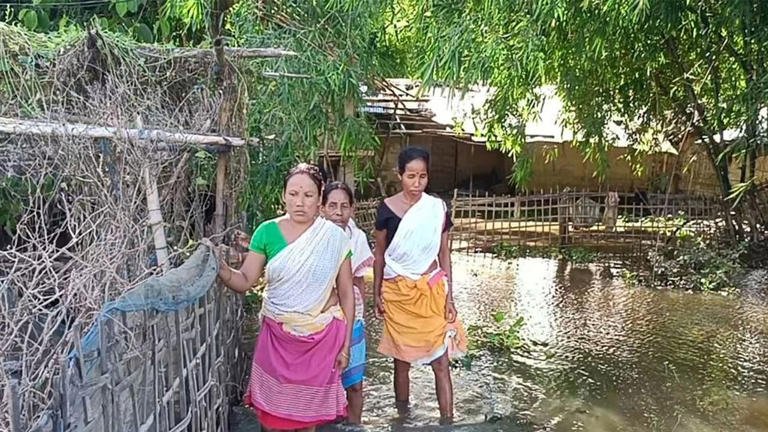
A month after devastating floods swept through parts of Assam, many villagers in Jorhat district are still struggling to rebuild their lives. The floodwaters have receded from several areas, but the damage remains visible in homes, farmland and livelihoods.
For many families, returning home did not mean returning to normal life. Floodwaters left behind thick layers of mud, damaged houses and destroyed household belongings. Farmers also face the difficult task of recovering from losses to crops and livestock.
Jorhat was among the worst-affected districts during the severe flooding in July. The crisis affected large parts of Upper Assam and forced thousands of people to leave their homes. Even after the waters began to recede, many families continued to need shelter, food and financial support.
Read More: MEA fact-checks viral post claiming ‘no foreign funding for CJP’ as misleading — here’s the truth
Floodwaters Recede, But Hardship Remains
The improvement in the flood situation has brought some relief to Jorhat. However, villagers now face a different challenge: rebuilding what the water destroyed.
In several affected communities, families have returned to homes covered in mud and silt. Some houses need major repairs, while others have suffered damage that makes them unsafe to live in.
The scale of the destruction has made recovery difficult. Families that lost household items must replace them while also finding ways to earn an income.
Humanitarian organisations working in Upper Assam have reported that families in Jorhat continue to struggle even as conditions improve. Caritas India said Jorhat remained among the areas where affected families still needed help with shelter, water, sanitation and basic living conditions.
Villagers Face Loss of Homes and Livelihoods
The floods did more than damage houses. They also disrupted the livelihoods of thousands of rural families.
Many villagers depend on farming, livestock and small-scale economic activities. Floodwaters can destroy standing crops and wash away livestock. The loss can leave families without income long after the water disappears.
Recent reports from Jorhat have highlighted the human cost of the disaster. One young athlete from the district, Janmoni Konwar, saw her family’s house washed away. The flood also damaged their fishery and swept away ducks and poultry. Her family later sold two buffaloes to help support her sporting ambitions.
Stories such as this show why recovery takes much longer than the flood itself.
Families Return to Damaged Homes
For some families, going home has brought another painful reality. Their houses may still stand, but they no longer resemble the homes they left behind.
Mud and silt have covered floors and damaged walls. Furniture, clothes, kitchen items and other belongings may have become unusable.
In some of the worst-hit parts of Upper Assam, residents have spent days removing mud from their homes. The Indian Express reported families struggling to clear thick layers of mud from houses after floodwaters receded. Relief workers have continued distributing food, clothing and other essential supplies.
For families with limited savings, repairing a damaged house can become a major financial burden.
Agriculture Faces a Long Road to Recovery
Farmers in Jorhat also face uncertainty after the floods damaged agricultural land.
Flooding can destroy crops just before harvest and leave fields covered with sand and silt. Farmers may then need to spend additional money preparing the land for the next cultivation cycle.
The losses can affect the entire household. When crops fail, families lose both food and income. Farmers may also struggle to purchase seeds, fertilisers and other inputs for the next season.
The Assam government has begun assessing damage to crops, livestock, fisheries and houses. Authorities announced that detailed assessments would help determine compensation for eligible families.
Relief Offers Immediate Support
The state government has continued to provide financial assistance to flood-affected families.
Assam recently released ₹47.93 crore in interim flood relief to 31,951 families across Sivasagar, Charaideo, Jorhat and Golaghat. Each family received ₹15,000 through Direct Benefit Transfer.
The latest release took the total flood relief distributed by the state to ₹146.26 crore.
The assistance can help families meet immediate expenses. However, many households need more than short-term relief. They also require support to repair homes, replace lost belongings and restore their livelihoods.
Volunteers and NGOs Step In
Government agencies are not the only groups helping Jorhat’s flood-hit communities. Volunteers, non-governmental organisations and community groups have also played an important role.
Relief teams have travelled to villages with food, drinking water, medicines, clothing and household supplies. Some organisations have also focused on sanitation and shelter.
A Jorhat-based organisation, NEADS, launched a Multi-Sectoral Post-Disaster Needs Assessment in August. Teams are visiting affected villages in Jorhat, Sivasagar and Charaideo to understand the long-term needs of families. The assessment aims to guide recovery and rehabilitation efforts.
Such assessments can help identify problems that emergency relief may overlook.
Damaged Embankments Add to Anxiety
The condition of embankments remains another concern for communities in Jorhat.
Flooding damaged several critical embankment points. Authorities have carried out urgent repair work using geotubes, geobags and bamboo structures to strengthen vulnerable sections.
Officials have worked on breaches at locations including Kakodonga and Charaipani. They have also carried out reinforcement work along the Jhanji riverbank.
For villagers, these repairs carry enormous importance. A damaged embankment can leave communities vulnerable to another wave of flooding.
Government Plans Long-Term Reconstruction
The Assam government now faces the challenge of moving from emergency relief to long-term reconstruction.
Chief Minister Himanta Biswa Sarma has said that the state could require more than ₹1,000 crore for repairs and rehabilitation following the recent floods. The government has prioritised rebuilding damaged infrastructure and helping affected residents return to normal life.
The reconstruction effort will need to cover houses, roads, bridges, embankments and agricultural infrastructure. Authorities will also need to consider how communities can prepare for future floods.
A Difficult Road Ahead for Jorhat Villagers
For Jorhat’s flood-affected villagers, the crisis did not end when the water receded. The hardest phase may now be beginning.
Families must clean and repair their homes. Farmers must recover damaged fields. Livestock owners must rebuild their assets. Children must return to school, while workers and small businesses must find ways to restart their livelihoods.
The latest relief measures offer important support, but rebuilding will take time.
The devastating floods have left deep economic and emotional scars across Jorhat. Yet communities continue to recover with support from the government, volunteers and humanitarian organisations.
The Jorhat flood situation now reflects a broader challenge facing Assam: moving from rescue and relief to sustainable recovery. As villagers slowly rebuild their homes and livelihoods, continued financial assistance, infrastructure repairs and long-term rehabilitation will remain essential to help them regain a sense of normalcy.
Read More: Assam Extends Interim Flood Relief to 31,951 More Families in Four Districts