


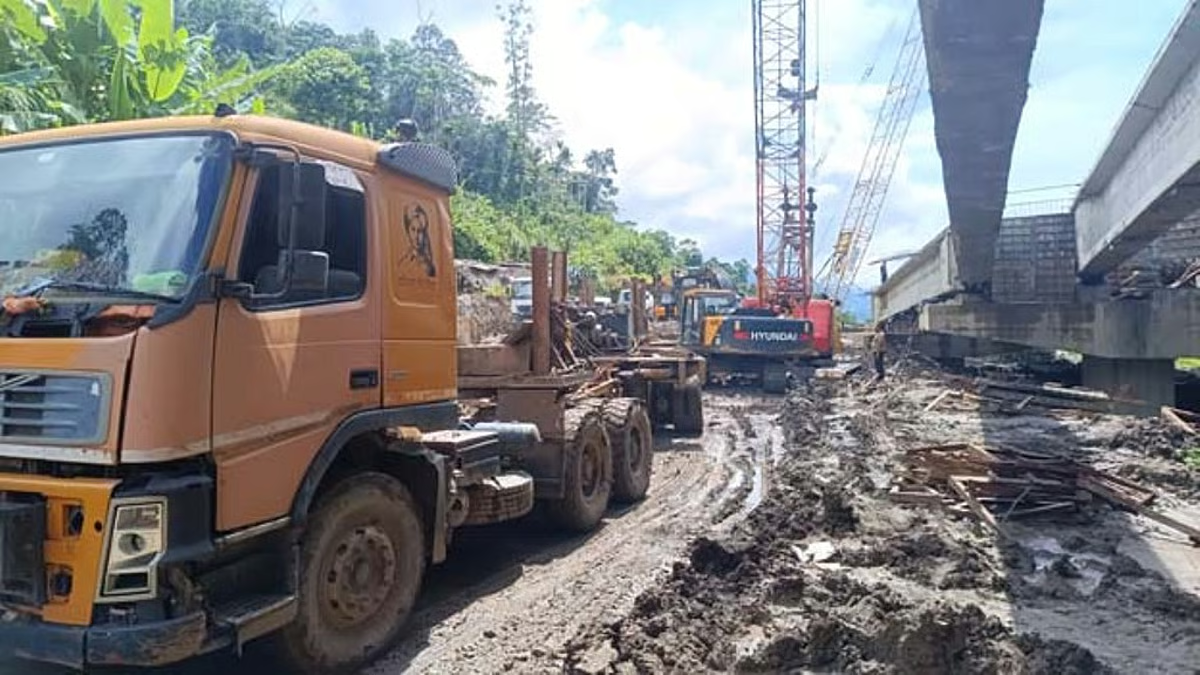
Assam Food, Public Distribution & Consumer Affairs, Mines and Minerals Minister Kaushik Roy on November 22 inspected the progress of the Silchar–Saurashtra East–West Corridor along the Harangajao–Jatinga stretch of National Highway 27. The visit comes at a crucial stage as construction work has accelerated in recent months under the supervision of the National Highways Authority of India. The project is seen as one of the most important infrastructure initiatives for improving connectivity between the Barak Valley and the rest of the country. Minister Roy interacted with engineers and project officials during the inspection and reviewed the pace of work across multiple points. He noted the upcoming milestones and emphasised the need to meet the revised timelines.
January 2026 Target for Harangajao Stretch
Following the inspection, the minister announced that the Harangajao stretch of the corridor is expected to be opened for public use by January 2026. He said the government is keen to ensure that the long-pending project is completed without further delay, given its impact on regional transportation. The stretch, known for its difficult terrain and frequent landslides, has required extensive stabilisation work. Officials informed the minister that reinforced retaining walls, slope protection measures and fresh earth-cutting works are near completion. Roy expressed satisfaction with the efforts and urged departments to maintain the momentum until the final phase.
A Lifeline for Barak Valley
The East–West Corridor has long been described as a lifeline for residents of the Barak Valley. Especially those who depend on road connectivity for trade, travel and essential services. Years of delays due to weather challenges. Land issues and contractor changes have slowed progress in the hilly sections around Harangajao. With the revised target now set, the government hopes to restore confidence among commuters and businesses. Improved connectivity is also expected to boost tourism in areas like Jatinga, known internationally for its unique bird migration phenomenon. The minister reiterated that the corridor will play a central role in accelerating economic activity once operational.
Push for Quality and Safety
During the review, Minister Roy stressed that the construction must not compromise on safety standards, especially in the vulnerable hill sections. Engineers were instructed to recheck vulnerable portions and ensure that all components meet highway-grade quality benchmarks. Officials explained the use of new technologies, including geo-textile reinforcement, drain rechanneling and slope protection mesh to prevent landslides. The minister said these measures will significantly reduce road accidents and closures caused by monsoon damage. He also reviewed the status of culverts, bridge expansion joints and other critical engineering components.
Coordination Between Departments
The inspection also included discussions on inter-departmental coordination required for smooth execution of the corridor. Roy met with representatives of the district administration to address land clearance issues that had previously slowed construction. The administration assured the government that pending matters would be settled quickly to avoid disruptions. The minister emphasised that coordination between PWD, forest authorities, revenue officials and NHAI is essential to meet the January deadline. He added that the government is monitoring the project closely and will continue regular field reviews.
Boost to Trade and Regional Connectivity
Once completed, the East–West Corridor is expected to significantly reduce travel time between Silchar and Guwahati, strengthening trade movement across Assam. Local traders in Dima Hasao have long demanded a reliable highway link to support the transportation of agricultural produce, minerals and forest goods. The opening of the Harangajao stretch will ease movement through one of the most challenging parts of the route. The corridor will also enhance connectivity with neighbouring states, creating new opportunities for logistics, tourism and small-scale industries. The minister highlighted that such connectivity will play a transformative role in improving livelihoods.
Government Urges Public Cooperation
Minister Roy appealed to residents living near the construction sites to cooperate with ongoing work and avoid obstructing progress. He acknowledged the temporary inconveniences faced by locals due to traffic diversions and excavation activities but said these disruptions are necessary for long-term improvement. The government also requested that drivers follow safety advisories while travelling through the partially completed sections. With monsoon challenges now reduced, officials expect work to pick up further over the next several weeks. The minister urged stakeholders to remain committed to ensuring timely completion.
A Call for Faster Execution
As the inspection concluded, Roy reiterated the government’s commitment to delivering a durable and efficient road network to the people of Assam. He said accelerating infrastructure projects is a priority under the state’s development agenda. The minister expressed confidence that the Harangajao stretch will meet the January 2026 target if all agencies maintain the current pace. He assured continued monitoring and promised to revisit the site in the coming months to assess final preparations. The government hopes that the upcoming completion will mark a turning point in the long-delayed corridor project.