


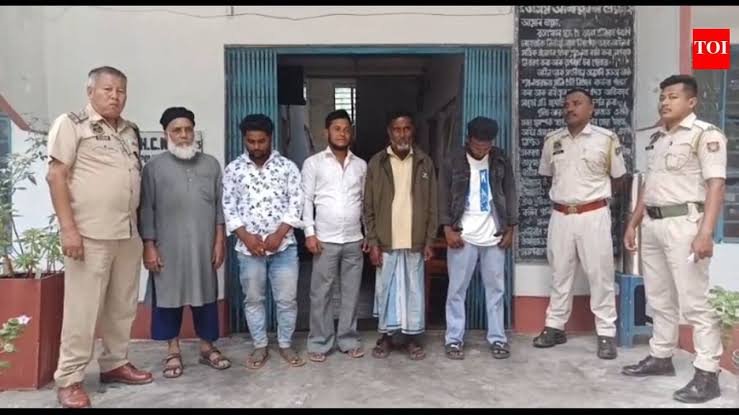
The Assam child marriage crackdown intensified on October 27, 2026, as police conducted overnight operations across several districts and arrested people allegedly linked to underage marriages. By the morning of October 28, Assam Chief Minister Himanta Biswa Sarma reported 524 arrests and 441 registered cases across the state. Dhubri emerged as a major focus of the latest operation, with police also conducting raids in other districts. The campaign has renewed attention on law enforcement, child protection and efforts to prevent underage marriages in Assam.
West Tripura DM Sets November 30 Deadline for Pending Pre-Puja Ration Distribution
Assam Child Marriage Crackdown Records 524 Arrests and 441 Cases
The latest figures reflect a statewide enforcement drive targeting people allegedly involved in child marriages. Chief Minister Himanta Biswa Sarma announced the numbers on October 27, stating that police had arrested 524 people and registered 441 cases by 5 pm that day. The update became public on October 28.
The chief minister reiterated the state government’s commitment to preventing child marriage. His announcement signalled that police operations would continue across Assam as authorities pursued people identified in suspected cases.
Dhubri district recorded a significant share of the reported arrests. Police carried out operations across several police station jurisdictions, including Dhubri Sadar, Gauripur, Golakganj, Agomoni, Tamarhat, Bilasipara, Chapar and Fakirganj. Reports identified parents, guardians and other people allegedly connected to underage marriages among those arrested.
Meanwhile, police conducted operations in other locations, including Nagaon, Boko, Chhaygaon and Bongaigaon. Reports published on October 27 recorded 98 arrests in one overnight sweep, including 64 in Dhubri and 34 across the other reported areas. These figures describe a particular operation and should not be confused with the chief minister’s larger statewide total of 524 arrests.
The difference matters because police conducted several operations across multiple jurisdictions. The statewide figures cover a wider campaign, while local reports provide snapshots of specific raids and districts. Consequently, readers should consider the reporting time and geographical scope when comparing arrest totals.
Police also indicated that investigations and enforcement activity would continue. However, authorities had not publicly disclosed the full details of every allegation or the specific role attributed to each person arrested. An arrest represents an investigative step, not a determination of guilt.
Assam Child Marriage Crackdown Focuses on Dhubri and Other Districts
Dhubri has emerged as a major focus of the latest operation. The district shares an international border with Bangladesh, but the available reports on this particular crackdown do not establish that investigators traced child-marriage cases to cross-border networks. The geographical fact should therefore remain separate from the specific allegations under investigation.
Within Dhubri, police expanded operations across multiple police station areas. The reports identify arrests in Dhubri Sadar, Gauripur and Golakganj, alongside other jurisdictions. This spread indicates that the latest enforcement action extended beyond a single locality.
Police also reported arrests in areas outside Dhubri. Nagaon, Boko, Chhaygaon and Bongaigaon featured in reports about the overnight operation. Separately, reports described police action in Charaideo and the Boko-Chaygaon area, including arrests and detentions linked to alleged child-marriage cases.
These reports show that authorities pursued cases across different parts of Assam. Nevertheless, the available information does not establish that every arrest involved the same circumstances or legal allegations. Investigators must assess each case on its own evidence.
The latest drive also involves people accused of facilitating or solemnising underage marriages. Depending on the circumstances, investigations may examine the alleged roles of grooms, family members, guardians and religious functionaries. Authorities must establish each person’s alleged involvement through the relevant legal process.
Moreover, the distinction between arrest, detention and prosecution matters when reporting enforcement figures. News reports sometimes use these terms to describe different stages of police action. A reliable statewide assessment requires consolidated official data explaining how many people police arrested, how many they detained and how many cases proceeded to court.
The government has presented the operation as part of its continuing effort to prevent child marriage. The next stage will depend on the evidence gathered, the applicable laws and decisions taken by investigating agencies and courts.
Assam Child Marriage Crackdown and the Legal Framework
India’s Prohibition of Child Marriage Act, 2006, provides the principal legal framework for preventing child marriages and addressing offences associated with the practice. The law defines a child for marriage-related purposes as a male who has not completed 21 years of age or a female who has not completed 18 years. It also establishes provisions concerning the validity of child marriages and penalties for people who facilitate them.
Under the Act, authorities can take legal action against people who arrange, conduct or promote child marriages when the statutory conditions for an offence apply. However, the precise charges depend on the facts of each case and the evidence available to investigators.
In some cases, authorities may also examine whether other laws apply. For example, allegations involving sexual offences against children may raise separate questions under the Protection of Children from Sexual Offences (POCSO) Act, 2012. Investigators must determine the applicable provisions based on the circumstances rather than assume that every child-marriage case involves identical charges.
The Assam child marriage crackdown builds on the state’s earlier enforcement campaigns. Assam conducted major operations against alleged child marriages in 2023, drawing national attention to arrests involving men accused of marrying underage girls, family members and people accused of facilitating the unions.
Those earlier operations also prompted discussion about enforcement methods, access to legal assistance and the impact of arrests on families. These concerns underline the importance of following legal procedures while protecting children from harmful practices.
Furthermore, police action forms only one part of prevention. Schools, local authorities, child-protection bodies and community organisations can help identify children at risk and connect families with support. Education and awareness can also help communities understand the legal requirements for marriage.
Effective enforcement must therefore combine evidence-based investigations with measures that protect children’s welfare. Authorities must follow due process, respect the rights of accused people and ensure that children receive appropriate protection and support.
Assam Child Marriage Crackdown Raises Questions About Prevention
The latest statewide operation places renewed focus on how Assam can prevent child marriage through enforcement and wider social intervention. Arrests may help authorities investigate alleged offences, but lasting prevention also requires efforts to address the conditions that leave children vulnerable to early marriage.
Education is an important part of that effort. Continued access to schooling can help children understand their rights and provide families with alternatives to early marriage. Schools and local officials can also help identify cases where a child faces pressure to marry before reaching the legal age.
Additionally, families need access to reliable information about marriage laws and available support services. Local awareness programmes can explain legal responsibilities and encourage people to report suspected cases to the appropriate authorities.
Child-protection agencies also have a role in assessing individual circumstances. When authorities identify a child at risk, they must consider the child’s safety, education, family situation and access to support. Responses should prioritise the child’s welfare rather than treat the case solely as an enforcement statistic.
Meanwhile, consistent and transparent reporting can help the public understand the results of the campaign. Officials can clarify the number of cases registered, arrests made, charges filed and matters brought before courts. Such information would distinguish immediate police activity from longer-term legal outcomes.
The latest figures show the scale of the current enforcement drive, but they do not establish how many cases will result in convictions or how much the campaign will reduce child marriage over time. Those questions require further evidence and sustained monitoring.
The state’s next challenge is to ensure that investigations proceed lawfully while strengthening prevention efforts across communities. Coordination among police, education officials and child-protection services can help authorities respond to suspected cases and reduce the risk of future underage marriages.
Conclusion
The Assam child marriage crackdown intensified on October 27, 2026, with Chief Minister Himanta Biswa Sarma reporting 524 arrests and 441 registered cases by 5 pm. Police operations covered Dhubri and several other districts, as authorities pursued people allegedly involved in underage marriages. The figures highlight the scale of the latest statewide enforcement campaign.
Dhubri’s prominence in the operation has drawn attention to police activity across the district’s multiple jurisdictions. However, the available reports do not establish that investigators traced the child-marriage cases to cross-border networks. Further official information will be necessary to clarify the individual allegations, legal proceedings and outcomes of the investigations.
Going forward, the effectiveness of the campaign will depend on lawful investigations, appropriate judicial action and sustained prevention efforts. Alongside enforcement, education, public awareness and child-protection services remain important tools for reducing child marriage. Authorities will need to monitor both legal outcomes and prevention efforts to assess progress over time.
FAQs
1. How many people were arrested in Assam’s latest child marriage crackdown?
Chief Minister Himanta Biswa Sarma reported 524 arrests and 441 registered cases as of 5 pm on October 27, 2026.
2. Which districts were involved in the latest police operations?
Reports covered Dhubri, Nagaon, Bongaigaon, Goalpara, Charaideo and several other areas, including Boko and Chhaygaon.
3. Why has Dhubri attracted attention during the crackdown?
Police reported numerous arrests across several police station jurisdictions in Dhubri. The district accounted for a significant share of the arrests reported during the latest operation.
4. Which law governs child marriage in India?
The Prohibition of Child Marriage Act, 2006, provides the principal legal framework for preventing child marriage and penalising specified offences associated with it.
5. Will Assam Police continue the child marriage crackdown?
Police have indicated that enforcement operations will continue. Further action will depend on ongoing investigations and the evidence gathered in individual cases.