


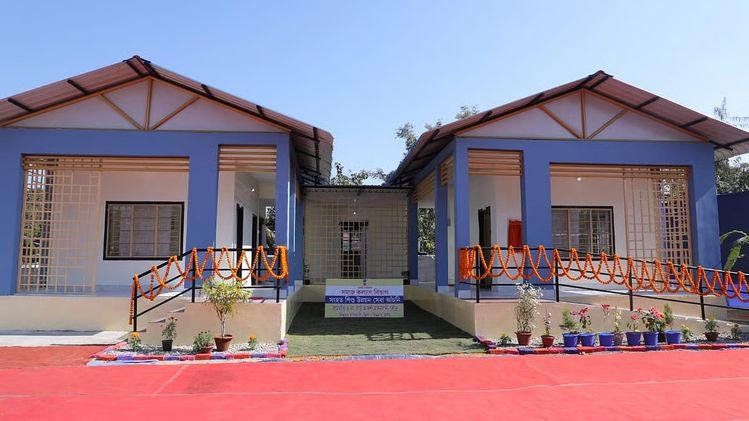
Assam is strengthening early childhood care and development through a major expansion of Model Anganwadi Centres across the state. The government has sanctioned 9,054 Model Anganwadi Centres, with thousands already completed and operational.
The initiative aims to improve the infrastructure available to children, pregnant women and lactating mothers. It also seeks to create safer and more child-friendly spaces for early learning, nutrition and basic care.
According to recent official data, 4,631 Model Anganwadi Centres have been completed, while construction continues at another 4,423 centres. Each centre has an estimated construction cost of Rs 25 lakh.
4,631 Centres Already Completed
The progress of the project marks a major expansion of Assam’s Anganwadi infrastructure. Of the 9,054 sanctioned Model Anganwadi Centres, more than half have now become functional.
The remaining 4,423 centres are under construction. Once completed, they will further expand access to improved child-care infrastructure across rural and other communities in the state.
The centres have received approval under schemes including the State Own Priority Development (SOPD), Rural Infrastructure Development Fund (RIDF) and North East Development Infrastructure Fund (NIDA).
Child-Friendly Infrastructure at New Centres
The Model Anganwadi initiative focuses on creating facilities that meet the needs of young children. The centres include several basic amenities that can improve the experience of children and caregivers.
These facilities include ramps, child-friendly toilets, separate kitchens, storage spaces, furniture, electricity and safe drinking water.
Such infrastructure can provide a safer environment for children while also supporting Anganwadi workers in delivering nutrition and early childhood education services.
The emphasis on ramps also supports easier access for children and visitors with mobility challenges. Child-friendly toilets and dedicated kitchen facilities can further improve hygiene and daily operations.
Assam Has 62,142 Anganwadi Centres
The Model Anganwadi programme forms part of a much larger network. Assam currently has 62,142 functioning Anganwadi Centres, according to state data.
These centres serve around 30.06 lakh beneficiaries, including children, pregnant women and lactating mothers.
Anganwadi Centres play an important role in India’s early childhood care system. They provide services related to nutrition, preschool education, health awareness and child development.
The scale of Assam’s network makes infrastructure improvement an important part of strengthening these services across the state.
Focus on Early Childhood Care and Education
The Model Anganwadi programme also supports the broader national focus on Early Childhood Care and Education (ECCE).
The Union government has introduced frameworks such as Navchetana for children from birth to three years and Aadharshila for children aged three to six years. These frameworks promote holistic development through age-appropriate learning and stimulation activities.
Aadharshila focuses on areas such as physical development, social and emotional development, cognitive skills, language and literacy, cultural and aesthetic development and positive learning habits.
Improved Anganwadi infrastructure can provide a stronger setting for workers to implement these early learning activities.
Nutrition Remains a Major Priority
Anganwadi Centres also form an important part of India’s nutrition support system. The Mission Saksham Anganwadi and Poshan 2.0 programme combines nutrition services with early childhood education.
The integrated package includes supplementary nutrition, preschool education, nutrition and health education, immunisation, health check-ups and referral services.
Better infrastructure can help centres deliver these services more effectively. Facilities such as kitchens, storage areas and drinking water systems are particularly important for maintaining hygiene and supporting nutrition-related activities.
Electricity and Water Access Still Need Attention
While Assam has made progress in constructing Model Anganwadi Centres, infrastructure access across the wider Anganwadi network remains an ongoing task.
Official data shows that 53,483 Anganwadi Centres have received external electricity connections from Assam Power Distribution Company Limited. The Jal Jeevan Mission has provided water supply facilities to 28,833 centres.
These figures indicate the scale of the infrastructure challenge across Assam’s 62,142 centres. Continued work on electricity, water and sanitation will remain important for ensuring that Anganwadi services reach beneficiaries in safe and functional surroundings.
Strengthening the Role of Anganwadi Workers
Infrastructure alone cannot improve early childhood services. Anganwadi workers also need training and resources to support children’s development.
At the national level, the government has expanded training on early childhood education and nutrition. As of March 31, 2026, more than 10.58 lakh Anganwadi workers had completed the first round of training under the Poshan Bhi Padhai Bhi initiative.
Training covers early childhood education, nutrition services and the use of digital tools such as Poshan Tracker.
For Assam, stronger infrastructure combined with trained workers can support better delivery of services at the grassroots level.
Technology and Modern Learning
The national Saksham Anganwadi programme also encourages the use of modern learning resources. Upgraded centres can receive facilities such as LED screens, audio-visual aids, internet connectivity where feasible, learning materials and Poshan Vatikas.
The Union government reported in March 2026 that 1,03,940 Anganwadi Centres across India had been upgraded into Saksham Anganwadi Centres.
Assam’s Model Anganwadi programme complements this broader effort by improving the physical infrastructure available to children and caregivers.
Building a Stronger Foundation for Children
The expansion of Assam Model Anganwadi Centres represents an important step towards improving early childhood services in the state. With 9,054 centres sanctioned and 4,631 already completed, the programme has established a significant infrastructure base.
The remaining 4,423 centres under construction will add to this network once they become functional.
For Assam’s children, the initiative can provide safer spaces for preschool learning, nutrition and basic care. For mothers and caregivers, improved facilities can make Anganwadi services more accessible and reliable.
The project also reflects a wider shift towards treating early childhood development as a key part of education, health and nutrition policy. With continued work on infrastructure, water, electricity, training and learning resources, Assam’s Model Anganwadi network can further strengthen services for young children and mothers across the state.