


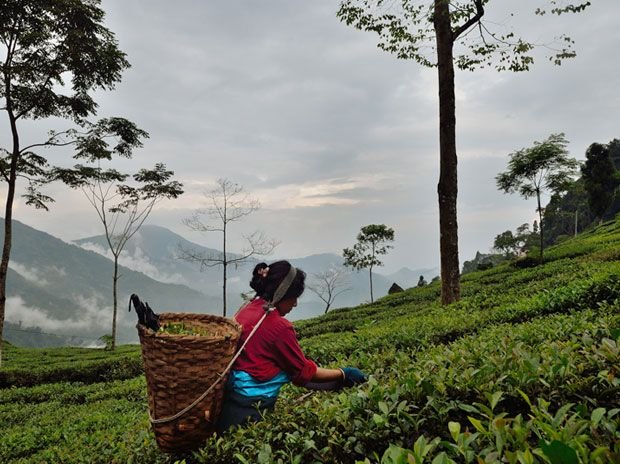
In a significant development from the heart of India’s tea country, the North East Confederation of Small Tea Growers’ Association (NECSTGA) has written to Prime Minister Narendra Modi seeking a “fair and remunerative pricing system” for green tea leaves. The association, which represents over 1.25 lakh small tea growers in Assam, says that volatile market prices and rising input costs have left thousands of families struggling to sustain their livelihoods.
Assam Small Tea Growers Seek Fair Pricing Mechanism
Assam, known globally for its robust black tea, owes much of its success to small-scale farmers who now account for more than 52% of the total tea production in the state. According to NECSTGA president Bijoy Gopal Chakraborty, growers often face severe price fluctuations due to lack of a regulated mechanism.
“We have urged the government to introduce a fair pricing system similar to the Minimum Support Price (MSP) used in other agricultural sectors,” Chakraborty said in a statement reported by NE News.
The current system leaves small growers dependent on private tea factories or middlemen who determine rates for green tea leaves based on fluctuating market conditions. During peak harvest months, prices can fall as low as ₹15–₹18 per kg, well below production costs, growers claim.
Letter to Prime Minister Highlights Urgent Concerns
In its letter to the Prime Minister’s Office (PMO), NECSTGA outlined the challenges faced by small growers, including rising fertilizer and labour costs, lack of financial protection, and limited bargaining power against large estates.
The association has requested the formation of a Tea Price Stabilization Fund, establishment of district-level monitoring committees, and policy intervention through the Tea Board of India to ensure fair trade practices.
The letter also emphasized that fair pricing could encourage sustainable cultivation and prevent youth migration from tea-growing regions.
“Without government intervention, the next generation will move away from tea farming,” the letter noted. “We need long-term assurance that the backbone of Assam’s tea economy will not be broken.”
Government’s Initial Response and Possible Measures
While the PMO has not yet issued an official response, sources in the Tea Board of India indicated that the matter is under review. A senior official told The Sentinel Assam that discussions are underway on how to make green leaf pricing more transparent.
The Assam government has also acknowledged the issue. State Industry and Commerce Minister Bimal Bora recently said that the government is considering introducing a structured pricing mechanism that could help both small and large stakeholders.
“We want to ensure that tea growers receive fair returns for their hard work,” Bora told local media. “Consultations with the Tea Board and stakeholders will be accelerated.”
Industry Experts Support Pricing Reform
Experts from the Tea Research Association, Tocklai, have long advocated for a more systematic approach to green leaf pricing. Economist Dr. Anjan Choudhury noted that a consistent fair price formula would bring stability and transparency to the sector.
“Assam’s tea ecosystem has remained unregulated for small growers for decades,” Dr. Choudhury explained. “An MSP-like model could help address income disparity and encourage quality improvement.”
According to data from the Tea Board of India, Assam produced approximately 680 million kilograms of tea in 2024, with small growers contributing over 350 million kilograms. However, inconsistent prices and lack of subsidies continue to affect rural livelihoods across tea-growing districts such as Jorhat, Golaghat, Dibrugarh, and Sonitpur.
Economic and Social Implications
A fair pricing system could have far-reaching benefits beyond the tea industry. Economists believe it would strengthen rural employment, boost women’s income (as nearly 60% of the tea workforce are women), and contribute to Assam’s overall GDP.
The move could also help align Assam’s tea industry with India’s national mission on sustainable agriculture, ensuring better export competitiveness and quality standards.
The Tea Board’s “Tea Development and Promotion Scheme 2021–26”, currently underway, aims to address similar challenges, but small growers claim its implementation has been slow and fragmented.
Challenges Ahead
Despite the strong demand for fair pricing, challenges persist. Many private tea factories operate outside formal monitoring systems, and the absence of digital price tracking makes exploitation easier. Experts say that any new mechanism must include transparent price discovery, online data publication, and cooperative-based leaf collection centers to ensure fairness.
“Price reforms must be backed by enforcement and education,” NECSTGA members emphasized. “We don’t want temporary relief; we want structural change.”
Way Forward for Assam’s Tea Sector
As Assam positions itself for economic growth and sustainability, the demand from NECSTGA reflects the broader struggle of small farmers across India seeking equitable participation in market systems. The call for a fair pricing mechanism for green tea leaves is not merely an economic request — it’s a demand for dignity and survival.
READ MORE: IG MoU: Assam & Google Launch AI Governance Drive
The Union Government, Tea Board, and Assam’s leadership must act swiftly to safeguard the livelihoods of thousands of tea growers. A transparent, remunerative pricing policy will ensure that the aroma of Assam’s tea continues to represent prosperity — not hardship — for those who nurture it.