


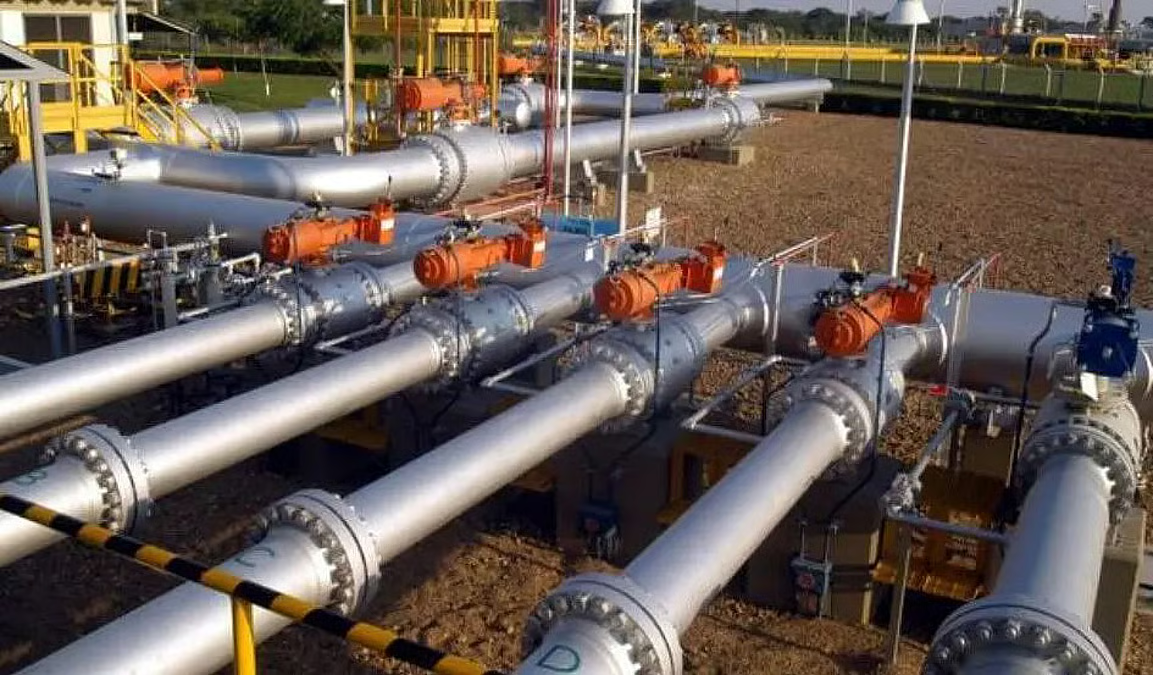
The Assam government is gearing up to expand its clean energy infrastructure. Residents of Baihata, Hajo, Sualkuchi, and Rangia will soon receive piped natural gas (PNG) connections, as the project to lay new pipelines is set to begin from late October.
The initiative marks a major step toward ensuring reliable and eco-friendly fuel access to households in semi-urban and rural regions.
A Push Toward Cleaner Energy in Assam
The upcoming piped natural gas network in Assam aims to reduce dependence on traditional cooking fuels like LPG cylinders. PNG will offer a steady, metered supply of natural gas directly to kitchens, improving safety and convenience for households.
Officials said that the first phase of work will focus on completing network pipelines in densely populated areas of Baihata and Hajo, followed by extensions to Sualkuchi and Rangia. The entire operation will be carried out in collaboration with local administrative bodies to ensure smooth execution and minimal disruption to public life.
The project also aligns with the Centre’s vision under the Pradhan Mantri Urja Ganga Project, which seeks to bring natural gas to every corner of India. Assam’s inclusion reflects the state’s growing emphasis on sustainable development and energy diversification.
Benefits for Households and the Environment
The PNG supply will not only enhance household convenience but also contribute to reducing carbon emissions. Unlike LPG cylinders that require transportation and storage, PNG is directly supplied through underground pipelines, making it safer and more efficient.
Residents will benefit from the “pay-as-you-use” model, allowing them to pay for gas consumption based on meter readings. This eliminates the need for advance cylinder bookings and delivery delays.
Environmental experts believe the move will significantly lower the state’s overall carbon footprint. The switch to natural gas can cut harmful emissions by up to 25 percent compared to LPG and nearly 40 percent compared to kerosene-based fuels.
Connectivity Expansion in Key Towns
According to state officials, the piped natural gas network in Baihata, Hajo, Sualkuchi, and Rangia will be built in stages. The initial phase will involve the laying of distribution pipelines, installation of gas meters, and setting up of local customer service centres.
In Sualkuchi, known as the ‘Manchester of Assam’ for its handloom industry. PNG is expected to benefit small weaving units that depend on gas for dyeing and other processes. The move could support the region’s traditional silk industry by reducing operational costs.
In Rangia and Baihata, which serve as major junctions for trade and transport. The network will strengthen energy access. And support commercial establishments such as hotels, eateries, and small industries.
Hajo, a town with deep religious and cultural roots. Will also benefit from cleaner cooking solutions for households and local businesses catering to pilgrims and tourists.
State’s Long-Term Vision for Energy Security
The expansion of PNG infrastructure is part of Assam’s broader strategy to promote green energy and reduce dependence on conventional fuels. The state government has been working closely with Indradhanush Gas Grid Limited (IGGL) and Assam Gas Company Limited (AGCL) to implement gas pipeline projects across key regions.
By 2026, the state aims to connect more than 3 lakh households to the PNG network. Plans are also in place to extend the grid to Guwahati’s peripheral towns. And industrial clusters to ensure equitable access.
Officials from the Assam Energy Department highlighted that the project will also generate employment opportunities for local youth. Besides, the construction and maintenance phases.
A Step Toward Sustainable Living
The piped natural gas network in Assam is not just a technological upgrade but a lifestyle change. It represents a move toward a safer, more sustainable, and environmentally conscious future.
The new PNG connections will empower residents with uninterrupted access to clean energy while supporting India’s broader goal of reducing carbon emissions and promoting green fuel alternatives.
With the pipeline work set to begin from late October, the people of Baihata, Hajo, Sualkuchi, and Rangia are looking forward to joining Assam’s growing clean energy map.
As the state prepares to welcome this transformation, the upcoming months could mark a major milestone in Assam’s energy transition story—one that balances progress with sustainability.