


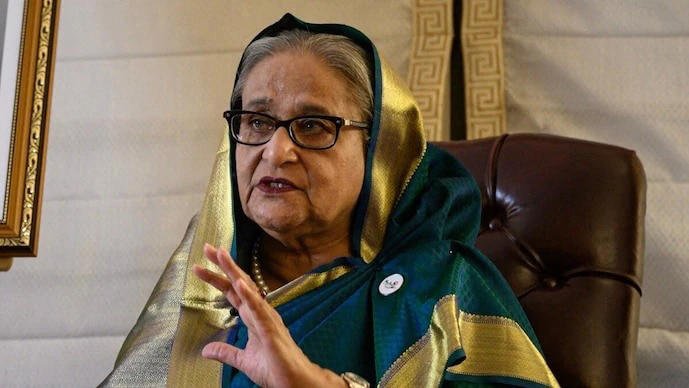
Bangladesh’s political scene entered a new and tense phase after a special tribunal handed former Prime Minister Sheikh Hasina a death sentence for crimes against humanity. The tribunal delivered the ruling in absentia and held her responsible for the violent suppression of the 2024 student protests. The decision triggered strong reactions across the country and opened a heated national debate on justice, politics and accountability.
Hasina left Bangladesh after mass unrest toppled her 15-year rule. She stayed outside the country during the trial. The court said she ordered harsh measures during the protest wave. The unrest spread fast and caused hundreds of deaths. Many families still claim the actual toll was much higher. The tribunal said the crackdown followed a coordinated plan and targeted unarmed civilians. For the judges, this pattern fit the definition of crimes against humanity.
Read More: Tripura’s Growth Under CM Manik Saha
Hasina rejected the verdict. She said the case aimed to remove her from politics. She claimed she tried to control the chaos and prevent more casualties. Her supporters repeated the same line and described the verdict as unfair. The interim government, however, sees the ruling as justice for the victims of the protests.
How the Case Reached This Point
The charges grew out of the massive student movement that erupted across Bangladesh in 2024. Students demanded reforms, accountability and an end to restrictions on public expression. When the protests spread, the government deployed large numbers of security forces. Officers moved into major cities, blocked roads and used heavy crowd-control measures. Many survivors said security forces used force without warning.
Prosecutors argued that Hasina gave orders that allowed excessive action. They presented communications, witness statements and accounts from former officials. The tribunal listened to survivors who described gunfire, drone surveillance and sudden night operations in crowded neighbourhoods.
Hasina refused to attend the hearings. Her legal team said the tribunal lacked neutrality. The judges said the evidence showed a planned and organised operation. They said the state acted with knowledge of the consequences and still pushed forward. The tribunal declared that this behaviour crossed legal and moral limits.
Reaction Across Bangladesh
The verdict stirred intense emotions. Families of victims said they waited for this moment and felt heard for the first time. They said the sentence gave them recognition and closure, even if Hasina remains outside the country.
Her supporters described the decision as a political attack. Some called for nationwide protests. Security forces increased patrols across Dhaka, Chittagong and other major cities. Police also set up checkpoints to prevent clashes.
Many citizens feel torn. Some believe the ruling marks a new beginning and signals accountability for past abuses. Others fear the decision might deepen divisions and spark a fresh cycle of anger.
What the Verdict Means for Bangladesh’s Democracy
The ruling carries major political weight. Hasina was one of Bangladesh’s most influential leaders. Her fall, followed by this sentence, marks a dramatic shift. The verdict also raises questions about how the country will manage power changes in the future.
Some political observers say the case shows that even powerful leaders must face scrutiny. They believe the verdict sends a message that victims matter. Others fear that the justice system might become a tool for political rivalry. They say fair trials require a neutral atmosphere, especially when the accused belongs to a major political force.
The interim government now faces the difficult task of guiding the country toward an election. It must rebuild trust, protect public rights and stabilise institutions. Citizens expect transparency and fairness from the next steps.
What Happens Next for Hasina?
Sheikh Hasina remains outside Bangladesh. Her location creates uncertainty about the enforcement of the sentence. The tribunal delivered a binding ruling, but authorities cannot act without an extradition process. Her legal team has signalled that they will continue their fight. They insist that the trial lacked fairness and that the verdict must be overturned.
Even without immediate enforcement, the ruling shuts the door on Hasina’s return to politics. She now carries a conviction for crimes against humanity. The verdict also reshapes the political future of her party, which already faces restrictions and arrests.
How the Country Moves Forward
Bangladesh stands at a crossroads. Many people want justice for past violence. Others want peace and stability. Political leaders must balance these needs while avoiding further unrest. Community groups, rights activists and students now appeal for calm dialogue.
The verdict sparked discussions on how the country can prevent similar tragedies. Many argue for reforms in law enforcement, transparency in government actions and more accountability in public decisions. Citizens want systems that protect rights while keeping order.
The path ahead will not be easy. Emotions remain strong. Memories of the 2024 crackdown still affect families across the country. Yet many hope that this moment will push Bangladesh toward a more just and stable political future.
Read More: Assam CM Moves to Bring Back Brindabani Bastra