


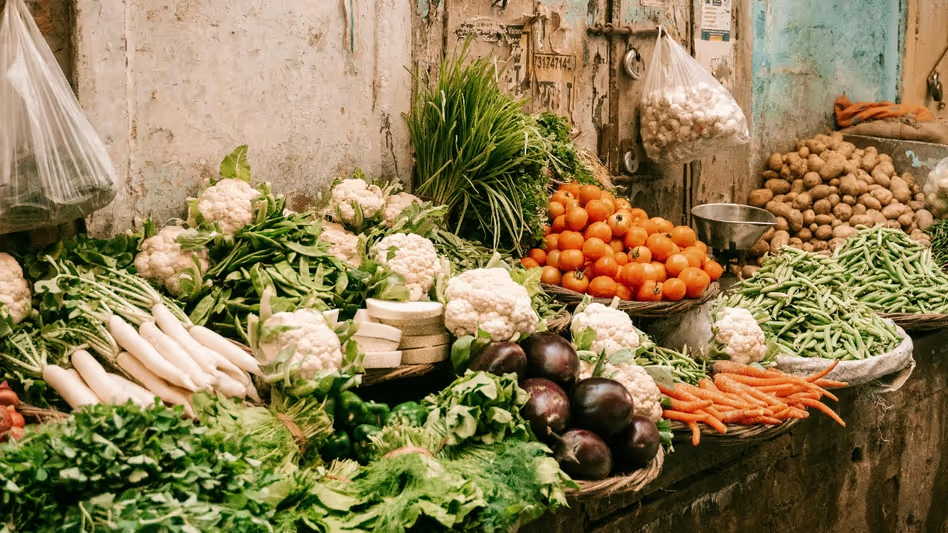
The Meghalaya Bangladesh Border Haats initiative has expanded with three new weekly trading bazaars reportedly opening along the Meghalaya-Bangladesh frontier. The markets aim to strengthen micro-trade between border communities and create additional opportunities for local producers and small traders.
Why India’s Small Businesses Still Struggle to Access the Right Financing Introduction
The Meghalaya Bangladesh Border Haats can provide a structured platform for communities living near the international boundary to exchange locally produced goods. Moreover, regulated border markets can support small-scale commerce without requiring traders to rely entirely on larger commercial channels.
The new bazaars could strengthen economic links between communities on both sides of the border. Therefore, the initiative may provide additional income opportunities for small traders, farmers, artisans, and other local producers.
The expansion also reflects the importance of people-to-people economic connectivity between Meghalaya and Bangladesh. Additionally, regular markets can encourage greater interaction between border communities while operating under established regulations.
Meghalaya Bangladesh Border Haats Expand Local Trade
The Meghalaya Bangladesh Border Haats provide a dedicated platform for small-scale cross-border commerce.
Moreover, border communities often produce agricultural goods, handicrafts, food products, and other items suitable for local markets. Consequently, weekly trading bazaars can give producers a more direct route to customers across the border.
Small traders can also benefit from a structured marketplace where trading takes place under designated rules. Furthermore, the arrangement can reduce the dependence on informal channels and create greater predictability for local commerce.
The reported opening of three new weekly markets could broaden the reach of the border-haat model along Meghalaya’s international frontier.
Meghalaya Bangladesh Border Haats Support Micro-Trade
The Meghalaya Bangladesh Border Haats focus on micro-trade rather than large-scale commercial shipments.
Additionally, small markets can provide opportunities for households that produce goods on a limited scale. Therefore, farmers and artisans may gain access to additional customers without requiring large distribution networks.
Regular weekly markets can also generate supporting economic activity. Meanwhile, transport operators, small service providers, and other local businesses can benefit from increased movement around the trading locations.
The overall economic impact will depend on participation, the range of permitted products, market accessibility, and the continued operation of the bazaars.
Meghalaya Bangladesh Border Haats Strengthen Community Links
The Meghalaya Bangladesh Border Haats also have a social dimension because they bring neighbouring border communities together through regulated economic activity.
Moreover, communities on both sides of the frontier share longstanding cultural and commercial links. Consequently, regular trading opportunities can strengthen local relationships while supporting livelihoods.
The markets can also help promote locally produced goods and encourage greater awareness of products from neighbouring communities. Additionally, direct interaction between buyers and sellers can create stronger commercial networks.
At the same time, authorities must ensure that border markets follow customs, security, and public-health requirements. Therefore, effective administration will remain important for maintaining safe and sustainable trading environments.
Conclusion
The Meghalaya Bangladesh Border Haats initiative has expanded with the reported opening of three new weekly trading bazaars along the Meghalaya-Bangladesh frontier.
Furthermore, the markets could strengthen micro-trade, create opportunities for small producers, and improve economic links between communities on both sides of the border. Regular trading platforms can also support local livelihoods while providing a structured alternative to informal commerce.
Overall, the Meghalaya Bangladesh Border Haats represent an important step toward expanding grassroots economic connectivity between Meghalaya and Bangladesh.
FAQs
1. What are the Meghalaya Bangladesh Border Haats?
They are designated local marketplaces that facilitate regulated small-scale trade between communities on the Meghalaya-Bangladesh border.
2. What is the purpose of the new markets?
The new weekly bazaars aim to promote micro-trade and create additional opportunities for local producers and small traders.
3. Who could benefit from border haats?
Farmers, artisans, small traders, transport operators, and other local businesses can potentially benefit from increased cross-border economic activity.
4. How do border haats differ from large commercial trade?
Border haats focus primarily on small-scale, community-level commerce rather than large commercial shipments between major businesses.
5. Why are border haats important for Meghalaya?
They can strengthen local livelihoods, improve economic connectivity with Bangladesh, and provide border communities with structured opportunities for cross-border trade.