


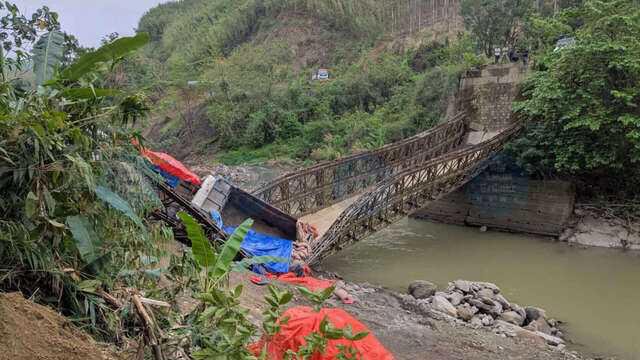
A major infrastructure failure has disrupted essential supply routes in Manipur after a Bailey bridge collapsed over the Tuivai River. The bridge stood between Sinzawl and Khuanggin villages along NH-102B, also known as Guite Road.
The incident has caused serious concern among residents and authorities. As a result, transportation of essential goods to Churachandpur and nearby hilly regions has been severely affected. Officials have started assessing the damage and exploring alternative routes.
The collapse has once again highlighted the fragile state of infrastructure in remote areas. Moreover, it has raised urgent questions about maintenance and preparedness.
Read More: Centre Resumes SoO Talks With Kuki-Zo Groups Amid Manipur Tensions
Location and Importance of the Bridge
The collapsed Bailey bridge connected key areas across the Tuivai River. It served as a vital link between remote villages and larger towns. In particular, it played a crucial role in transporting essential supplies to Churachandpur and surrounding hill districts.
NH-102B is an important route that supports the movement of goods, services, and people. Therefore, the sudden collapse has disrupted daily life and economic activities.
Residents depend heavily on this route for food supplies, fuel, and medical necessities. Consequently, the disruption has created immediate challenges for communities in the region.
Impact on Supply Chains and Daily Life
The Manipur bridge collapse has significantly affected supply chains. Trucks carrying essential commodities can no longer use the route. As a result, deliveries to Churachandpur and nearby areas have slowed down.
Local markets have already started feeling the impact. Shortages of basic goods may occur if the situation continues. In addition, transportation costs could increase due to longer alternative routes.
Residents in remote areas face the greatest difficulty. Many depend on regular supply deliveries for their daily needs. Therefore, the disruption has created uncertainty and inconvenience.
Healthcare services may also face challenges. Medical supplies and emergency transport rely on efficient road connectivity. Any delay can affect patient care in critical situations.
Response From Authorities
Authorities have responded quickly to the incident. Officials visited the site to assess the extent of the damage. They have also begun discussions on immediate and long-term solutions.
The state administration is working to restore connectivity as soon as possible. Engineers are evaluating whether a temporary structure can replace the collapsed bridge.
In addition, officials are identifying alternative routes to ensure the movement of essential goods. However, these routes may not fully compensate for the loss of the main bridge.
The government has assured residents that it will prioritize restoration efforts. Moreover, it has emphasized the importance of maintaining supply chains during this period.
Causes and Structural Concerns
While authorities have not confirmed the exact cause of the collapse, several factors may have contributed. Bailey bridges are temporary structures designed for quick deployment. However, they require regular maintenance and monitoring.
Heavy loads, weather conditions, and wear and tear can weaken such structures over time. Therefore, lack of timely repairs may increase the risk of failure.
The incident has raised concerns about the condition of other bridges in the region. Officials may now conduct inspections to prevent similar घटनाएँ.
Experts stress the need for stronger infrastructure in hilly areas. Durable and permanent bridges can reduce the risk of disruptions.
Economic and Social Implications
The Manipur bridge collapse has broader economic implications. Disrupted supply routes can affect trade and local businesses. Traders may face losses due to delays and increased costs.
In addition, daily wage workers and transport operators may experience reduced income. This can further impact the local economy.
Socially, the disruption has increased difficulties for residents. Access to education, healthcare, and essential services has become more challenging.
However, local communities have shown resilience. People are supporting each other and finding ways to manage the situation. This collective effort highlights the strength of community networks in times of crisis.
Need for Infrastructure Improvement
The incident underscores the urgent need to improve infrastructure in Manipur. Reliable roads and bridges are essential for economic growth and public welfare.
Authorities must invest in durable construction and regular maintenance. In addition, they should adopt modern technologies to monitor structural health.
Improved planning can also help prevent such incidents. For example, authorities can design alternative routes to reduce dependency on a single bridge.
Furthermore, disaster preparedness should become a priority. Quick response systems can minimize the impact of infrastructure failures.
Way Forward and Restoration Plans
The government is expected to take immediate steps to restore connectivity. Temporary solutions may provide short-term relief, while permanent reconstruction will address long-term needs.
Engineers and planners will likely assess the feasibility of building a stronger bridge. This process may take time, but it is necessary for sustainable development.
Meanwhile, authorities must ensure that essential supplies reach affected areas. Coordination between departments will play a key role in achieving this goal.
Public communication is also important. Keeping residents informed can reduce panic and help them prepare for challenges.
Conclusion
The collapse of the Bailey bridge over the Tuivai River has disrupted essential supply routes in Manipur. It has exposed vulnerabilities in infrastructure and highlighted the importance of preparedness.
While authorities are working to restore connectivity, the incident serves as a reminder of the need for long-term solutions. Strengthening infrastructure and improving maintenance can prevent similar incidents in the future.
As efforts continue, the focus remains on ensuring that affected communities receive the support they need. With timely action and proper planning, the state can overcome this challenge and build a more resilient infrastructure system.
Read More: Nagaland Conducts Mega Mock Drill on Earthquake Preparedness