


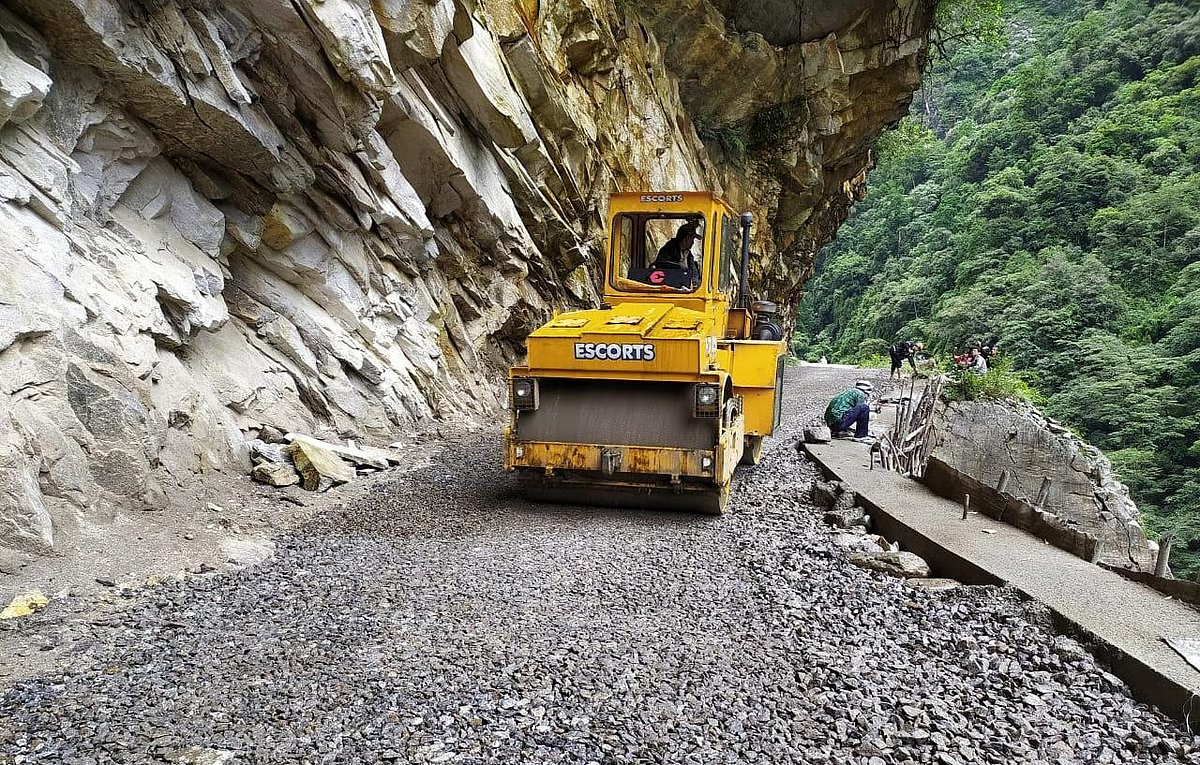
The Border Roads Organisation (BRO) continues to strengthen strategic road infrastructure across India’s Himalayan frontier. Its projects focus on improving access to remote border areas and maintaining essential routes through extreme weather. In the Northeast, Arunachal Pradesh and Sikkim remain important areas for high-altitude road development along the Line of Actual Control (LAC). BRO is also adopting modern construction methods and mechanised equipment to improve project execution. Winter maintenance, snow clearance and road restoration remain central to year-round connectivity. These efforts support military logistics while improving access for civilians living in remote mountain settlements.
TTAADC Postpones Executive Members’ Oath Ceremony
BRO Strengthens Strategic Roads Along the LAC
BRO plays a major role in developing and maintaining roads near India’s international borders.
Its responsibilities include road construction, bridge development, tunnel projects and maintenance of difficult mountain routes.
In the Northeast, Project Arunank and Project Swastik handle important infrastructure assignments.
Project Arunank operates in Arunachal Pradesh. It develops roads and bridges that connect remote valleys and strategically important locations.
Project Swastik manages infrastructure projects in Sikkim. Its work includes road development and maintenance in high-altitude areas near the Himalayan frontier.
These projects face difficult working conditions. Heavy rainfall, snowfall, landslides and unstable slopes can disrupt construction.
Consequently, BRO plans its operations around seasonal weather conditions and available working periods.
Arunachal Pradesh Remains a Major Infrastructure Priority
Arunachal Pradesh has a long international boundary with China. Its mountainous terrain creates significant challenges for road construction.
BRO’s Project Arunank has developed important road and bridge infrastructure across the state.
The organisation is also executing sections of the proposed Arunachal Frontier Highway.
The wider highway project extends approximately 1,748 kilometres along the state’s northern frontier. BRO is responsible for a substantial portion of the planned construction.
The project aims to connect remote areas and improve access to settlements near the international boundary.
The Hapoli–Sarli–Huri road also forms part of the region’s strategic connectivity network.
Better road access can support military logistics and civilian movement. It can also improve access to healthcare, education and essential supplies.
However, construction remains difficult because of steep slopes, weather disruptions and limited working seasons.
Sikkim Roads Receive Strategic Upgradation
Sikkim remains another important area for BRO’s high-altitude infrastructure work.
Project Swastik has developed more than 1,000 kilometres of roads in the state, according to government information.
The organisation continues to improve strategic routes connecting Gangtok with high-altitude locations.
The Gangtok–Sherathang–Nathula road is particularly important for border connectivity.
BRO has also undertaken improvements to the Kupup–Sherathang road. The upgraded route provides an additional movement option near the eastern frontier.
Meanwhile, the organisation continues work on road widening, bridges and protective infrastructure.
These improvements aim to strengthen year-round connectivity.
They can also support local tourism and transportation in remote mountain areas.
Winter Operations Focus on Snow Clearance and Road Restoration
Winter creates some of the toughest operating conditions for BRO personnel.
Heavy snowfall can block mountain passes and isolate remote settlements. Ice formation and avalanches can also make roads unsafe.
BRO deploys snow-clearance teams and specialised machinery to restore access where weather conditions permit.
Its responsibilities include clearing snow, removing debris and repairing damaged road sections.
In January 2026, BRO carried out a major rescue and road restoration operation at Chatergala Pass in Jammu and Kashmir.
The pass lies at an altitude of approximately 10,500 feet. Heavy snowfall had covered parts of the route with five to six feet of snow.
BRO teams cleared around 38 kilometres of road over nearly 40 hours. The operation enabled the evacuation of 20 civilians and 40 Army personnel.
Although the operation took place outside the Northeast, it demonstrates BRO’s high-altitude winter response capabilities.
Modern Equipment Supports Faster Construction
BRO is increasingly adopting modern technologies for road development in difficult terrain.
These include LiDAR surveys, drone-based mapping and digital project monitoring.
Mechanised construction equipment can also improve work efficiency in remote locations.
During the Infra Build Northeast Conference in Guwahati in September 2026, BRO officials discussed these technologies and the challenges affecting regional infrastructure projects.
They highlighted the need for better project planning, quality assurance and maintenance.
The organisation also discussed specialised construction materials suitable for cold climates and high-altitude conditions.
Such methods can help reduce delays caused by difficult terrain and short construction seasons.
However, technology must work alongside proper environmental assessment and engineering standards.
Bridges and Tunnels Improve All-Weather Connectivity
Road infrastructure requires more than highway construction.
Bridges and tunnels are essential for maintaining access across deep valleys and snow-prone mountain passes.
BRO has developed major bridges in Arunachal Pradesh. These include the Siyom Bridge and Sisseri River Bridge.
Such structures improve movement across difficult terrain and support logistics.
Tunnel projects also offer important connectivity benefits.
The proposed Shinkun La Tunnel is expected to provide another all-weather route to Ladakh through the Zanskar Valley.
Although the project lies outside the Northeast, it reflects BRO’s wider approach to improving Himalayan connectivity.
In the Northeast, bridge and tunnel development can reduce travel difficulties and improve access to remote locations.
Infrastructure Development Supports Border Communities
Strategic roads also serve people living in remote frontier settlements.
Improved connectivity can reduce travel time and make essential services more accessible.
Residents can benefit from better access to hospitals, schools and markets.
Roads can also support agriculture, tourism and local businesses.
In Sikkim and Arunachal Pradesh, improved transport links can help communities maintain connections during difficult weather conditions.
Furthermore, dependable roads can support disaster response operations.
BRO frequently assists civilian authorities during landslides, floods and heavy snowfall.
Its road restoration work can help emergency teams reach affected areas.
Therefore, strategic infrastructure development also contributes to regional economic and social development.
Coordination Remains Essential for Project Completion
High-altitude construction requires coordination among several government agencies.
BRO works with the Ministry of Defence, state administrations and other relevant departments.
Land availability, environmental clearances and utility shifting can affect project schedules.
Weather conditions also influence construction progress.
BRO officials have emphasised the importance of synchronised planning among stakeholders.
Better coordination can reduce delays and improve the quality of infrastructure.
The organisation also needs regular maintenance budgets and equipment support to keep completed roads functional.
These measures remain essential for reliable connectivity along India’s Himalayan frontier.
Conclusion
The Border Roads Organisation continues to strengthen strategic road infrastructure across Arunachal Pradesh, Sikkim and other Himalayan regions. Project Arunank and Project Swastik remain important to Northeast border connectivity. Winter operations, snow clearance and modern construction technologies support access in difficult terrain. Bridges, tunnels and improved highways can strengthen military logistics while benefiting remote communities. Although no separate new winter acceleration order for all LAC routes was confirmed, BRO’s ongoing work demonstrates its continuing focus on strategic and all-weather connectivity.
FAQs
1. What is the Border Roads Organisation?
BRO is a government organisation responsible for developing and maintaining roads and related infrastructure in border and strategically important areas.
2. Which BRO projects operate in Northeast India?
Project Arunank works in Arunachal Pradesh, while Project Swastik handles infrastructure development in Sikkim.
3. Why are high-altitude roads important along the LAC?
They improve access to remote border areas and support military logistics, civilian transportation and emergency services.
4. How does BRO maintain roads during winter?
Its teams conduct snow clearance, remove debris and restore damaged road sections when weather conditions allow.
5. Which major road project is planned along Arunachal Pradesh’s northern frontier?
The proposed Arunachal Frontier Highway extends approximately 1,748 kilometres along the state’s northern frontier.
6. How does BRO infrastructure benefit local communities?
Better roads improve access to healthcare, education, markets, tourism destinations and essential supplies.