


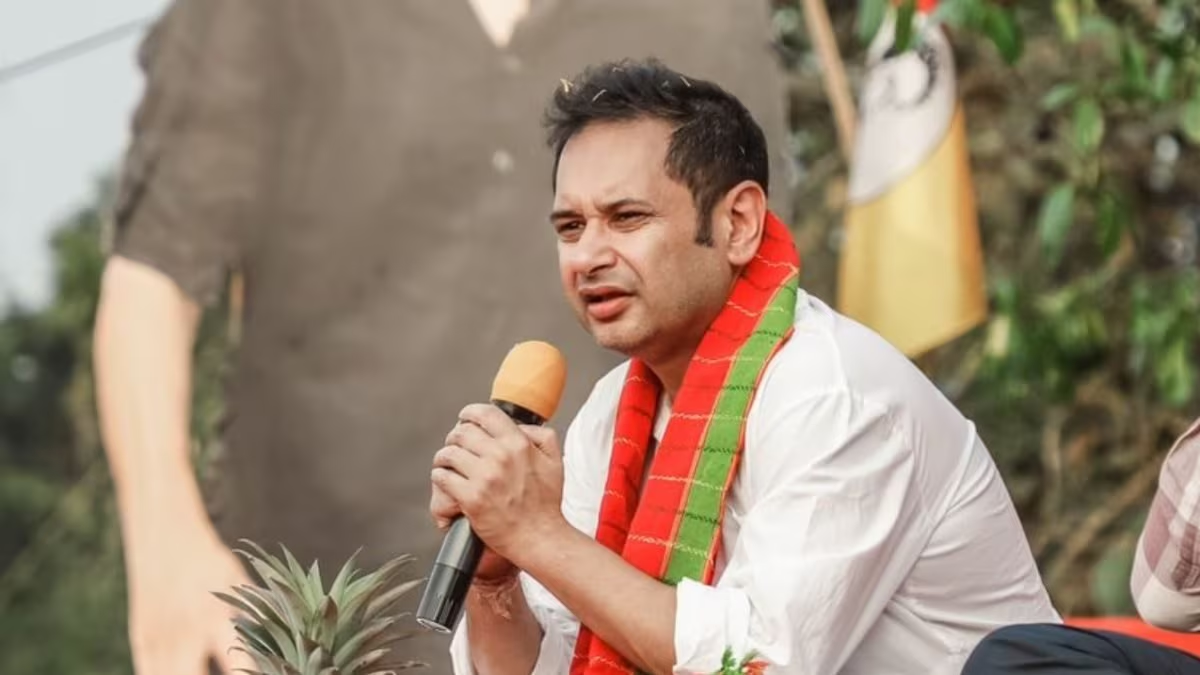
Tensions have escalated between the BJP and its ally Tipra Motha after party founder Pradyot Kishore Debbarma issued a stern warning that his party may walk out of the alliance if the Tiprasa Accord is not implemented in its “true spirit and form.”
Speaking to media, Pradyot accused the state government—a signatory to the historic tripartite agreement—of deliberately stalling its progress due to fears of losing political dominance. He alleged that steps to empower the Tripura Tribal Areas Autonomous District Council (TTAADC) under the accord were being wrongly portrayed as a challenge to the state’s authority.
“The Union Home Minister has assured me of the Centre’s commitment. But while the Centre and Tipra Motha are ready, the state government remains reluctant,” Pradyot said. He emphasized that the Tiprasa people remain loyal Indians and strongly oppose any form of divisive politics.
The comments come at a time when BJP leaders recently met Union Home Minister Amit Shah and Union Minister Piyush Goyal in Delhi to deliberate on the upcoming TTAADC elections in 2026. With Tipra Motha enjoying widespread support in the tribal-dominated hill areas, the alliance dynamics have become increasingly fragile.
Political observers note that Pradyot’s warning is significant, as it underscores growing mistrust between the allies ahead of a crucial electoral contest. While the BJP seeks to strengthen its presence in the tribal belt, Tipra Motha continues to demand meaningful autonomy and full implementation of the Tiprasa Accord.
Pradyot’s remarks have also reignited discussions on tribal rights, regional identity, and the long-standing demand for greater administrative powers within the TTAADC. His firm stand indicates that unless the state government takes concrete steps, the alliance could face a rupture well before the 2026 polls.
As of now, the BJP has not issued an official response to Pradyot’s statements. However, political circles in Tripura are abuzz with speculation about whether this fresh confrontation will lead to a realignment in the state’s coalition politics.