


The Cockroach Janta Party (CJP) has announced a 24-hour protest against the Special Intensive Revision (SIR) of electoral rolls in Chennai. The demonstration is scheduled to begin at 4 pm on October 22 and continue until 4 pm on October 23. However, Chennai Police have denied permission for the event.
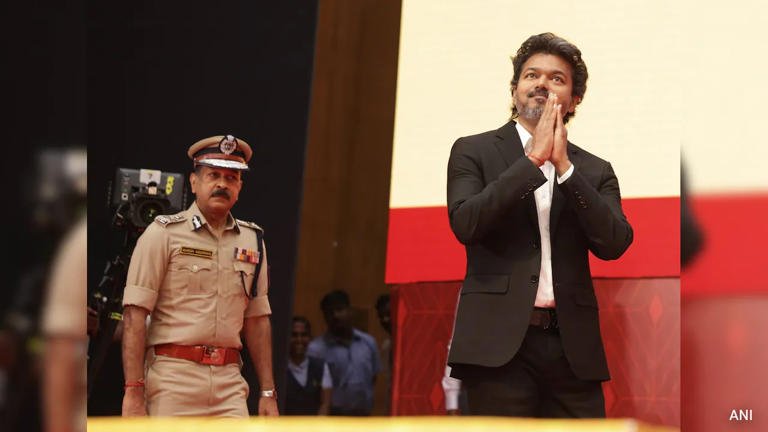
The protest, titled “Chennai’s Jantar Mantar 2.0”, is planned near Rajarathinam Stadium in Egmore. Despite the police decision, organisers have said they intend to proceed with the demonstration. As a result, the protest could create a major political challenge for Tamil Nadu Chief Minister Vijay.
The CJP has been at the forefront of protests demanding accountability from the Election Commission. Its campaign focuses on the SIR exercise and Chief Election Commissioner Gyanesh Kumar. The organisation wants the revision process withdrawn and Kumar to resign.
A senior police officer confirmed to NDTV that permission had been denied. Nevertheless, organisers remain determined to hold the demonstration for the full 24 hours. This has raised questions about how the state government will handle the situation.
Vijay Faces a Political Test
The planned protest puts Vijay’s government in a difficult position. His party, Tamilaga Vettri Kazhagam (TVK), has opposed the SIR exercise. At the same time, the government must enforce police restrictions on public gatherings.
TVK is also part of the Congress-led INDIA bloc, which has criticised the voter revision process. Therefore, any police action against protesters could invite criticism from opposition parties and civil society groups.
However, the government must also consider public order and legal requirements. Authorities maintain that demonstrations require permission and must follow established rules. The key question is whether the state can enforce these restrictions without creating the impression of suppressing dissent.
The issue is particularly sensitive because Vijay holds the Home portfolio in Tamil Nadu. This places responsibility for the state’s police administration within his government. Consequently, the handling of the demonstration could influence public perceptions of his administration’s approach to democratic protest.
Organisers have challenged the denial of permission. They argue that peaceful demonstrations should be allowed, especially when they concern electoral rights. They have also questioned why permission was denied despite TVK’s opposition to the SIR exercise.
Nine Organisations Join the Anti-SIR Campaign
The Chennai demonstration is being organised by a coalition of nine youth and student organisations. These include the Democratic Youth Federation of India (DYFI), Students’ Federation of India (SFI), All India Youth Federation (AIYF) and All India Students’ Federation (AISF).
Other participating groups include the CJP, All India Students’ Association (AISA), Revolutionary Youth Association (RYA), All India Democratic Students’ Organisation (AIDSO) and All India Democratic Youth Organisation (AIDYO).
Together, these organisations aim to mobilise students, young people and members of the public. They have also appealed to film personalities, writers and other public figures to support the agitation.
DYFI Tamil Nadu secretary S Karthi criticised the police decision during a press conference at the Chennai Press Club. He accused the authorities of restricting democratic protests and said the demonstration would proceed as planned.
He also questioned why permission had been denied when a Tamil Nadu minister had participated in an INDIA bloc protest against the SIR exercise. The organisers want the state government to explain its position clearly.
Protesters Demand Withdrawal of SIR
The Special Intensive Revision is a major point of contention between the Election Commission and opposition parties. The exercise aims to review electoral rolls and identify entries requiring removal or correction.
However, critics fear that the process could exclude eligible voters. Opposition parties and activist groups have raised concerns about transparency, verification procedures and the possible deletion of genuine voters.
The Election Commission has defended the revision process. It maintains that the exercise aims to improve electoral roll accuracy. It has also said eligible voters can seek inclusion through the prescribed procedures.
The CJP and its allies are demanding the withdrawal of the SIR exercise. They also want the restoration of voter names removed during the revision. Another major demand is the resignation of Chief Election Commissioner Gyanesh Kumar.
The scale of the exercise has intensified the debate. Election Commission data cited in recent reports shows substantial changes to voter lists across the country. In Tamil Nadu, the revision initially removed 97.38 lakh names, while 27.53 lakh voters were added and another 4.23 lakh entries were deleted. This resulted in a net reduction of 73.4 lakh electors.
These figures have become central to political arguments over the revision. However, the final implications depend on the verification process and the resolution of individual voter claims.
CJP’s Earlier Protests Add to Tensions
The CJP has previously organised high-profile protests over examination irregularities and the functioning of public institutions. Its earlier agitation at Delhi’s Jantar Mantar drew attention to the NEET paper leak controversy and demands for accountability.
More recently, the organisation has protested against the SIR exercise and demanded action against Gyanesh Kumar. Some of its demonstrations have faced police restrictions and detentions.
The group has also challenged the handling of protests in Delhi. The Supreme Court has scrutinised aspects of the crackdown and directed the release of detained protesters without criminal antecedents, according to reports.
These developments have increased attention on the organisation’s latest campaign. The Chennai protest will test whether its supporters can sustain the movement despite restrictions.
DMK Backs Protest as Political Pressure Grows
Tamil Nadu’s principal opposition party, the Dravida Munnetra Kazhagam (DMK), has expressed support for the anti-SIR agitation. The party has criticised the Centre’s handling of the issue. However, it remains unclear how many DMK leaders or supporters will join the Chennai demonstration.
The protest also raises questions about relations between the state and central governments. The INDIA bloc has opposed the SIR exercise, while the BJP-led Union government has defended the Election Commission’s process.
For Vijay, the challenge is to balance his party’s political position with his government’s responsibility to maintain public order. Any forceful police response could invite accusations of inconsistency. On the other hand, allowing a protest without permission could raise questions about the enforcement of existing rules.
Chennai Protest Could Shape Vijay’s Image
The planned demonstration has become more than a dispute over permission. It is now a test of the state government’s response to political dissent and public mobilisation.
If the protest proceeds peacefully, organisers may present it as a victory for democratic expression. However, any confrontation could intensify political criticism and deepen tensions between the government and protest groups.
Ultimately, the dispute highlights the wider debate over electoral reform, voter rights and freedom of assembly. The CJP wants the government to address concerns about the SIR exercise. Meanwhile, the authorities must balance those demands with public safety and legal restrictions.
Vijay’s handling of the situation will be closely watched. His government’s response could shape perceptions of its commitment to democratic freedoms and its ability to manage a politically sensitive protest.