


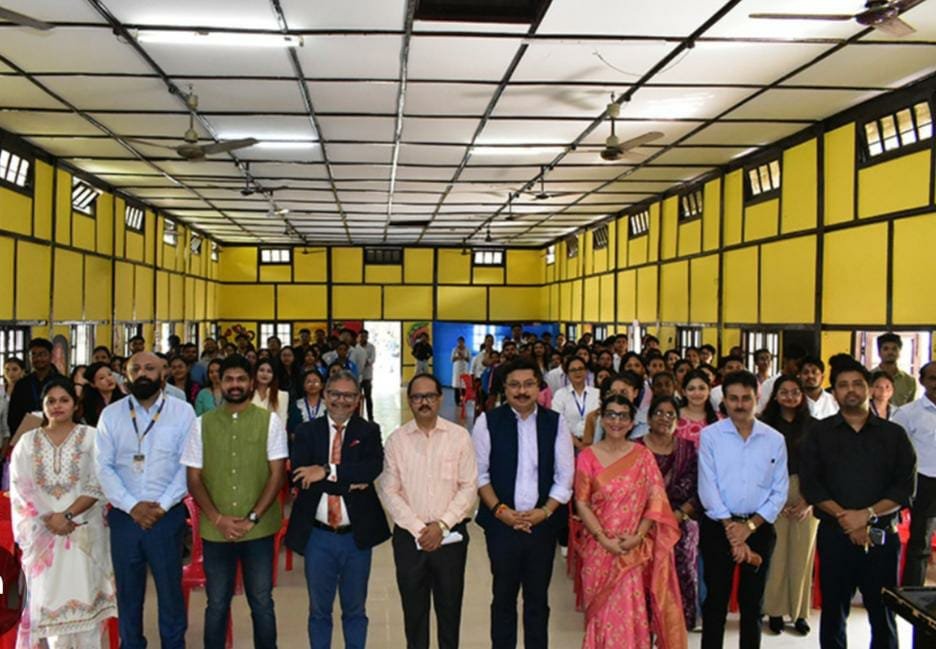
The regional workshop titled Climate Skills – Seeds for a Transition India brought together young changemakers from across India’s Northeast in Guwahati on 24 October 2025. Hosted by The Energy and Resources Institute (TERI) in partnership with the British Council and HSBC, and held at Gauhati University, the event empowered youth to build climate-skills and leadership in a fast-changing environment.
The workshop marks the final regional edition of this national project. It comes at a time when climate change impacts are increasingly felt in the Northeast region and when youth leadership is more vital than ever.
Building Local Leadership Through Climate Skills
The Climate Skills Workshop focused on empowering youth to design local climate solutions. It provided hands-on training, practical sessions, and mentorship to build leadership and problem-solving capacity.
Speakers from TERI, the British Council, and Gauhati University urged participants to take actionable steps on sustainability. They stressed that young people must become “climate ambassadors” for their communities.
Youth participants learned how to translate climate awareness into actionable projects, aligning with the broader goal of regional resilience and sustainable development.
Why This Matters for Northeast India
The Northeast is among India’s most climate-sensitive regions. It faces floods, deforestation, and soil erosion. Therefore, the Climate Skills Workshop aimed to equip youth with regional resilience strategies.
Coupling local leadership with climate-responsive skills is essential for building community-based resilience. The event in Guwahati therefore holds significance beyond just capacity-building—it signals a shift toward regional empowerment and grassroots innovation.
Workshop Highlights & Key Sessions
- Welcome Address by Dr Dipankar Saharia, Senior Director at TERI: “Everything we do should consider the climate, because the future depends on our actions today.”
- Keynote Address by Dr Nani Gopal Mahanta, Vice-Chancellor, Gauhati University: He stressed bringing climate change into lived experience, beyond conference halls.
- Hands-on Activities: Participants engaged in role-play, empathy-driven modules and interactive networking designed to build collaboration, self-awareness and climate leadership.
- Final Session (24 October): A valedictory session to reflect on learnings, outline next steps and launch peer networks for sustained action.
From Workshop to Real-World Climate Action
One of the key features of the programme is that it does not stop at theory. Youth participants are expected to initiate projects on their campuses or in their communities. As the Guwahati edition wraps the regional workshop phase, selected participants will be invited to a five-day Sustainability and Leadership Camp in Mukteshwar, Uttarakhand, to further develop their social-action initiatives.
By enabling youth to design small-scale initiatives locally, the Climate Skills initiative nurtures a long-term network of climate-aware leaders who can adapt solutions to regional contexts and drive sustainable change.
Collaborations & Institutional Support
The success of the workshop owes itself to institutional partnerships:
- TERI served as the implementing agency nationwide.
- The British Council brought international linkages and youth empowerment frameworks.
- HSBC supported the initiative financially, aligning with its global sustainability priorities.
- Gauhati University worked as the local host and knowledge partner for the Guwahati edition.
- Outreach partner Vishwa Yuvak Kendra helped engage youth networks across the Northeast.
These partnerships reflect the multidisciplinary, multi-stakeholder nature of climate action today—blending academia, civil society, finance and youth networks.
Next Steps & Impact
As the regional workshop series concludes, attention now shifts to the follow-up phase—particularly the Mukteshwar camp and on-ground project implementation. Monitoring impact will be key: how many youth go on to lead initiatives? How many communities benefit? How are gender and inclusion integrated?
For participants and institutions alike, the challenge now is to transition from workshop learning to sustained action. The workshop achieved its immediate goal of capacity-building—but the real test lies in longevity and impact.
READ MORE: Muhammad Yunus Map Controversy Triggers India Row