


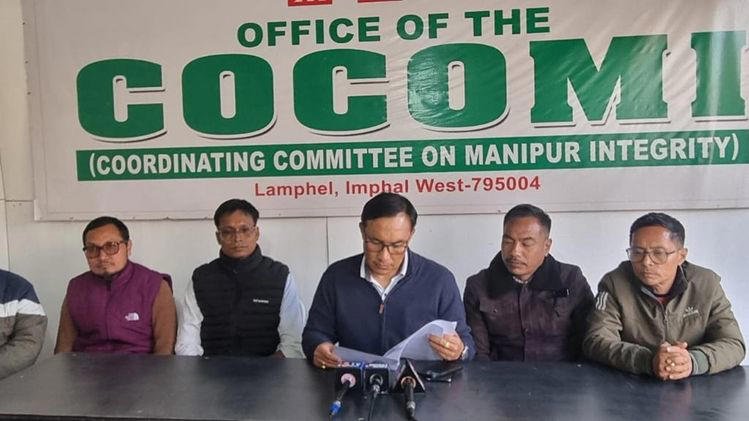
COCOMI rejects Manipur government reply as tensions continue over the handling of the prolonged crisis in the state. The Coordinating Committee on Manipur Integrity (COCOMI) and representatives of internally displaced persons (IDPs) have rejected the Manipur government’s written response to their memorandum, describing it as “vague and incomplete.” The groups said the reply failed to address core demands related to security, rehabilitation, and accountability.
Moreover, the rejection highlights growing frustration among displaced families and civil society groups who believe the government has not provided a clear roadmap for restoring normalcy. As thousands of IDPs continue to live in relief camps, the latest development has added to the strain between the administration and affected communities.
Read More: 45% of Tripura-Mizoram gas pipeline project completed
COCOMI rejects Manipur government reply over lack of clarity
COCOMI rejects Manipur government reply primarily due to what it called the absence of concrete assurances. According to the committee, the written response did not specify timelines, mechanisms, or responsible authorities for implementing promised measures.
Additionally, COCOMI leaders said the reply relied on broad statements instead of actionable commitments. Therefore, they argued that such communication does little to build confidence among people who have endured months of displacement and uncertainty.
IDPs express disappointment with official response
Internally displaced persons echoed COCOMI’s concerns and said the government’s reply ignored ground realities. Many IDPs said they expected clear answers on rehabilitation, compensation, and safe return to their homes.
Furthermore, IDP representatives noted that camp residents continue to face challenges related to healthcare, education, and livelihood. As a result, COCOMI rejects Manipur government reply not only on political grounds but also on humanitarian concerns.
Key demands reiterated by COCOMI and IDPs
COCOMI and IDPs reiterated their core demands while rejecting the reply. These include ensuring adequate security in vulnerable areas, facilitating the dignified return of displaced families, and rebuilding damaged homes and infrastructure.
They also demanded accountability for incidents of violence and destruction. According to the groups, without justice and transparency, trust cannot be restored. Therefore, COCOMI rejects Manipur government reply for failing to address these foundational issues.
Concerns over rehabilitation and resettlement
Rehabilitation remains one of the most pressing concerns. IDPs said the government’s response lacked details on long-term resettlement plans. Temporary relief measures, they argued, cannot substitute for permanent solutions.
Moreover, many displaced families fear returning without assurances of safety. Consequently, COCOMI rejects Manipur government reply as it does not explain how the administration plans to ensure security in affected areas.
Trust deficit between administration and civil groups
The rejection of the reply reflects a deeper trust deficit. Civil society groups believe that repeated assurances without follow-through have weakened confidence in official communication.
Additionally, leaders said written replies must reflect empathy and seriousness. Vague language, they argued, signals a lack of urgency. Hence, COCOMI rejects Manipur government reply as part of a broader concern over governance and responsiveness.
Political and administrative implications
The development has political implications as well. Analysts note that civil society pressure can influence policy direction in Manipur. By rejecting the reply, COCOMI and IDPs are pushing the government to engage more meaningfully.
Meanwhile, the administration has maintained that it remains committed to peace and rehabilitation. However, COCOMI rejects Manipur government reply because it believes commitment must translate into measurable action.
Calls for dialogue and revised response
COCOMI and IDP representatives have called on the government to issue a revised response addressing their concerns in detail. They said open dialogue, rather than formal and unclear communication, could help bridge differences.
Furthermore, they urged authorities to involve community representatives in planning and implementation. Such inclusion, they believe, can improve trust and effectiveness. Therefore, COCOMI rejects Manipur government reply while keeping the door open for constructive engagement.
Humanitarian situation remains fragile
Despite ongoing relief efforts, the humanitarian situation for IDPs remains fragile. Many families continue to depend on aid for basic needs. Education for children and mental health support remain major challenges.
Given these conditions, groups argue that policy responses must be precise and time-bound. As long as uncertainty persists, displacement will continue to affect lives. This reality strengthens the stance that COCOMI rejects Manipur government reply as inadequate.
Way forward amid continued unrest
The rejection of the government’s reply underscores the urgency of decisive action. COCOMI and IDPs have warned that prolonged ambiguity could deepen grievances and delay reconciliation.
Ultimately, COCOMI rejects Manipur government reply to press for accountability, clarity, and compassion. Whether the administration responds with a more detailed and transparent plan will likely shape the next phase of engagement. For now, the episode reflects the continuing struggle to address displacement, restore trust, and move Manipur toward lasting peace.
Read More: Reviving the Birthplace: Governor Bhalla and Minister Scindia Chart Polo Roadmap for Manipur