


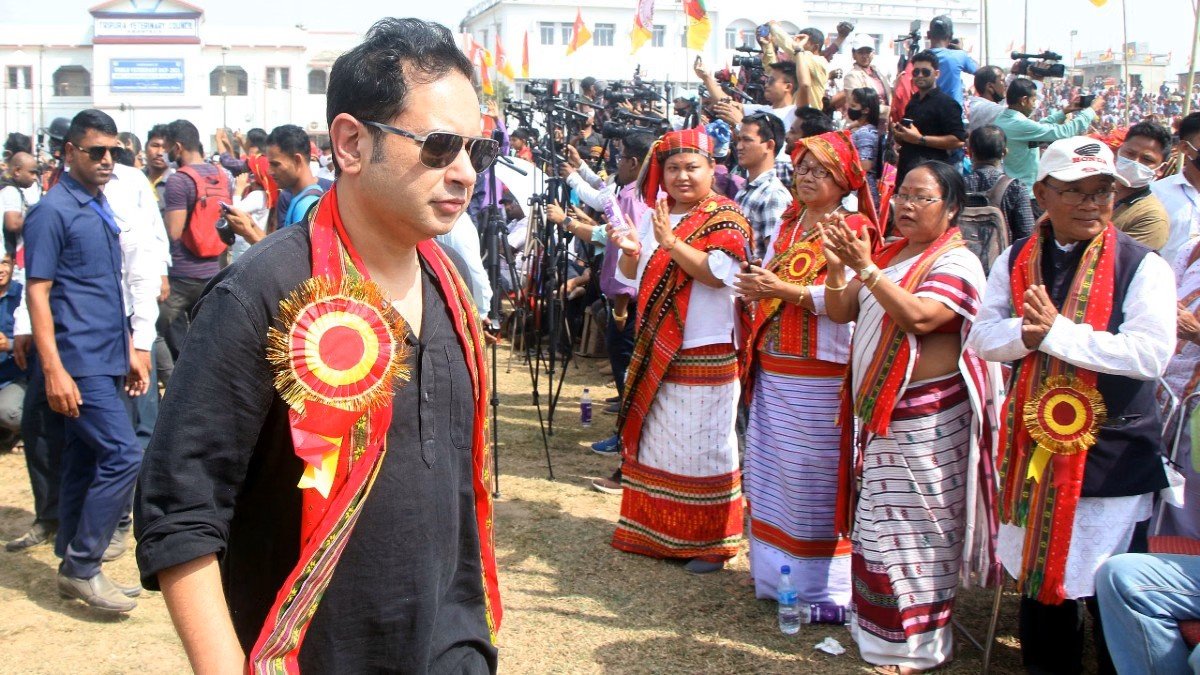
Pradyot Debbarma, the chief of the TIPRA Motha party, issued a strong statement regarding the sensitive debate over the script for the Kokborok language. Specifically, he asserted that “no outsider can give any diktat” on this matter. This statement underscores his party’s position: the script choice belongs solely to the indigenous people of Tripura who speak Kokborok.
The controversy has deep historical and cultural roots. It pits advocates for the Roman script against those favoring the Bengali script for writing Kokborok. This issue recently gained renewed political urgency. Consequently, the TIPRA Motha leader weighed in decisively. His firm stand aims to protect the cultural autonomy and linguistic identity of the state’s tribal communities.
Read More: Tripura Ranks 2nd Nationally in Energy Conservation Efforts
The Core of the Script Controversy
Kokborok is the primary indigenous language of Tripura. It remains at the center of a linguistic and cultural struggle. Historically, people have written it using various scripts, including Roman and Bengali. Currently, the Bengali script often dominates official and administrative use. However, a significant segment of the tribal community, particularly youth and students, strongly advocates for the widespread adoption of the Roman script. They argue the Roman script is easier to learn and use. Furthermore, they believe it facilitates broader educational and digital connectivity.
Advocates for the Bengali script, conversely, often cite its historical use and easier publishing within the state. This division significantly complicates efforts to standardize the language’s script. Thus, it directly impacts educational policies and cultural expression.
Debbarma’s intervention highlights the political sensitivity of the issue. By explicitly stating that no ‘outsider’—meaning non-indigenous entities or groups—should impose a decision, he frames the issue as a matter of indigenous self-determination. This principle is a core tenet of the TIPRA Motha’s political platform.
Political Implications and Autonomy
As a prominent leader and fierce advocate for the rights of the indigenous population, Debbarma’s words carry significant political weight. His demand for local control over the script choice directly challenges any potential interference from central bodies or other interest groups. Therefore, his statement works to mobilize support among the Kokborok-speaking populace. It firmly positions the TIPRA Motha as the defender of their linguistic identity and cultural rights.
Resolving the Kokborok Script Debate Pradyot is crucial for establishing stability and communal harmony in Tripura. The script choice affects curriculum design, official communication, and cultural preservation efforts. A decision made without the full consent of the indigenous community risks deepening existing ethnic divides and fueling unrest.
Debbarma’s stance emphasizes that any solution must originate from within the community itself. He urges authorities to respect the democratic choice of the Kokborok speakers. Moreover, he stresses that educational and official recognition of the language must fully respect the community’s preferred script. Only then will the recognition be truly meaningful and acceptable to all stakeholders. This principle of non-interference and community consensus is vital for long-term social and political peace.
Moving Towards a Community-Led Solution
Debbarma advocates for a resolution that genuinely respects the voice of the people. Specifically, he believes the immediate focus should be on promoting the language itself and ensuring its constitutional recognition. This goal should be pursued regardless of the differing personal script preferences of individuals. Nonetheless, he insists that the state must facilitate an environment where the majority choice of the speakers is determined, respected, and subsequently adopted in official and educational spheres.
The firm assertion that “no outsider can give any diktat” sets a clear political and cultural boundary. It affirms that linguistic and cultural choices must remain solely within the purview of the communities whose heritage is fundamentally at stake. In conclusion, the Kokborok Script Debate Pradyot has successfully elevated the script issue from a minor linguistic detail to a central question of tribal rights, self-determination, and essential political autonomy in Tripura.
Read More: What Does the “i” in iPhone and iPad Really Mean?