


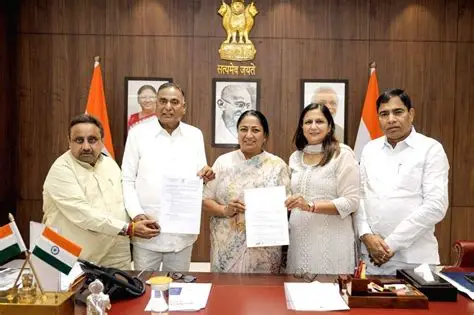
Delhi Chief Minister Rekha Gupta held extensive pre-budget consultations with labour unions and gig workers as part of preparations for the upcoming Delhi Budget 2026. The meetings aimed to gather inputs from key stakeholders and ensure that the budget reflects the needs of the working population.
The consultations mark an important step in shaping policies that directly impact workers across sectors. By engaging with representatives from labour groups and the gig economy, the government seeks to build a more inclusive and responsive budget framework.
Read More: Arunachal CM Hails Tingong Wangpan’s Gold and National Record
Focus on Labour Welfare and Social Security
During the discussions, labour unions highlighted several issues related to worker welfare. These included demands for better wages, improved working conditions, and stronger social security measures.
Union representatives also emphasized the need for timely implementation of labour laws. They called for increased monitoring to ensure compliance across industries. Moreover, they urged the government to expand welfare schemes for unorganized workers.
The Chief Minister assured participants that their concerns would be taken into consideration. She reiterated the government’s commitment to safeguarding the rights of workers and improving their quality of life.
Gig Workers Raise Concerns Over Job Security
Gig workers, including delivery personnel and app-based service providers, played a key role in the consultations. They raised concerns about job security, income stability, and lack of benefits.
Many participants pointed out that gig workers often face unpredictable earnings and limited access to healthcare and insurance. Therefore, they demanded policies that provide financial protection and social security coverage.
Additionally, gig workers called for clear regulations to define their employment status. This, they argued, would help ensure fair treatment and accountability.
Government Explores Policy Measures for Gig Economy
The Delhi government is reportedly considering several measures to support gig workers. These may include welfare schemes, insurance coverage, and mechanisms to address grievances.
Officials indicated that the government aims to create a framework that balances innovation with worker protection. As the gig economy continues to grow, policymakers face the challenge of adapting existing laws to new forms of employment.
The consultations provided valuable insights into the realities faced by gig workers. This information will play a crucial role in shaping future policies.
Emphasis on Inclusive Budget Planning
Chief Minister Rekha Gupta stressed the importance of inclusive budget planning. She stated that the government is committed to incorporating feedback from diverse groups.
By engaging directly with workers, the administration aims to design policies that address real-world challenges. This approach ensures that the budget is not only comprehensive but also practical.
Furthermore, such consultations help build trust between the government and citizens. They create a platform for dialogue and collaboration, which is essential for effective governance.
Addressing Urban Employment Challenges
Urban employment remains a key concern in Delhi. Rapid urbanization has led to increased demand for jobs, particularly in informal sectors.
Labour unions highlighted the need for skill development programs to enhance employability. They also suggested initiatives to support small businesses and create new job opportunities.
The government is expected to consider these suggestions while formulating the budget. Addressing employment challenges will be crucial for sustaining economic growth.
Strengthening Worker Protection Mechanisms
Another major focus of the consultations was the need to strengthen worker protection mechanisms. Participants called for stricter enforcement of safety standards and labour regulations.
They also emphasized the importance of grievance redressal systems. Workers should have access to platforms where they can report issues and seek resolution.
The Chief Minister acknowledged these concerns and assured that steps would be taken to improve existing systems. Enhancing worker protection remains a priority for the government.
Role of Stakeholder Engagement in Policy Making
The pre-budget consultations highlight the role of stakeholder engagement in policymaking. By involving labour unions and gig workers, the government can gain a better understanding of ground realities.
This approach leads to more informed decision-making. It also ensures that policies are aligned with the needs of the people they are intended to serve.
Experts believe that such participatory processes can improve the effectiveness of governance. They also promote transparency and accountability.
Expectations from Delhi Budget 2026
The upcoming Delhi Budget 2026 is expected to focus on worker welfare, employment generation, and social security. The inputs received during the consultations will likely influence key policy decisions.
Observers anticipate measures aimed at supporting both traditional labour sectors and the emerging gig economy. This balanced approach is essential for addressing the diverse needs of the workforce.
Moreover, the budget may include initiatives to boost economic growth while ensuring equitable distribution of resources.
Conclusion: A Step Towards Worker-Centric Governance
The pre-budget consultations led by Chief Minister Rekha Gupta represent a significant step towards worker-centric governance. By engaging with labour unions and gig workers, the government has demonstrated its commitment to inclusivity and dialogue.
As the budget takes shape, the focus will remain on addressing the challenges faced by workers and creating opportunities for growth. The success of these efforts will depend on how effectively the government translates feedback into actionable policies.
Read More: ‘Jag Laadki’ Reaches Mundra with 80,886 MT Crude via Strait of Hormuz