


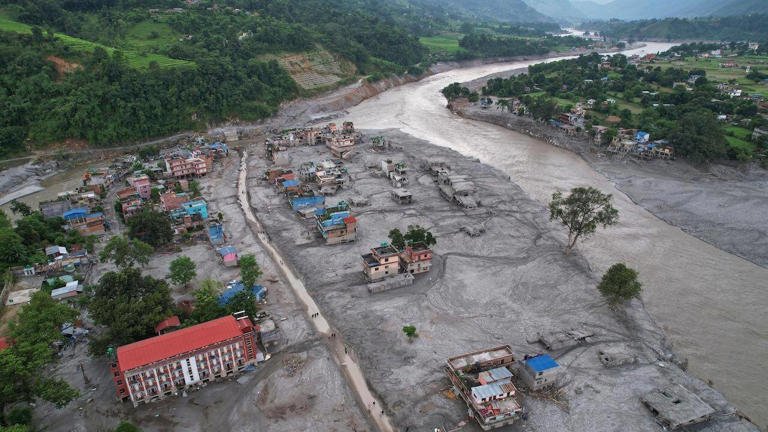
India has said developed countries must take the lead in addressing climate change and its consequences, responding to questions surrounding climate compensation following the devastating floods in Nepal.
The Ministry of External Affairs (MEA) made the remarks as rescue and relief efforts continued in Nepal, where severe flooding and related disasters have caused widespread destruction.
The humanitarian crisis has also raised concerns in India. According to information shared by the authorities, 275 Indian nationals remain missing in Nepal amid the ongoing disaster situation.
India has continued to monitor developments closely and remains in contact with Nepalese authorities as efforts continue to trace missing people and provide assistance to those affected.
MEA Highlights Responsibility of Developed Nations
Responding to questions on climate compensation in the wake of the Nepal floods, the MEA stressed that developed countries must take the lead in tackling climate change.
India has consistently argued that countries with greater historical responsibility for greenhouse gas emissions should play a larger role in climate action and support developing nations facing the consequences of climate change.
The issue has gained renewed attention following the severe floods in Nepal.
Extreme weather events can cause significant humanitarian and economic damage, particularly in developing and vulnerable countries.
Countries affected by floods, landslides and other climate-related disasters often face major challenges in rebuilding infrastructure and supporting displaced communities.
The MEA’s remarks underline India’s broader position that developed countries should lead efforts to address climate change and provide adequate support for countries dealing with its consequences.
Nepal Floods Cause Widespread Humanitarian Concerns
The floods in Nepal have created a serious humanitarian situation, affecting communities and damaging infrastructure.
Floodwaters and other weather-related disasters have disrupted normal life in several areas.
Rescue teams and government agencies continue to assess the full scale of the damage.
Authorities have focused on rescuing stranded people, locating missing individuals and providing relief to affected families.
The disaster has also affected travellers and foreign nationals who were present in Nepal when the severe weather struck.
India has been closely monitoring the situation because of the large number of Indian citizens who travel to Nepal for tourism, business, employment and religious purposes.
The open border and close ties between the two countries also mean that disasters in Nepal can directly affect Indian citizens and communities.
275 Indian Nationals Still Missing
The MEA confirmed that 275 Indian nationals remain missing amid the disaster situation in Nepal.
Authorities are working to gather information and establish contact with those affected.
Tracing missing people can become extremely difficult during floods and other natural disasters.
Communication networks may fail, roads may become inaccessible and entire communities can become temporarily cut off.
These conditions can delay efforts to determine the location and safety of missing individuals.
Indian authorities are coordinating with Nepalese agencies and other relevant authorities as search efforts continue.
The government is also expected to provide assistance to Indian nationals who need help during the crisis.
Families of missing individuals continue to await information as authorities work to trace those who remain unaccounted for.
India Continues to Monitor the Situation
The Indian government has said it remains in close contact with Nepal and continues to monitor developments.
The MEA plays a key role in coordinating assistance for Indian nationals during emergencies abroad.
During a major disaster, Indian missions and government agencies work with local authorities to gather information about affected citizens.
The government may also coordinate rescue, evacuation and relief measures when required.
In the current situation, locating the 275 missing Indian nationals remains a major concern.
The success of these efforts will depend on weather conditions, access to affected areas and the progress of search and rescue operations.
India is likely to continue working closely with Nepalese authorities as the situation develops.
Climate Change and Disaster Compensation Debate
The Nepal floods have once again brought attention to the debate over climate change, loss and damage and financial support for vulnerable countries.
Developing nations often argue that they face severe consequences from climate change despite contributing less to historical global emissions.
The demand for climate compensation centres on the question of responsibility and financial support.
Countries affected by climate-related disasters need resources to rebuild infrastructure, support displaced populations and restore livelihoods.
India has maintained that developed countries must take greater responsibility because of their historical contribution to global emissions.
The MEA’s latest remarks reflect this position.
The issue also forms part of wider international discussions on climate finance and support for developing countries.
Floods Highlight Vulnerability of Himalayan Region
The Himalayan region remains highly vulnerable to extreme weather events and natural disasters.
Heavy rainfall can trigger floods and landslides, particularly in mountainous areas.
These disasters can damage roads, bridges and communication networks.
They can also isolate communities and make rescue operations more difficult.
Changing weather patterns and extreme rainfall events have increased concerns about disaster preparedness in the Himalayan region.
Governments face the challenge of improving infrastructure while protecting vulnerable communities.
The Nepal disaster highlights the need for stronger disaster preparedness and early warning systems.
Better coordination between countries in the Himalayan region can also help improve responses to cross-border disasters.
Search and Rescue Operations Continue
Authorities in Nepal continue their efforts to locate missing people and assist affected communities.
Rescue teams face difficult conditions in areas damaged by flooding and severe weather.
Access remains one of the biggest challenges.
Damaged roads and unstable terrain can slow down emergency operations.
Search teams may need to reach affected areas using alternative routes or specialised equipment.
The situation can also change quickly if heavy rainfall continues.
For the families of the 275 missing Indian nationals, every update remains important.
Authorities will continue to verify information before confirming the status of missing individuals.
The number of people listed as missing may also change as communication improves and people are located.
India Reiterates Call for Global Climate Responsibility
The MEA’s response has once again highlighted India’s demand for greater global responsibility in addressing climate change.
India maintains that climate action must recognise the principle of equity and the different responsibilities of developed and developing countries.
Developed nations, according to India’s position, must lead efforts to reduce emissions and provide financial and technological support.
For countries such as Nepal, climate-related disasters can place enormous pressure on limited resources.
Recovery requires significant investments in infrastructure, housing and livelihoods.
The debate over climate compensation is therefore closely linked to the broader question of climate justice.
The Nepal floods have added urgency to these discussions.
Focus Remains on Missing Indians and Disaster Relief
While the international debate over climate responsibility continues, the immediate focus remains on the humanitarian crisis in Nepal.
Rescue teams and authorities continue to search for missing people and provide assistance to affected communities.
India remains engaged with Nepalese authorities as efforts continue to trace the 275 Indian nationals who remain missing.
The disaster has highlighted both the human cost of extreme weather and the challenges faced by vulnerable countries during major climate-related events.
The MEA’s remarks have also reinforced India’s position that developed countries must take the lead in addressing climate change and supporting nations facing its consequences.
As search and relief operations continue, authorities will closely monitor developments and work to provide updates on the missing Indian nationals.
The coming days will remain crucial for rescue efforts, disaster recovery and the broader discussion surrounding climate responsibility and support for countries affected by extreme weather events.