


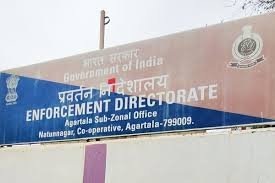
ED asset seizure Tripura: In a major crackdown on organized crime, the Enforcement Directorate (ED) recently seized ₹2.21 crore in assets linked to a large-scale cannabis trafficking and money laundering case. Investigators are focusing on Bishu Kumar Tripura and Bikash Debbarma, who allegedly funneled criminal proceeds through their bank accounts. This action forms part of the government’s strict measures to curb illegal drug trade and financial crimes in the state.
Atal Cup 2026: Mohanpur Cricket Goes High-Tech
Background of the ED Asset Seizure
The case revolves around a massive cannabis trafficking operation in Tripura. Authorities allege that Bishu Kumar Tripura and Bikash Debbarma cultivated, transported, and sold ganja across multiple regions. Investigators found that Bikash Debbarma funneled the illegal trade proceeds through his bank accounts, making him a key figure in the money laundering network.
As a result of the ED’s probe, officials identified and attached assets worth ₹2.21 crore. These assets include immovable properties, bank balances, and other financial instruments linked to the accused.
Agartala Content Creator Disputes: Rising Conflicts in Digital Community
Legal Framework and ED’s Authority
The Enforcement Directorate (ED) operates under the Prevention of Money Laundering Act (PMLA), 2002, which gives it the power to attach assets linked to criminal activities. Under this law, authorities can seize any property derived from crime and later confiscate it through legal proceedings.
The recent Tripura seizure highlights the ED’s proactive enforcement of the PMLA and its efforts to prevent offenders from benefiting from illicit gains. Moreover, officials stressed that such actions are not merely punitive but also preventive, aiming to dismantle the financial foundations of organized crime.
Impact on Ganja Trafficking Networks
This high-profile seizure is expected to disrupt local ganja trafficking networks. By targeting the financial channels used to launder proceeds, the ED is cutting off critical resources that fund illegal operations.
Statements from Officials
ED officials stated that the attached assets were directly linked to the proceeds from cannabis sales. “Our objective is to ensure that crime does not pay,” said a senior ED officer. Authorities further stressed that the investigation is ongoing and more individuals and assets could be identified as the probe continues.
Local police have also lauded the ED’s efforts, emphasizing that asset seizure is a crucial step in disrupting the criminal ecosystem in Tripura.
Role of Financial Monitoring in Crime Prevention
The ED’s investigation highlights the role of financial monitoring in tackling organized crime. By tracking suspicious transactions, cross-checking account activities, and coordinating with banks, authorities can uncover hidden criminal networks.
In this case, investigators identified Bikash Debbarma’s accounts as conduits for money laundering. By freezing and attaching these assets, they ensured that criminals cannot reuse or reinvest the proceeds. This approach combines law enforcement with financial intelligence, creating a comprehensive anti-crime strategy.
Conclusion: A Strong Message Against Crime
The ED asset seizure in Tripura sends a powerful message to criminals: illegal activities, especially ganja trafficking, will not go unchecked. By attaching ₹2.21 crore in assets and continuing investigations, authorities are showing the state’s zero-tolerance policy toward money laundering and organized crime.
Moreover, such operations deter future criminal attempts and strengthen public trust in law enforcement agencies. As a result, citizens can expect stricter monitoring of financial and drug-related crimes, helping to ensure safer communities across Tripura.